
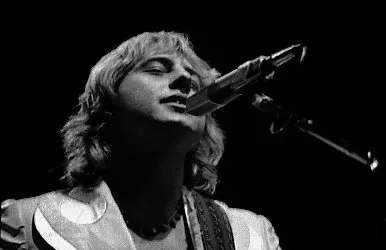
Photo by Jean-Luc Ourlin , licensed under CC BY-SA 2.0 · Wikimedia Commons
Rank #453
Greg Lake
From Wikipedia
Gregory Stuart Lake was an English musician, singer, and songwriter. He gained prominence as a founding member of the progressive rock bands King Crimson and Emerson, Lake & Palmer (ELP).
Discography & Previews
Browse through and click an album to open and play 30-second previews streamed from Apple Music.
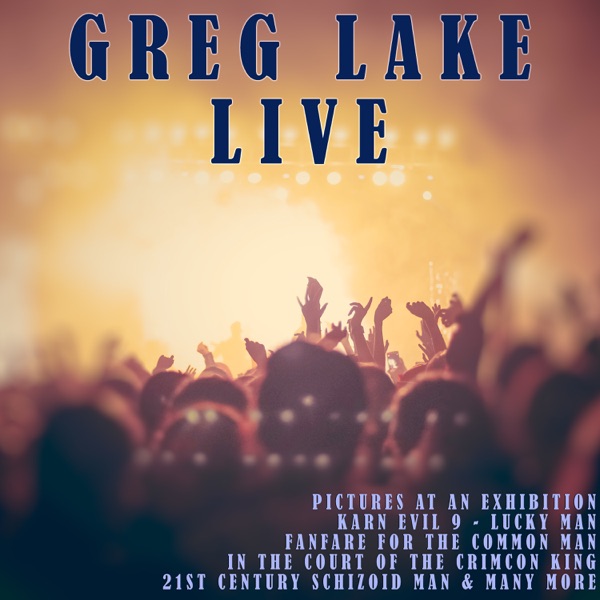
Greg Lake
1981 · 10 tracks
- 1 In the Court of the Crimson King (Live) ↗ 7:52
- 2 Paper Blood (Live) ↗ 3:55
- 3 Touch and Go (Live) ↗ 3:26
- 4 Take a Pebble (Live) ↗ 9:39
- 5 Farewell To Arms (Live) ↗ 6:09
- 6 Fanfare For the Common Man (Live) ↗ 7:03
- 7 Lucky Man (Live) ↗ 5:35
- 8 21st Century Schizoid Man (Live) ↗ 6:22
- 9 Pictures In an Exhibition (Live) ↗ 18:13
- 10 Karn Evil 9 1st Impression Part 2 (Live) ↗ 5:53

Manoeuvres
1983 · 10 tracks

-
 Greg LakeGreg Lake198110 tracks
 -
 ManoeuvresGreg Lake198310 tracks
 -
 Ride the TigerGreg Lake20157 tracks
Deep Dive
Overview
Greg Lake was an English musician, singer, and songwriter whose career spanned nearly seven decades and touched some of the most ambitious and sonically innovative corners of rock music. He first gained prominence as a founding member of King Crimson, the avant-garde progressive rock band that redefined rock’s structural and textural possibilities in the late 1960s. Later, as a co-founder of Emerson, Lake & Palmer, he became central to the art rock and progressive rock movements of the 1970s. Beyond those landmark ensembles, Lake sustained a solo recording and touring career that allowed him to explore folk rock, hard rock, and operatic arrangements on his own terms.
Formation Story
Greg Lake was born in Poole, Dorset, in 1947, coming of age in Britain during the emergence of electric rock and folk traditions. He developed his musical skills in the early 1960s, absorbing influences from blues, folk, and the British Invasion bands reshaping popular music. His entry into the progressive rock world came through his work as a guitarist and vocalist with Emerson, Lake & Palmer, alongside keyboardist Keith Emerson and drummer Carl Palmer. Before that, however, he had earned his credentials as a member of King Crimson, the experimental ensemble led by guitarist Robert Fripp that debuted in 1969 with a record that would become a cornerstone of progressive rock. Lake’s ability to deliver both intricate instrumental performances and emotionally direct vocal lines made him an ideal bridge between the band’s avant-garde impulses and its need for melodic anchoring.
Breakthrough Moment
Lake’s initial prominence came through his role in King Crimson, whose self-titled 1969 debut introduced audiences to fractured time signatures, tonal shifts between serene and abrasive, and an almost orchestral approach to rock instrumentation. His presence on that album and subsequent live performances established him as a musician unafraid of complexity. The real breakthrough into mainstream recognition, however, came with Emerson, Lake & Palmer. Formed in 1970, the trio released its self-titled debut in 1971, followed by Tarkus in 1971 and Pictures at an Exhibition in 1972, recordings that fused keyboard-driven arrangements, lengthy progressive compositions, and classical music influences into an entirely new template for what rock music could be. These albums reached international audiences and established ELP as one of the dominant acts of the 1970s.
Peak Era
The years from 1970 through the mid-1970s represented Lake’s peak commercial and creative period, anchored by his work with Emerson, Lake & Palmer. The band’s elaborate live shows, concept albums, and ability to sell out large venues made them one of the era’s biggest rock acts. Lake’s songwriting contributions during this period—combining folk-influenced melodies with progressive rock’s formal adventurousness—gave the band much of its emotional core. Even as the broader rock landscape began to shift in the late 1970s toward punk and new wave, ELP maintained its touring schedule and recording presence, though with diminishing chart impact and critical favor.
Musical Style
Greg Lake’s musicianship bridged folk tradition and modernist rock experimentation. As a vocalist, he possessed a clear, soulful tenor capable of both intimate acoustic passages and the powerful projection required in large concert halls. His guitar playing ranged from fingerpicked folk patterns to distorted rock textures, though he frequently functioned as a vocalist and rhythm player within his ensembles rather than the lead guitar virtuoso. His songwriting leaned toward narrative structure and emotional directness, often grounded in folk song forms that stood in productive tension with the elaborate orchestrations around them. Across his solo work and band recordings, Lake drew from folk rock, hard rock, progressive rock, and even operatic elements, creating a personal style that refused easy categorization. His baritone and emotional delivery in ballads became a signature of Emerson, Lake & Palmer’s character—softening and humanizing the keyboard’s otherworldly complexity.
Major Albums
Greg Lake (1981)
Lake’s self-titled solo debut marked his first release under his own name as a full artist statement, arriving after significant time spent with Emerson, Lake & Palmer and related projects. The album showcased his ability to sustain a record without the symphonic apparatus of his previous work, leaning instead toward folk rock and direct song craft.
Manoeuvres (1983)
The follow-up demonstrated Lake’s continued exploration of solo material, balancing introspective songwriting with the production sophistication available in the early 1980s. The record further established his identity as a standalone artist capable of sustaining listener interest across an album-length form.
Ride the Tiger (2015)
Lake’s final studio album arrived late in his life, nearly a decade after his previous release. The record represented a synthesis of his lifelong musical interests and provided a lasting document of his voice and songwriting craft in his final creative period.
Signature Songs
- “Karn Evil 9” — An Emerson, Lake & Palmer epic that exemplified the band’s approach to nine-minute progressive compositions, blending classical piano, hard rock guitar, and Lake’s soaring vocals.
- “Lucky Man” — A key ELP ballad in which Lake’s emotionally direct delivery provided the emotional anchor for Keith Emerson’s Moog synthesizer showcase.
- “Bitches Crystal” — A King Crimson piece showcasing Lake’s ability to navigate the band’s fractured, unsettling soundscapes.
- “From the Beginning” — An introspective Emerson, Lake & Palmer number highlighting Lake’s gift for intimate songwriting within the band’s progressive framework.
Influence on Rock
Greg Lake’s career traced the arc of progressive rock from its avant-garde origins in the late 1960s through its mainstream dominance in the 1970s. His presence in King Crimson helped establish the template for art rock: music that embraced dissonance, non-standard song structures, and sonic experimentation as legitimate tools for serious rock musicians. With Emerson, Lake & Palmer, he helped popularize progressive rock’s fusion of classical music, electronic instruments, and rock energy to stadium-sized audiences. His approach to singing—delivering emotional authenticity within elaborate, often lengthy compositions—influenced how subsequent progressive and art rock bands balanced accessibility with complexity. Though the progressive rock movement faced critical reassessment in the 1980s and beyond, Lake’s fundamental contributions to expanding rock’s harmonic and structural vocabulary remained embedded in the DNA of countless artists who drew from that lineage.
Legacy
Greg Lake’s name is inseparable from two of progressive rock’s most significant bands. King Crimson’s influence on avant-garde and experimental rock proved enduring and deep, with the band and its offshoots continuing to tour and record decades after its initial run. Emerson, Lake & Palmer became both exemplars of progressive rock’s ambition and, retrospectively, symbols of the movement’s occasional excess and decline in critical esteem during the 1980s onward. Yet the band maintained a devoted global fanbase, with reunion tours and reissues continuing to reach audiences well into the 2000s and 2010s. Lake’s solo work, while modest in commercial scale compared to his band work, documented his identity as a craftsman and serious songwriter beyond the collaborative contexts for which he was best known. He remained active as a performer and recording artist until his death in 2016, maintaining the integrity of his musical vision across multiple decades and genres.
Fun Facts
- Lake was a founding member of King Crimson alongside Robert Fripp and Pete Sinfield, contributing vocals and guitar to one of the most consequential debut albums in rock history.
- His work with Emerson, Lake & Palmer produced some of the longest songs ever recorded by a major rock band, with pieces regularly exceeding ten minutes and conceptual suites spanning entire album sides.
- Lake’s solo career allowed him to explore folk rock and acoustic arrangements with greater emphasis than his band work typically permitted, revealing dimensions of his artistry less visible in the progressive rock context.