

Photo by Andrew D. Hurley , licensed under CC BY-SA 4.0 · Wikimedia Commons
Rank #438
Howard Jones
From Wikipedia
John Howard Jones is a British musician. He had ten top 40 hit singles on the UK singles chart between 1983 and 1986, six of which reached the top ten, including "Like to Get to Know You Well", "What Is Love?", "New Song", and "Things Can Only Get Better". His debut studio album Human's Lib (1984) reached number one on the UK Albums Chart. Around the world, Jones had 15 top 40 hit singles between 1983 and 1992. The 1986 hit single "No One Is to Blame" reached No. 4 on the US charts. Four others placed in the US top 20.
Discography & Previews
Browse through and click an album to open and play 30-second previews streamed from Apple Music.


Dream Into Action
1985 · 14 tracks
- 1 Things Can Only Get Better ↗ 3:56
- 2 Life In One Day ↗ 3:41
- 3 Dream Into Action ↗ 3:47
- 4 No One Is To Blame ↗ 3:31
- 5 Look Mama ↗ 3:53
- 6 Assault And Battery ↗ 4:52
- 7 Automaton ↗ 4:05
- 8 Is There A Difference? ↗ 3:32
- 9 Elegy ↗ 4:23
- 10 Specialty ↗ 3:59
- 11 Why Look For The Key ↗ 3:23
- 12 Hunger For The Flesh ↗ 4:02
- 13 Bounce Right Back ↗ 4:32
- 14 Like To Get To Know You Well ↗ 4:00

One to One
1986 · 11 tracks
- 1 You Know I Love You, Don't You? ↗ 4:01
- 2 The Balance Of Love ↗ 4:29
- 3 All I Want ↗ 4:36
- 4 Where Are We Going? ↗ 5:01
- 5 Don't Want To Fight Anymore ↗ 4:34
- 6 Step Into These Shoes ↗ 4:20
- 7 Will You Still Be There? ↗ 4:45
- 8 Good Luck, Bad Luck ↗ 4:07
- 9 Give Me Strength ↗ 5:02
- 10 Little Bit Of Snow ↗ 4:28
- 11 No One Is To Blame ↗ 3:31


Working in the Backroom
1993 · 11 tracks
- 1 Cathedral Of Chutai Excerpt ↗ 1:19
- 2 Cookin' In The Kitchen ↗ 4:59
- 3 Over & Above ↗ 4:48
- 4 You Are Beautiful To Me ↗ 4:53
- 5 Left No Evidence ↗ 4:09
- 6 You Can Say It's All Over ↗ 5:28
- 7 Don't Get Me Wrong ↗ 7:10
- 8 Blue ↗ 4:23
- 9 Egypt Love Trance ↗ 5:20
- 10 Let The Spirit Carry Me ↗ 4:18
- 11 Cathedral of Chutai ↗ 4:06

People
1997 · 13 tracks
- 1 You're The Buddha ↗ 4:35
- 2 Tomorrow Is Now ↗ 3:51
- 3 Everything ↗ 3:48
- 4 Let The People Have Their Say (Original US Mix) ↗ 3:40
- 5 If You Love ↗ 4:37
- 6 Sleep My Angel ↗ 4:31
- 7 We Make The Weather ↗ 5:16
- 8 Back In Your Life ↗ 5:12
- 9 Wedding Song ↗ 4:41
- 10 Dreamin' On ↗ 3:31
- 11 Let Me Be The First To Know ↗ 5:15
- 12 Nothing To Fear ↗ 6:55
- 13 Not One Of The Lonely Tonight ↗ 6:54

Perform.00
2000 · 14 tracks
- 1 You Know I Love You, Don't You? (2000 Re-Record) ↗ 3:39
- 2 Love Is A Good Thing (2000 Re-Record) ↗ 3:47
- 3 No One Is To Blame (2000 Re-Record) ↗ 4:37
- 4 Someone You Need ↗ 3:32
- 5 Everlasting Love (2000 Re-Record) ↗ 4:21
- 6 I Must Go (2000 Re-Record) ↗ 5:49
- 7 Tomorrow Is Now (2000 Re-Record) ↗ 4:19
- 8 Pearl In The Shell (2000 Re-Record) ↗ 4:25
- 9 Hide And Seek (2000 Re-Record) ↗ 10:33
- 10 What Is Love? (2000 Re-Record) ↗ 6:06
- 11 Let The People Have Their Say (2000 Re-Record) ↗ 3:18
- 12 Like To Get To Know You Well (2000 Re-Record) ↗ 4:36
- 13 New Song 99 (2000 Re-Record) ↗ 4:59
- 14 Things Can Only Get Better (2000 Re-Record) ↗ 7:44


Revolution of the Heart
2005 · 10 tracks


Piano Composed Spirio
2025 · 10 tracks
- 1 The Way You Choose To See It ↗ 3:44
- 2 Everything Is Connected ↗ 3:33
- 3 Finding The Silver Lining ↗ 3:20
- 4 Hope Is A Decision ↗ 6:10
- 5 Turning Poison Into Medicine ↗ 5:42
- 6 It's In Your Hands ↗ 3:59
- 7 Five Pianos ↗ 4:37
- 8 Cherish Life ↗ 4:22
- 9 Winter Always Turns To Spring ↗ 4:07
- 10 It's Great To See You Smile Again ↗ 3:06
-
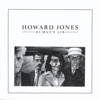 Human’s LibHoward Jones198411 tracks
 -
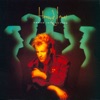 Dream Into ActionHoward Jones198514 tracks
 -
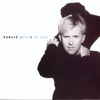 One to OneHoward Jones198611 tracks
 -
 Cross That LineHoward Jones198910 tracks
 -
 In the RunningHoward Jones199210 tracks
 -
 Working in the BackroomHoward Jones199311 tracks
 -
 PeopleHoward Jones199713 tracks
 -
 Perform.00Howard Jones200014 tracks
 -
 Piano Solos (For Friends and Loved Ones)Howard Jones20039 tracks
 -
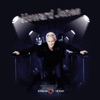 Revolution of the HeartHoward Jones200510 tracks
 -
 Ordinary HeroesHoward Jones200910 tracks
 -
 TransformHoward Jones201910 tracks
 -
 DialogueHoward Jones20228 tracks
 -
 Piano Composed SpirioHoward Jones202510 tracks
Deep Dive
Overview
Howard Jones is a British musician who emerged as one of the defining figures of 1980s synth-pop and new wave. Born in 1955, Jones built his reputation on the strength of keyboard-driven pop songs, distinctive vocal delivery, and an accessible sensibility that crossed both UK and international charts. Between 1983 and 1986, he placed ten top 40 singles on the UK Singles Chart, six of which reached the top ten, establishing him as a consistent commercial force during the height of the synthesizer era.
Formation Story
Howard Jones came of age during the late 1970s and early 1980s, a period when synthesizers and drum machines were reshaping popular music. Growing up in the United Kingdom, Jones was drawn to rock and pop idioms enriched by electronic instrumentation. By the early 1980s, as new wave and synth-pop were gaining mainstream footing, Jones developed his own brand of keyboard-centered pop music that balanced technological innovation with straightforward melodic sensibility and emotionally direct songwriting. His entry into professional recording came in the mid-1980s, marking the beginning of a career that would span multiple decades and musical shifts.
Breakthrough Moment
Howard Jones’s breakthrough arrived with the release of his debut studio album Human’s Lib in 1984, which reached number one on the UK Albums Chart and immediately established him as a major commercial force. The album spawned multiple hit singles, including “Like to Get to Know You Well” and “What Is Love?,” both of which charted prominently in the UK. This early success positioned Jones at the forefront of British pop at a moment when synthesizer-based music was at peak commercial viability. The album’s combination of infectious hooks, polished production, and Jones’s distinctive vocal presence resonated with both radio programmers and listeners, securing his place in the 1980s pop landscape.
Peak Era
Jones’s peak commercial period extended from 1983 through the late 1980s, with his most creatively successful and chart-dominant years concentrated between 1984 and 1986. Following the success of Human’s Lib, he released Dream Into Action in 1985 and One to One in 1986, both of which maintained his commercial momentum in the UK and began expanding his profile internationally. The 1986 single “No One Is to Blame” became his signature achievement on the US charts, reaching number four and establishing him as a crossover artist with genuine transatlantic appeal. Around the world, Jones accumulated 15 top 40 hit singles between 1983 and 1992, with four additional tracks placing in the US top 20, demonstrating the breadth of his commercial reach during this period.
Musical Style
Howard Jones’s sound is rooted in synth-pop and new wave, characterized by prominent synthesizer arrangements, crisp drum machine programming, and melodically sophisticated pop songwriting. His vocals—clear, expressive, and often featuring a conversational directness—became a signature element of his productions, distinguishing his work from more robotic or abstract approaches to electronic pop. The production aesthetic of his early work emphasized accessibility over experimentation, with hooks and emotional clarity taking precedence over production novelty. As his career progressed, particularly from the late 1980s onward, Jones’s sound evolved to incorporate broader pop-rock elements, and he eventually explored acoustic and piano-based arrangements, as evidenced by his later instrumental piano albums beginning with Piano Solos (For Friends and Loved Ones) in 2003.
Major Albums
Human’s Lib (1984)
Jones’s debut remains his commercial peak and the album that defined his signature sound. Reaching number one on the UK Albums Chart, it introduced his core aesthetic of keyboard-driven pop with strong hooks and emotional directness.
Dream Into Action (1985)
This follow-up consolidated his success and produced additional top 10 UK singles, confirming that his breakthrough was no one-album phenomenon and establishing him as a sustained chart force.
One to One (1986)
Released at the height of his commercial power, this album included the transatlantic hit “No One Is to Blame” and represented the culmination of his early 1980s pop-rock vision.
Cross That Line (1989)
This album marked a transition in Jones’s career as the market for 1980s-style synth-pop began to shift, reflecting broader changes in popular music while maintaining his core sensibility.
Piano Solos (For Friends and Loved Ones) (2003)
A significant shift in artistic direction, this instrumental album showcased Jones’s keyboard mastery in acoustic and piano-based arrangements, presaging a long series of intimate, composition-focused works released thereafter.
Signature Songs
- “Like to Get to Know You Well” — A top 10 UK hit from his debut that exemplified his gift for accessible, emotionally warm pop hooks.
- “What Is Love?” — A defining single from the early 1980s that became one of his most recognized tracks in the UK.
- “New Song” — A chart success that showcased his knack for straightforward, memorable pop composition.
- “Things Can Only Get Better” — A top 10 UK single that became an anthem of optimism and remains one of his most enduring compositions.
- “No One Is to Blame” — His greatest international success, reaching number four on the US charts and establishing him as a crossover artist with genuine transatlantic reach.
Influence on Rock
Howard Jones emerged during the commercial peak of synthesizer-driven pop in the 1980s and helped legitimize keyboard-centered songwriting as a vehicle for emotional and melodic expression rather than pure technical innovation. His commercial success demonstrated that synth-pop could achieve mainstream, sustained chart performance without sacrificing melody or accessibility. By placing multiple songs in both the UK and US charts, he contributed to the international acceptance of new wave and synth-pop aesthetics among mainstream radio audiences. His influence on subsequent generations of pop and new wave artists lies less in radical sonic innovation than in proving that synthesizer-based pop music could be both commercially dominant and emotionally direct.
Legacy
Howard Jones remains an active recording artist more than four decades after his debut, with a catalog spanning from 1984’s Human’s Lib through 2025’s Piano Composed Spirio. His sustained career reflects the enduring appeal of his melodic sensibility and his willingness to evolve his sound across multiple idioms—from 1980s synth-pop to rock to acoustic and piano-based compositions. The body of work from his peak years continues to circulate on streaming platforms and maintains cultural currency through periodic radio play and retrospective programming devoted to 1980s pop. His transformation from a chart-dominant 1980s pop star into a pianist and composer working across instrumental and composition-driven projects demonstrates an artist committed to sustained creative development beyond initial commercial success.
Fun Facts
- Jones secured ten top 40 UK singles chart entries between 1983 and 1986, a concentration of chart success that placed him among the most consistent hit-makers of the early 1980s.
- His international reach extended well beyond the UK and US, with 15 top 40 hits around the world between 1983 and 1992, reflecting the global commercial power of 1980s synth-pop.
- Beginning in 2003 with Piano Solos (For Friends and Loved Ones), Jones embarked on a series of acoustic and instrumental piano albums, representing a significant artistic pivot toward composition-focused work and intimate arrangements.
- Over four decades of continuous recording activity, Jones released albums across multiple eras of popular music, from the 1980s synthesizer boom through the 2020s, demonstrating remarkable longevity in a genre often associated with short-term trends.