
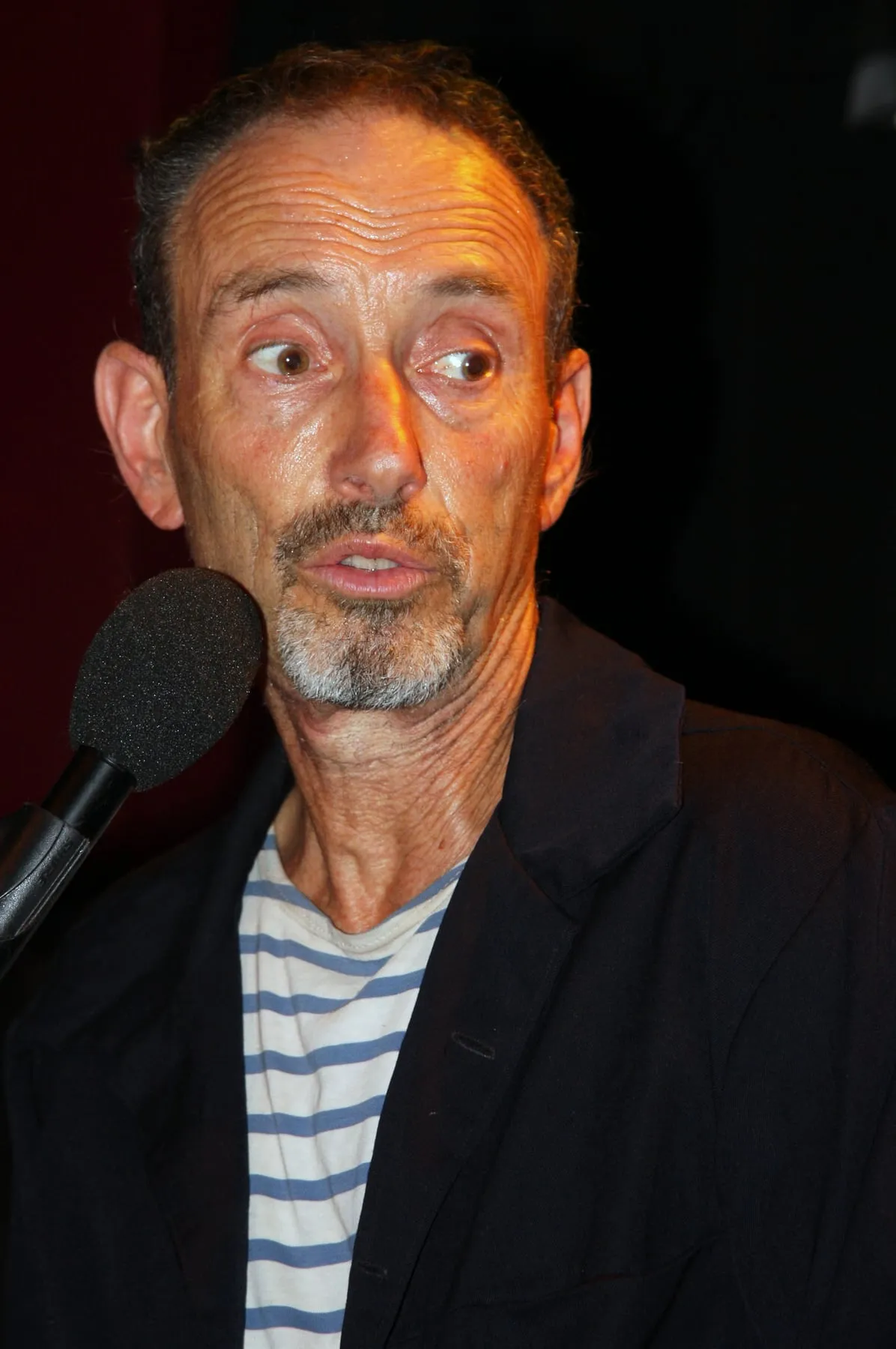
Photo by Jonathunder , licensed under GFDL 1.2 · Wikimedia Commons
Rank #348
Jonathan Richman
From Wikipedia
Jonathan Michael Richman is an American singer, songwriter and guitarist. In 1970, he founded the Modern Lovers, an influential proto-punk band. Since the mid-1970s, Richman has worked either solo or with low-key acoustic and electric backing. He is known for his wide-eyed, unaffected, and childlike outlook, and music that, while rooted in rock and roll, is influenced by music from around the world.
Discography & Previews
Browse through and click an album to open and play 30-second previews streamed from Apple Music.

Jonathan Richman
1989 · 12 tracks
- 1 Malagueña De Jojo ↗ 2:12
- 2 Action Packed ↗ 2:58
- 3 Every Day Clothes ↗ 3:07
- 4 Fender Stratocaster ↗ 2:56
- 5 Blue Moon ↗ 3:55
- 6 Closer ↗ 3:24
- 7 I Eat With Gusto, Damn! You Bet ↗ 4:00
- 8 Miracles Will Start To Happen ↗ 3:08
- 9 Sleepwalk ↗ 2:14
- 10 Que Reste-T-ll De Nos Amours? ↗ 2:00
- 11 A Mistake Today For Me ↗ 2:14
- 12 Cerca ↗ 3:43

Jonathan Goes Country
1990 · 12 tracks
- 1 Since She Started To Ride ↗ 2:36
- 2 Reno ↗ 4:03
- 3 You're The One For Me ↗ 3:13
- 4 Your Good Girl's Gonna Go Bad ↗ 3:01
- 5 I Must Be King ↗ 2:29
- 6 You're Crazy For Taking The Bus ↗ 2:34
- 7 Rodeo Wind ↗ 2:22
- 8 Corner Store ↗ 3:04
- 9 The Neighbors ↗ 2:47
- 10 Man Walks Among Us ↗ 2:24
- 11 I Can't Stay Mad At You ↗ 1:38
- 12 Satisfied Mind ↗ 1:54

Having a Party With Jonathan Richman
1991 · 12 tracks
- 1 The Girl Stands Up To Me Now ↗ 2:32
- 2 Cappuccino Bar (Live) ↗ 3:35
- 3 My Career As A Homewrecker ↗ 3:41
- 4 She Doesn't Laugh At My Jokes ↗ 2:02
- 5 When She Kisses Me ↗ 2:31
- 6 They're Not Tryin' On The Dance Floor ↗ 1:56
- 7 At Night ↗ 3:47
- 8 When I Say Wife (Live) ↗ 1:45
- 9 1963 ↗ 1:42
- 10 Monologue About Bermuda (Live) ↗ 7:12
- 11 Our Swingin' Pad ↗ 3:31
- 12 Just For Fun (Live) ↗ 3:01
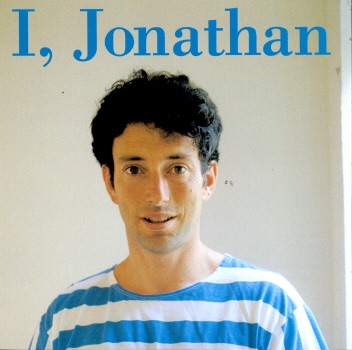
I, Jonathan
1992 · 10 tracks

¡Jonathan, te vas a emocionar!
1994 · 15 tracks
- 1 Pantomima de "El Amor Brujo" ↗ 3:09
- 2 Harpo en Su Harpa ↗ 2:50
- 3 No Te Oye ↗ 2:56
- 4 No Más por Fun ↗ 1:50
- 5 Papel de Chicle ↗ 2:32
- 6 Los Vecinos ↗ 2:41
- 7 Compadrito Corazón ↗ 1:58
- 8 Melodía Tradicional Ecuadoriana ↗ 2:18
- 9 Shirin y Farad ↗ 4:26
- 10 Reno ↗ 3:21
- 11 Cerca ↗ 4:02
- 12 El U.F.O. Man ↗ 4:02
- 13 Ahora Es Mejor ↗ 2:06
- 14 Sabor a Mí ↗ 1:40
- 15 Una Fuerza Allá ↗ 3:22

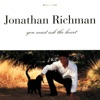
You Must Ask the Heart
1995 · 13 tracks
- 1 To Hide A Little Thought ↗ 3:17
- 2 The Heart Of Saturday Night ↗ 1:57
- 3 Vampire Girl ↗ 3:37
- 4 Just Because I'm Irish ↗ 1:54
- 5 That's How I Feel ↗ 2:08
- 6 Let Her Go Into The Darkness ↗ 3:20
- 7 The Rose ↗ 1:36
- 8 You Must Ask The Heart ↗ 3:29
- 9 Nothng Can Change This Love ↗ 2:09
- 10 Amorcito Corazon ↗ 3:34
- 11 City Vs. Country ↗ 2:34
- 12 Walter Johnson ↗ 2:53
- 13 Nishi ↗ 0:20
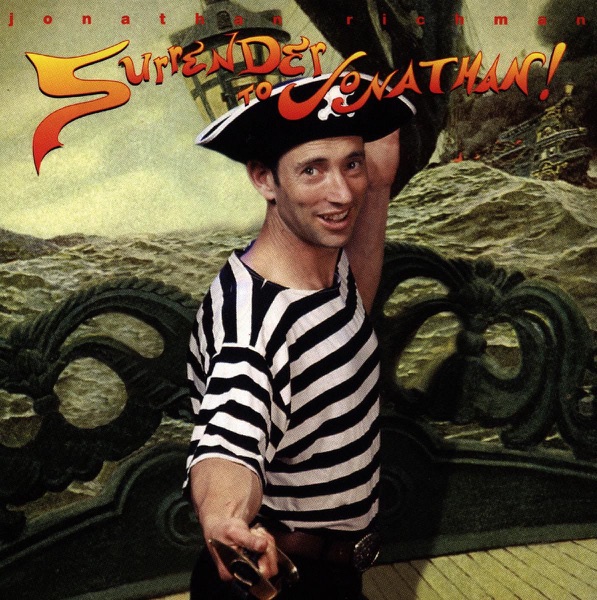
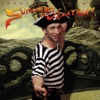
Surrender to Jonathan!
1996 · 13 tracks
- 1 Just Look At Me ↗ 2:34
- 2 Not Just a "Plus One" On the Guest List ↗ 2:50
- 3 That Little Sleeper Car ↗ 3:07
- 4 French Style ↗ 3:17
- 5 Surrender ↗ 3:26
- 6 I Was Dancing In the Lesbian Bar ↗ 5:03
- 7 To Hide a Little Thought ↗ 2:57
- 8 Egyptian Reggae ↗ 3:50
- 9 When She Kisses Me ↗ 3:41
- 10 Satisfy ↗ 2:14
- 11 Rock 'N' Roll Drummer Straight from the Hospy-Tel ↗ 3:31
- 12 My Little Girl's Got a Full Time Daddy Now ↗ 2:19
- 13 Floatin' ↗ 4:17
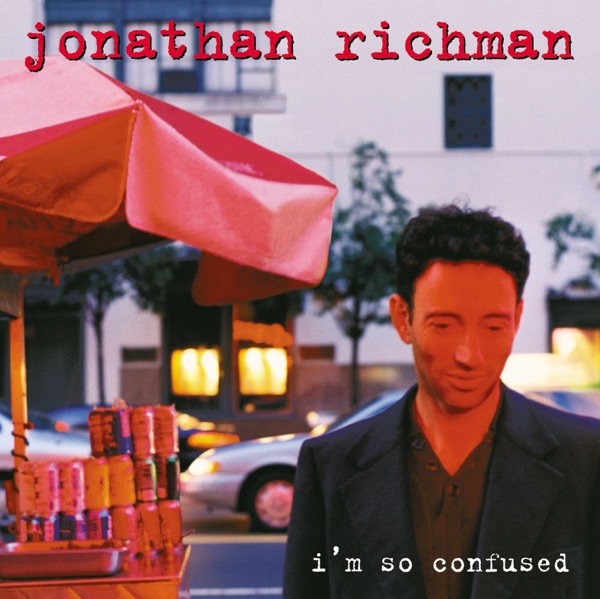
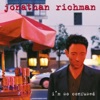
I'm So Confused
1998 · 12 tracks
- 1 When I Dance ↗ 2:51
- 2 Nineteen In Naples ↗ 3:00
- 3 I'm So Confused ↗ 3:28
- 4 True Love Is Not Nice ↗ 3:11
- 5 Love Me Like I Love ↗ 3:35
- 6 Hello from Cupid ↗ 3:08
- 7 If She Don't Love Me ↗ 2:30
- 8 The Lonely Little Thrift Store ↗ 2:52
- 9 Affection ↗ 4:15
- 10 I Can Hear Her Fighting With Herself ↗ 3:18
- 11 The Night Is Still Young ↗ 2:14
- 12 I Can't Find My Best Friend ↗ 2:55
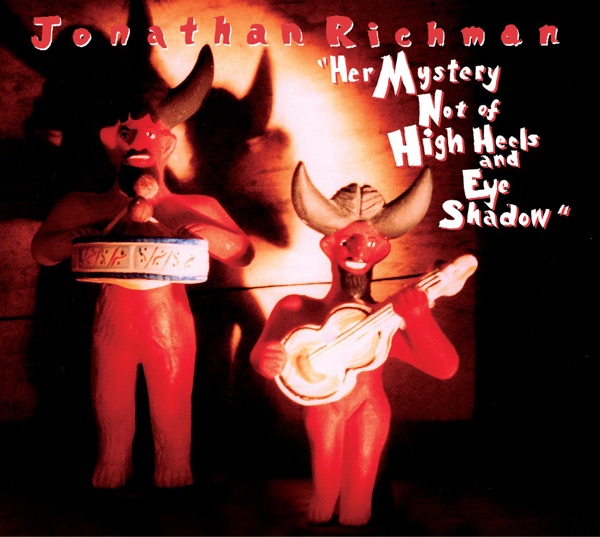
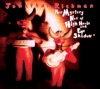
Her Mystery Not of High Heels and Eye Shadow
2001 · 14 tracks
- 1 Her Mystery Not of High Heels and Eye Shadow ↗ 2:29
- 2 Springtime In New York ↗ 2:54
- 3 Me and Her Got a Good Thing Goin' Baby ↗ 2:43
- 4 Couples Must Fight ↗ 2:05
- 5 I Took a Chance On Her ↗ 2:51
- 6 Maybe a Walk Home from Natick High School ↗ 1:16
- 7 Give Paris One More Chance ↗ 2:42
- 8 My Love for Her Ain't Sad ↗ 1:31
- 9 Leaves On the Sidewalk After the Rain ↗ 0:43
- 10 Tonight ↗ 2:09
- 11 Yo Tengo una Novia ↗ 2:36
- 12 El Joven Se Estremece ↗ 2:51
- 13 Con el Merengue ↗ 2:03
- 14 Vampresa Mujer (Vampire Girl) ↗ 3:28

Not So Much to Be Loved as to Love
2004 · 15 tracks
- 1 Not So Much to Be Loved As to Love ↗ 2:52
- 2 Sunday Afternoon ↗ 1:17
- 3 Vincent Van Gogh ↗ 3:03
- 4 Cosi Veloce ↗ 3:31
- 5 He Gave Us the Wine to Taste ↗ 2:40
- 6 Salvador Dali ↗ 2:22
- 7 My Baby Love Love Loves Me ↗ 3:10
- 8 In Che Mondo Viviamo ↗ 2:27
- 9 Behold the Lilies of the Field ↗ 3:07
- 10 Les Étoiles ↗ 2:13
- 11 The World Is Showing Its Hand ↗ 2:23
- 12 Abu Jamal ↗ 2:16
- 13 On a Du Soleil ↗ 1:54
- 14 I Had a Dream That the Sea ↗ 2:05
- 15 Not So Much to Be Loved As to Love (Version 2) ↗ 2:46

Because Her Beauty Is Raw and Wild
2008 · 14 tracks
- 1 Because Her Beauty Is Raw and Wild ↗ 2:29
- 2 No One Was Like Vermeer ↗ 3:00
- 3 Time Has Been Going By So Fast ↗ 2:45
- 4 Es Como el Pan ↗ 3:00
- 5 Our Drab Ways ↗ 3:19
- 6 The Lovers Are Here and They're Full of Sweat ↗ 3:00
- 7 Le Printemps Des Amoreux Est Venu ↗ 2:35
- 8 When We Refuse to Suffer ↗ 2:15
- 9 This Romance Will Be Different for Me ↗ 3:22
- 10 Old World ↗ 3:22
- 11 Our Party Will Be On the Beach Tonight ↗ 4:03
- 12 When We Refuse to Suffer (Second Version) ↗ 4:00
- 13 Here It Is ↗ 4:27
- 14 As My Mother Lay Lying ↗ 3:05
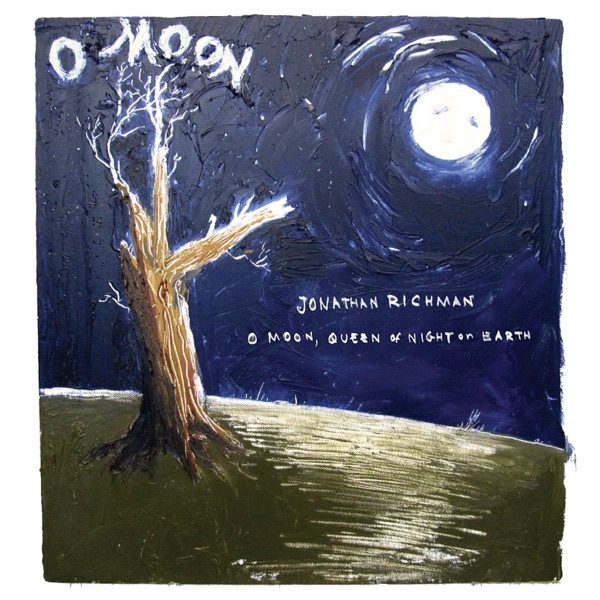
O Moon, Queen of Night on Earth
2010 · 14 tracks
- 1 O Moon, Queen of Night On Earth ↗ 2:12
- 2 These Bodies That Came to Cavort ↗ 2:43
- 3 If You Want to Leave Our Party Just Go ↗ 2:34
- 4 I Was the One She Came For ↗ 4:13
- 5 Sa Voix M'atisse ↗ 2:51
- 6 We'll Be the Noise, We'll Be the Scandal ↗ 1:56
- 7 The Sea Was Calling Me Home ↗ 1:30
- 8 Winter Afternoon By B.U. In Boston ↗ 4:02
- 9 The Bitter Herb ↗ 2:17
- 10 Sa voix m'atisse (Reprise) ↗ 1:51
- 11 My Affected Accent ↗ 2:53
- 12 Even Though I Know I Am the Wind and the Sun, I ↗ 1:37
- 13 The Sea Was Calling Me Home (Reprise) ↗ 2:16
- 14 It Was Time for Me to Be With Her ↗ 3:26

Ishkode! Ishkode!
2016 · 11 tracks
- 1 Whoa! How Different We Are! ↗ 2:52
- 2 Ishkode! Ishkode! ↗ 3:38
- 3 Wait! Wait! ↗ 2:47
- 4 O Sun! ↗ 2:45
- 5 Without The Heart For Chaperone ↗ 3:08
- 6 'A Nnammurata Mia ↗ 4:16
- 7 Let Me Do This Right! ↗ 1:45
- 8 But Then Ego Went Away ↗ 2:24
- 9 Outside O' Duffy's ↗ 2:51
- 10 Longtemps ↗ 2:14
- 11 Mother I Give You My Soul Call ↗ 3:11

SA!
2018 · 12 tracks
- 1 SA ↗ 2:15
- 2 My Love She Is From Somewhere Else ↗ 4:23
- 3 The Fading Of An Old World ↗ 3:12
- 4 O Mind! Let Us Go Home ↗ 2:59
- 5 A Penchant For The Stagnant ↗ 3:03
- 6 O Mind! Just Dance! ↗ 7:58
- 7 This Lovers' Lane Is Very Narrow ↗ 2:51
- 8 ¡Alegre Soy! ↗ 4:00
- 9 Yes, Take Me Home ↗ 1:42
- 10 And Do No Other Thing ↗ 2:46
- 11 The Sad Trumpets Of Afternoon ↗ 2:58
- 12 SA (Reprise) ↗ 3:15
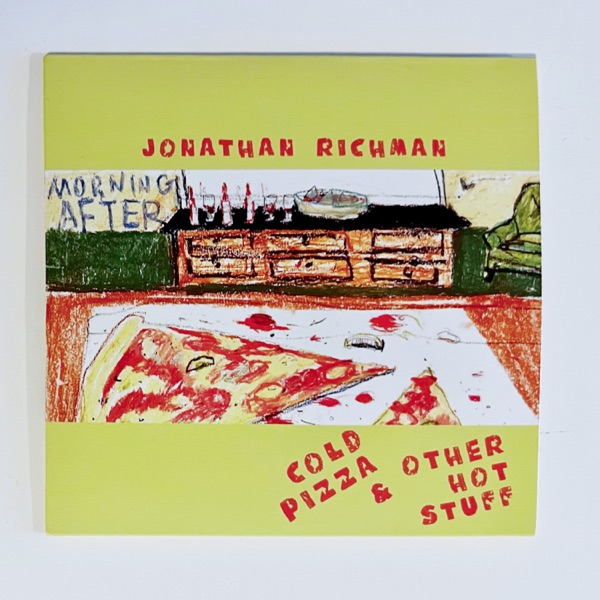

Want to Visit My Inner House?
2022 · 10 tracks
- 1 Want To Visit My Inner House? ↗ 3:15
- 2 Me And Her And The Beach ↗ 5:41
- 3 This Is One Sad World ↗ 3:41
- 4 When She Is Walking Up The Street Towards Me ↗ 2:25
- 5 This Kind Of Weather Is For Me ↗ 4:58
- 6 Distant Are The Stars ↗ 2:11
- 7 I Had To See The Harm I'd Done Before I Could Change ↗ 4:45
- 8 Shameless, Shameless ↗ 2:27
- 9 Sento, Sento ↗ 2:45
- 10 Want To Visit My Inner House? (Reprise) ↗ 4:30
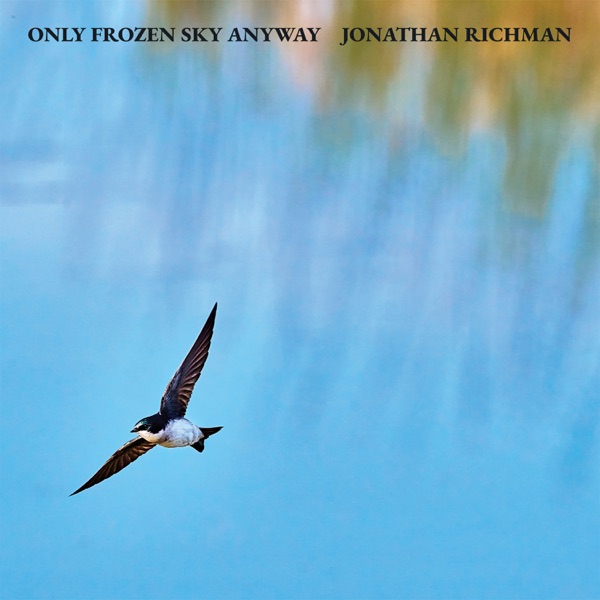
Only Frozen Sky Anyway
2025 · 12 tracks
- 1 I Was Just A Piece Of Frozen Sky Anyway ↗ 3:28
- 2 But We May Try Weird Stuff ↗ 3:37
- 3 Night Fever ↗ 3:35
- 4 You Need Me Too ↗ 2:30
- 5 The Dog Star ↗ 3:34
- 6 Se Va Pa'volver ↗ 2:42
- 7 That Older Girl ↗ 5:10
- 8 Little Black Bat ↗ 3:16
- 9 O Guitar ↗ 2:52
- 10 David & Goliath ↗ 4:45
- 11 The Wavelet ↗ 3:11
- 12 I Am The Sky ↗ 0:55
-
 Jonathan RichmanJonathan Richman198912 tracks
 -
 Jonathan Goes CountryJonathan Richman199012 tracks
 -
 Having a Party With Jonathan RichmanJonathan Richman199112 tracks
 -
 I, JonathanJonathan Richman199210 tracks
 -
 ¡Jonathan, te vas a emocionar!Jonathan Richman199415 tracks
 -
 You Must Ask the HeartJonathan Richman199513 tracks
 -
 Surrender to Jonathan!Jonathan Richman199613 tracks
 -
 I'm So ConfusedJonathan Richman199812 tracks
 -
 Her Mystery Not of High Heels and Eye ShadowJonathan Richman200114 tracks
 -
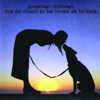 Not So Much to Be Loved as to LoveJonathan Richman200415 tracks
 -
 Because Her Beauty Is Raw and WildJonathan Richman200814 tracks
 -
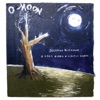 O Moon, Queen of Night on EarthJonathan Richman201014 tracks
 -
 Ishkode! Ishkode!Jonathan Richman201611 tracks
 -
 SA!Jonathan Richman201812 tracks
 -
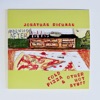 Cold Pizza & Other Hot Stuff EPJonathan Richman20226 tracks
 -
 Want to Visit My Inner House?Jonathan Richman202210 tracks
 -
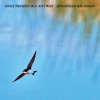 Only Frozen Sky AnywayJonathan Richman202512 tracks
Deep Dive
Overview
Jonathan Richman is an American singer-songwriter and guitarist born in 1951 who has maintained an active and prolific recording career spanning more than five decades. While he is perhaps best known for founding the Modern Lovers in 1970—a proto-punk band that influenced the emerging punk and new wave movements of the mid-1970s—Richman’s solo career, which accelerated from the mid-1970s onward, reveals an artist committed to a highly personal and eclectic vision. His work is characterized by an unaffected, childlike outlook and music that, while rooted in rock and roll, draws freely from folk traditions and musical influences from around the world.
Formation Story
Jonathan Richman emerged from the American rock underground of the late 1960s and early 1970s, a period marked by the collision of traditional rock idioms with new waves of experimentation. Born in 1951, he came of age during a time when rock music was expanding its sonic and conceptual boundaries. In 1970, at the height of the progressive rock era, Richman founded the Modern Lovers, a band that would prove to be ahead of its time. The Modern Lovers developed a stripped-down, energetic sound that prefigured punk rock’s arrival by several years, establishing Richman as a significant figure in the proto-punk movement even before punk gained mainstream visibility. This early work set the template for his later approach: direct, emotionally unguarded songwriting combined with a fundamental belief in rock and roll’s power to express immediate human feeling without elaborate production or pretense.
Breakthrough Moment
The Modern Lovers became an influential proto-punk act during the early 1970s, attracting attention from musicians and critics who recognized in the band a more visceral and urgent approach to songwriting than the prevailing prog-rock aesthetic. The band’s reputation grew through live performances and word-of-mouth in the underground rock press, establishing Richman as a singular voice in American rock. By the mid-1970s, as punk rock began to crystallize as a movement and record labels began signing punk and new wave acts, Richman’s earlier work with the Modern Lovers gained retrospective recognition as a crucial precursor to that shift. His influence extended to punk and new wave artists who emerged during the latter half of the decade, positioning him as a foundational figure in one of rock’s most significant stylistic turns.
Peak Era
From the mid-1970s onward, Richman transitioned to a sustained solo career, working either as a solo artist or with low-key acoustic and electric backing arrangements. This period, continuing through the 1980s and beyond, represented his most prolific phase as a recording artist. Rather than chase commercial success or trends, Richman developed an increasingly distinctive aesthetic that prioritized emotional directness and musical variety over genre consistency. His solo work eschewed both the bombast of arena rock and the self-consciousness of art rock, instead embracing a folk-influenced approach that incorporated elements of traditional rock and roll, world music, and experimental pop. This era solidified his reputation as an uncompromising artist willing to record across a broad range of moods and styles, from acoustic ballads to energetic electric arrangements, guided solely by his own artistic instincts.
Musical Style
Jonathan Richman’s musical approach is fundamentally rooted in rock and roll yet resists easy categorization. His vocals are often conversational and intimate, delivered with little ornamentation or stylistic affectation; this quality—sometimes described as childlike or wide-eyed—reflects his commitment to emotional authenticity over technical display. Musically, his work incorporates folk music traditions alongside proto-punk energy and rock and roll fundamentals, creating a sound that is simultaneously vintage and timeless. The instrumentation in his solo recordings tends toward acoustic guitar, simple arrangements, and a prioritization of melody and lyrical clarity. Over his decades-long solo career, Richman has demonstrated a willingness to explore diverse influences, from traditional music to world music traditions, all filtered through his distinctive sensibility. His production choices have generally favored clarity and directness over studio elaboration, reflecting his belief that the song and the emotion it conveys matter more than production technique.
Major Albums
Jonathan Richman (1989)
Richman’s 1989 self-titled solo album established the baseline for his mature solo aesthetic, combining acoustic and electric elements with his characteristically direct songwriting approach.
Jonathan Goes Country (1990)
This album found Richman engaging explicitly with country music traditions and instrumentation, demonstrating his genuine interest in exploring American musical idioms beyond rock and roll.
I, Jonathan (1992)
Released in 1992, this album consolidated Richman’s approach to solo recording, balancing folk and rock sensibilities while maintaining his unaffected vocal style and straightforward arrangements.
You Must Ask the Heart (1995)
This 1995 release exemplified Richman’s mature songwriting, with carefully crafted songs that reflected his continued commitment to emotional honesty and musical openness.
I’m So Confused (1998)
Richman’s 1998 album continued his solo trajectory, combining his folk-influenced acoustic work with electric backing, showcasing his ability to move between styles without compromising his artistic vision.
Her Mystery Not of High Heels and Eye Shadow (2001)
Released in 2001, this album featured some of Richman’s most developed songwriting, exploring emotional and romantic themes with characteristic directness and vulnerability.
Signature Songs
- “Roadrunner” — An early Modern Lovers composition that became a proto-punk anthem, featuring a driving beat and simple, powerful lyrics about urban life and movement.
- “Modern World” — A statement of artistic purpose that captured the Modern Lovers’ raw energy and Richman’s distinctive approach to rock songwriting.
- “Lovers” — A tender song that exemplified Richman’s ability to express emotional depth through minimalist arrangements and unaffected vocals.
- “Pablo Picasso” — A Modern Lovers track that showcased Richman’s witty, conversational lyrical style and his interest in high art and culture.
Influence on Rock
Jonathan Richman’s influence on rock music operates on two distinct levels. First, his work with the Modern Lovers in the early 1970s directly influenced the development of punk rock and new wave, with the band’s stripped-down approach, direct songwriting, and energetic performances providing a blueprint for artists who would emerge at the mid-1970s punk explosion. Musicians from the Ramones to Talking Heads recognized in the Modern Lovers a model for rock music that prioritized emotional and sonic directness over complexity or pretension. Second, Richman’s solo career has influenced subsequent generations of indie and alternative rock musicians who value artistic independence, idiosyncratic songwriting, and a refusal to be confined by genre boundaries. His example demonstrates that a successful rock career need not follow the conventional industry trajectory of chasing hits or commercial trends; instead, sustained artistic integrity and a genuine personal voice can sustain a recording and performing career across decades.
Legacy
Jonathan Richman remains an active recording artist well into the 2020s, with new studio releases appearing regularly, most recently in 2025. His prolific output across more than thirty years of solo recording—beginning with his 1989 self-titled album and continuing through subsequent releases—establishes him as one of rock music’s most consistent and uncompromising voices. While the Modern Lovers have received increasing historical recognition as a proto-punk touchstone, Richman’s solo work has maintained a dedicated following among listeners and musicians who appreciate his commitment to artistic authenticity and his willingness to draw from a global palette of musical traditions. His career trajectory, from influential underground figure to enduring independent artist, has provided a model for alternative approaches to sustaining a rock music career outside the mainstream commercial system. The combination of his proto-punk credentials, folk influences, and genuinely individual artistic vision ensures that Richman occupies a distinctive and important position in the history of American rock and singer-songwriter traditions.
Fun Facts
- Richman’s solo albums frequently feature titles in Spanish and multilingual references, reflecting his genuine interest in global music and his refusal to limit himself to English-language expression.
- Throughout his solo career, Richman has recorded with both Vapor Records and Beserkley Records, maintaining relationships with independent and alternative labels rather than pursuing major label deals.
- His 1990 album Jonathan Goes Country demonstrated Richman’s willingness to engage directly with American country music traditions, expanding his musical palette beyond his rock and roll roots.