
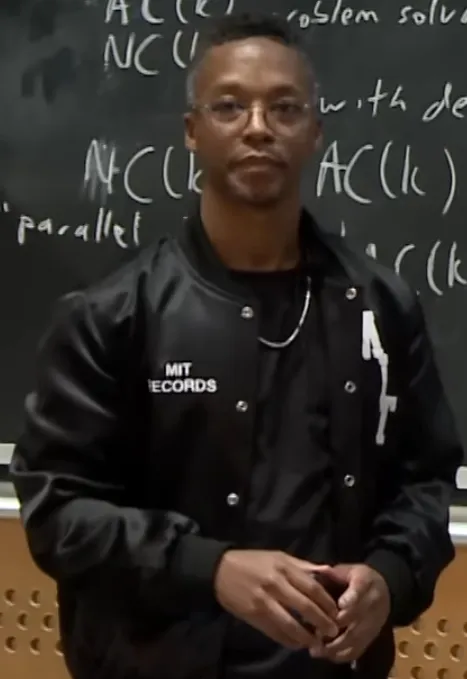
Photo by MIT Comparative Media Studies/Writing , licensed under CC BY 3.0 · Wikimedia Commons
Rank #83
Lupe Fiasco
From Wikipedia
Wasalu Muhammad Jaco, better known by his stage name Lupe Fiasco, is an American rapper, singer, record producer and music educator. Born and raised in Chicago, he gained mainstream recognition for his guest appearance on Kanye West's 2006 single "Touch the Sky," which peaked within the top 50 of the Billboard Hot 100. He also formed the rock band Japanese Cartoon in 2008, for which he serves as lead vocalist.
Discography & Previews
Browse through and click an album to open and play 30-second previews streamed from Apple Music.
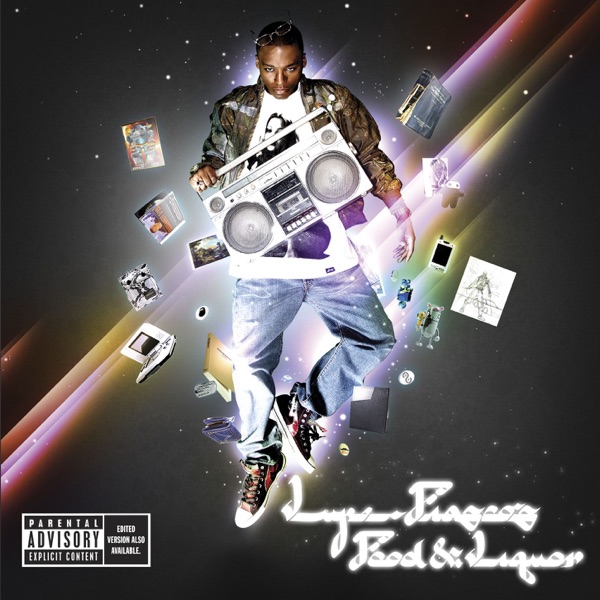
Lupe Fiasco’s Food & Liquor
2006 · 16 tracks
- 1 Intro ↗ 3:07
- 2 Real (feat. Sarah Green) ↗ 4:01
- 3 Just Might Be OK (feat. Gemini) ↗ 4:24
- 4 Kick, Push ↗ 4:14
- 5 I Gotcha ↗ 3:59
- 6 The Instrumental (feat. Jonah Matranga) ↗ 3:26
- 7 He Say She Say (feat. Gemini & Sarah Green) ↗ 4:12
- 8 Sunshine ↗ 3:56
- 9 Daydreamin' (feat. Jill Scott) ↗ 3:55
- 10 The Cool ↗ 3:47
- 11 Hurt Me Soul ↗ 4:23
- 12 Pressure (feat. JAŸ-Z) ↗ 4:47
- 13 American Terrorist (feat. Matthew Santos) ↗ 4:41
- 14 The Emperor's Soundtrack ↗ 2:57
- 15 Kick, Push II ↗ 4:12
- 16 Outro ↗ 12:13
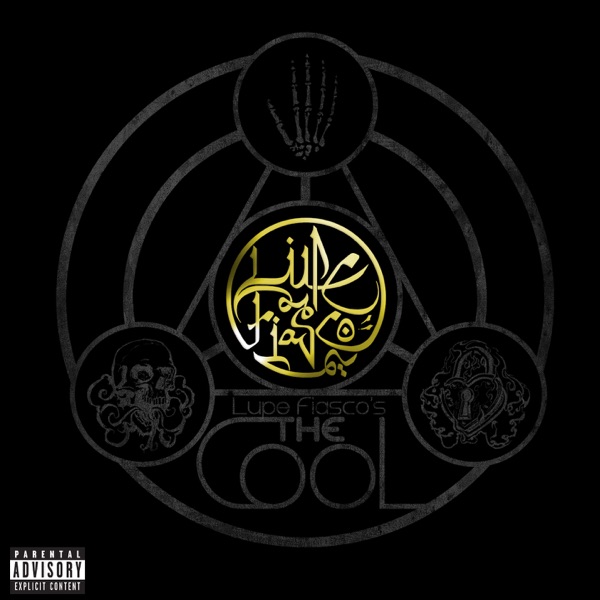
Lupe Fiasco’s The Cool
2007 · 19 tracks
- 1 Baba Says Cool for Thought ↗ 0:47
- 2 Free Chilly (feat. Sarah Green & GemStones) [Interlude] ↗ 1:02
- 3 Go Go Gadget Flow ↗ 4:10
- 4 The Coolest ↗ 5:13
- 5 Superstar (feat. Matthew Santos) ↗ 4:49
- 6 Paris, Tokyo ↗ 4:31
- 7 Hi-Definition (feat. Snoop Dogg & Pooh Bear) ↗ 3:52
- 8 Gold Watch ↗ 4:13
- 9 Hip-Hop Saved My Life (feat. Nikki Jean) ↗ 4:03
- 10 Intruder Alert (feat. Sarah Green) ↗ 4:00
- 11 Streets on Fire ↗ 4:40
- 12 Little Weapon (feat. Bishop G & Nikki Jean) ↗ 4:06
- 13 Gotta Eat ↗ 3:24
- 14 Dumb It Down (feat. GemStones & Graham Burris) ↗ 4:04
- 15 Hello/Goodbye (Uncool) [feat. Unkle] ↗ 4:27
- 16 The Die (feat. GemStones) ↗ 3:23
- 17 Put You on Game ↗ 3:03
- 18 Fighters (feat. Matthew Santos) ↗ 3:33
- 19 Go Baby (feat. GemStones) ↗ 3:37

Lasers
2011 · 12 tracks
- 1 Letting Go (feat. Sarah Green) ↗ 4:27
- 2 Words I Never Said (feat. Skylar Grey) ↗ 4:17
- 3 Till I Get There ↗ 3:24
- 4 I Don't Wanna Care Right Now (feat. MDMA) ↗ 4:16
- 5 Out of My Head (feat. Trey Songz) ↗ 3:24
- 6 The Show Goes On ↗ 4:00
- 7 Beautiful Lasers (2 Ways) [feat. MDMA] ↗ 4:02
- 8 Coming Up (feat. MDMA) ↗ 3:58
- 9 State Run Radio (feat. sELF) ↗ 3:57
- 10 Break the Chain (feat. Eric Turner & Sway) ↗ 4:22
- 11 All Black Everything ↗ 3:41
- 12 Never Forget You (feat. John Legend) ↗ 4:04
Food & Liquor II: The Great American Rap Album, Pt. 1
2012 · 16 tracks
- 1 Ayesha Says (Intro) ↗ 1:57
- 2 Strange Fruition (feat. Casey Benjamin) ↗ 3:42
- 3 ITAL (Roses) ↗ 4:25
- 4 Around My Way (Freedom Ain't Free) ↗ 4:16
- 5 Audubon Ballroom ↗ 4:40
- 6 Bitch Bad ↗ 4:49
- 7 Lamborghini Angels ↗ 3:16
- 8 Put 'Em Up ↗ 3:56
- 9 Heart Donor (feat. Poo Bear) ↗ 4:00
- 10 How Dare You? (feat. Bilal) ↗ 4:09
- 11 Battle Scars ↗ 4:10
- 12 Brave Heart (feat. Poo Bear) ↗ 3:26
- 13 Form Follows Function ↗ 4:23
- 14 Cold War (feat. Jane $$$) ↗ 6:27
- 15 Unforgivable Youth (feat. Jason Evigan) ↗ 4:56
- 16 Hood Now (Outro) ↗ 6:21
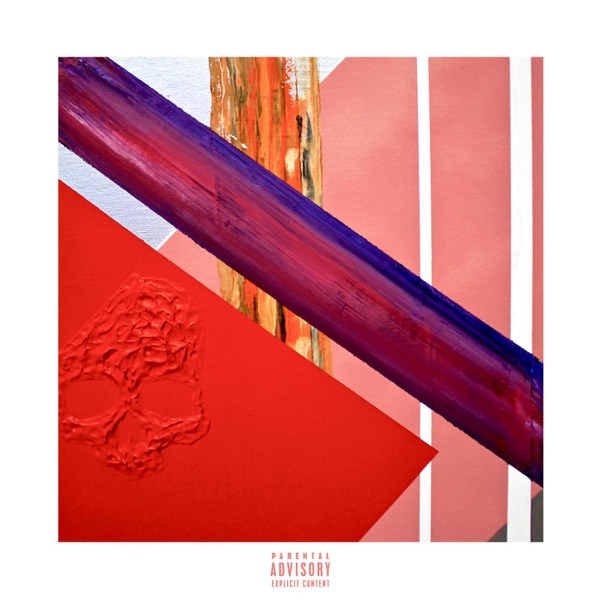
Tetsuo & Youth
2015 · 16 tracks
- 1 Summer ↗ 1:27
- 2 Mural ↗ 8:49
- 3 Blur My Hands (feat. Guy Sebastian) ↗ 5:28
- 4 Dots & Lines ↗ 6:32
- 5 Fall ↗ 1:14
- 6 Prisoner 1 & 2 (feat. Ayesha Jaco) ↗ 8:36
- 7 Body of Work (feat. Troi & Terrace Martin) ↗ 5:54
- 8 Little Death (feat. Nikki Jean) ↗ 4:29
- 9 No Scratches (feat. Nikki Jean) ↗ 4:22
- 10 Winter ↗ 1:32
- 11 Chopper (feat. Billy Blue, Buk of Psychodrama, Trouble, Trae Tha Truth, Fam Lay & Glasses Malone) ↗ 9:33
- 12 Deliver ↗ 3:53
- 13 Madonna (And Other Mothers In the Hood) [feat. Nikki Jean] ↗ 4:43
- 14 Adoration of the Magi (feat. Crystal Torres) ↗ 5:06
- 15 They.Resurrect.Over.New. (feat. Ab-Soul & Troi) ↗ 5:39
- 16 Spring ↗ 1:36

DROGAS Light
2017 · 14 tracks
- 1 Dopamine Lit (Intro) ↗ 2:49
- 2 NGL (feat. Ty Dolla $Ign) ↗ 4:03
- 3 Promise ↗ 4:32
- 4 Made in the USA (feat. Bianca Sings) ↗ 3:31
- 5 Jump (feat. Gizzle) ↗ 4:35
- 6 City of the Year (feat. Rondo) ↗ 3:52
- 7 High (Interlude) [feat. Simon Sayz] ↗ 3:59
- 8 Tranquillo (feat. Rick Ross & Big K.R.I.T.) ↗ 5:10
- 9 Kill (feat. Ty Dolla $ign & Victoria Monet) ↗ 7:10
- 10 Law (feat. Simon Sayz) ↗ 5:26
- 11 Pick Up the Phone ↗ 4:40
- 12 It's Not Design (feat. Salim) ↗ 3:50
- 13 Wild Child (feat. Jake Torrey) ↗ 3:28
- 14 More Than My Heart (feat. Rxmn & Salim) ↗ 3:56
DROGAS WAVE
2018 · 24 tracks
- 1 In the Event of Typhoon ↗ 0:19
- 2 Drogas ↗ 2:17
- 3 Manilla ↗ 5:27
- 4 Gold vs the Right Things To Do ↗ 3:43
- 5 Slave Ship (Interlude) ↗ 3:31
- 6 WAV Files ↗ 6:38
- 7 Down (feat. Nikki Jean) ↗ 6:17
- 8 Haile Selassie (feat. Nikki Jean) ↗ 4:49
- 9 Alan Forever (feat. Crystal Torres) ↗ 4:45
- 10 Helter Skelter (Interlude) ↗ 0:17
- 11 Stronger (feat. Nikki Jean) ↗ 4:05
- 12 Sun God Sam & The California Drug Deals (feat. Nikki Jean) ↗ 4:44
- 13 XO (feat. Troi Irons) ↗ 4:32
- 14 Don't Mess Up the Children (Interlude) ↗ 0:45
- 15 Jonylah Forever ↗ 3:46
- 16 Kingdom (feat. Damian Marley) ↗ 4:46
- 17 Baba Kwesi (Interlude) ↗ 0:36
- 18 Imagine (feat. Simon Sayz & Crystal Torres) ↗ 4:08
- 19 Stack That Cheese (feat. Nikki Jean) ↗ 4:13
- 20 Cripple (feat. Elena Pinderhughes) ↗ 4:51
- 21 King Nas ↗ 5:58
- 22 Quotations from Chairman Fred (feat. Nikki Jean & Bishop Edgar Jackson) ↗ 7:09
- 23 Happy Timbuck2 Day ↗ 5:48
- 24 Mural Jr. ↗ 5:13

Drill Music in Zion
2022 · 10 tracks

-
 Lupe Fiasco’s Food & LiquorLupe Fiasco200616 tracks
 -
 Lupe Fiasco’s The CoolLupe Fiasco200719 tracks
 -
 LasersLupe Fiasco201112 tracks
 -
 Food & Liquor II: The Great American Rap Album, Pt. 1Lupe Fiasco201216 tracks
 -
 Tetsuo & YouthLupe Fiasco201516 tracks
 -
 DROGAS LightLupe Fiasco201714 tracks
 -
 DROGAS WAVELupe Fiasco201824 tracks
 -
 Drill Music in ZionLupe Fiasco202210 tracks
 -
 SamuraiLupe Fiasco20248 tracks
Deep Dive
Overview
Wasalu Muhammad Jaco, known professionally as Lupe Fiasco, is a Chicago-born rapper, singer, record producer, and music educator who emerged as a distinctive voice in mainstream hip-hop during the mid-2000s. Working across alternative hip-hop, conscious rap, and rock idioms, Fiasco built a career marked by conceptual ambition and genre-blending experimentation. His guest appearance on Kanye West’s 2006 single “Touch the Sky” introduced him to a national audience and catalyzed a recording output that has spanned nearly two decades, encompassing solo albums, collaborative projects, and ventures into rock music.
Formation Story
Lupe Fiasco was born and raised in Chicago, a city with deep roots in hip-hop, soul, and blues. Growing up in the Midwest during the 1980s and 1990s, he was shaped by both the Chicago rap tradition and a broader appetite for rock, punk, and experimental music. Rather than following a linear path from bedroom producer to recording artist, Fiasco began his career with a series of self-released and collaborative mixtapes in the early 2000s, including Fahrenheit 1/15, Part 1: The Truth Is Among Us and Fahrenheit 1/15, Part 3: A Rhyming Ape (both 2005), which showcased his approach to blending wordplay, production experimentation, and genre-crossing sonics. These early projects established him within underground and independent hip-hop circles before mainstream visibility arrived.
Breakthrough Moment
Fiasco’s national breakthrough came via his featured verse on Kanye West’s “Touch the Sky,” which crested within the top 50 of the Billboard Hot 100 in 2006. That same year, he released Lupe Fiasco’s Food & Liquor, his major-label debut on Atlantic Records, positioning him as an alternative voice within mainstream rap. The album’s commercial and critical reception announced a new kind of artist in hip-hop—one versed in intricate rhyme schemes, conceptual depth, and sonic eclecticism. The late 2006 and early 2007 period cemented his place in the broader music conversation, leading to subsequent touring and media presence that would define his career trajectory.
Peak Era
Lupe Fiasco’s most creatively prolific and commercially successful period spanned the late 2000s and early 2010s. Following the success of Food & Liquor, he released Lupe Fiasco’s The Cool in 2007, which extended his reputation for ambitious songwriting and production. The years 2010–2012 saw a flurry of releases: Before There Were Lasers, Abstract Artform, and It Was Written… (all 2010), along with the major-label album Lasers (2011) and Food & Liquor II: The Great American Rap Album, Pt. 1 (2012). During this span, Fiasco also formed the rock band Japanese Cartoon in 2008, serving as lead vocalist and demonstrating his commitment to crossing genre boundaries beyond hip-hop. This period showcased Fiasco at his most experimental and productive, willing to release material across multiple independent and major outlets simultaneously.
Musical Style
Lupe Fiasco’s sound is rooted in hip-hop but refuses confinement to any single subgenre. His early work drew on conscious rap traditions—intricate lyricism, social awareness, and sample-based production—while incorporating elements of alternative rap and Midwest hip-hop sensibilities. Over time, his production choices and collaborations have expanded to embrace rock, punk, and electronic influences, reflecting his work with bands like Japanese Cartoon and his engagement with producers working across genre lines. Vocally, Fiasco employs varied delivery across his catalog, from rapid-fire, technically precise rapping to melodic singing, particularly evident in his rock-oriented projects. His songwriting frequently emphasizes conceptual coherence across entire albums, and he has demonstrated willingness to experiment with unconventional album structures and release strategies, from the fractured Fahrenheit 1/15 series to later full-length statements. Throughout his career, his approach has resisted easy categorization, treating hip-hop as one dialect within a larger musical language that includes rock, soul, and art-rock aesthetics.
Major Albums
Lupe Fiasco’s Food & Liquor (2006)
His major-label debut announced a new sensibility in mainstream rap, blending conscious lyricism with sophisticated production and establishing the template for his career’s conceptual ambition.
Lupe Fiasco’s The Cool (2007)
A concept album that deepened his reputation for narrative-driven hip-hop, demonstrating his growth as a songwriter and his facility with album-length storytelling.
Lasers (2011)
A more radio-oriented major-label statement that expanded his commercial reach while maintaining his commitment to lyricism and genre experimentation.
Tetsuo & Youth (2015)
A return to more experimental production and conscious rap sensibilities, marking a creative reinvigoration after a period of label-related struggles and hiatus.
DROGAS WAVE (2018)
An ambitious release that synthesized lessons from his earlier work, featuring intricate production and multi-layered songwriting.
Signature Songs
- “Touch the Sky” (featuring on Kanye West’s 2006 single)—The breakthrough that introduced Fiasco to mainstream audiences and remains his most commercially successful collaboration.
- “Daydreaming” (from Lupe Fiasco’s Food & Liquor, 2006)—A showcase for his melodic sensibility and intimate storytelling within the context of a major-label album.
- “The Cool” (from Lupe Fiasco’s The Cool, 2007)—The centerpiece of his concept album, displaying his narrative approach and production sophistication.
- “Enemy of the State” (2009)—A striking single demonstrating his political consciousness and sonic innovation.
Influence on Rock
While Lupe Fiasco is primarily recognized within hip-hop discourse, his influence extends into the broader alternative and rock music landscape through his consistent genre-blending approach and his formation of Japanese Cartoon. He has exemplified the late 2000s and 2010s trend of hip-hop artists moving fluidly between rap, rock, and electronic music, breaking down the generic walls that once separated these idioms. His work with rock instrumentation and his explicit identification with punk and art-rock aesthetics have positioned him as a figure who pushed against hip-hop’s genre boundaries, influencing subsequent artists who have similarly resisted generic limitation. His production choices, particularly his engagement with left-field and experimental sonic approaches, have informed the broader alternative hip-hop ecosystem.
Legacy
Lupe Fiasco remains an influential figure in alternative and conscious hip-hop, with a recorded catalog spanning nearly two decades that continues to circulate via streaming platforms and independent reissues. His willingness to release music through multiple channels—major labels, independent imprints, and self-release—established a model for artist autonomy that became increasingly common in the post-2010 music landscape. His dual identity as a rapper and rock musician, demonstrated through Japanese Cartoon and his genre-crossing album work, positioned him as a precursor to later multi-genre practitioners. Fiasco has also worked as a music educator, extending his influence beyond recording into pedagogy. His albums from the 2015–2024 period, including Tetsuo & Youth, DROGAS Light, DROGAS WAVE, Blackstar (2020), Drill Music in Zion (2022), and Samurai (2024), demonstrate his continued creative activity and his refusal to become a legacy act trading solely on past success.
Fun Facts
- Fiasco’s stage name derives from a mishearing of “La Fucaccia,” an Italian bread, demonstrating the whimsical approach to identity that has characterized his career.
- His involvement in forming Japanese Cartoon in 2008 as a rock band lead vocalist remains one of his least-documented but most significant genre crossings.
- The Fahrenheit 1/15 series, released across 2005–2006, represents an early example of an artist simultaneously releasing multiple album-length projects as a strategy for building audience and exploring different sonic territories before mainstream breakthrough.
- Fiasco has maintained creative independence and artistic control as priorities throughout his career, resulting in periods of reduced major-label output and strategic moves to independent release strategies.