

Photo by Steve Wheeler from Plymouth, England; cropped by Beyond My Ken ( talk ) 22:15, 9 April 2010 (UTC) , licensed under CC BY-SA 2.0 · Wikimedia Commons
Rank #447
Malcolm McLaren
From Wikipedia
Malcolm Robert Andrew McLaren was an English fashion designer, entrepreneur and music manager. He was a promoter and a manager for punk rock and new wave bands such as New York Dolls, Sex Pistols, Adam and the Ants, and Bow Wow Wow, and was an early influencer of the punk subculture.
Discography & Previews
Browse through and click an album to open and play 30-second previews streamed from Apple Music.


Round the Outside! Round the Outside!
1990 · 10 tracks
- 1 Operaa House ↗ 5:54
- 2 World Tribe ↗ 3:49
- 3 Diva Loves Operaa House ↗ 7:08
- 4 II Be or Not II Be ↗ 4:10
- 5 Romeo and Juliet ↗ 3:10
- 6 Wherefor Art Thou? ↗ 5:50
- 7 Buffalo Gals II (Remix) ↗ 3:44
- 8 World Famous Supreme Team Radio Show (Remix) ↗ 5:27
- 9 Un Coche de Agua Negra ↗ 4:20
- 10 Aladdin's Scratch ↗ 3:43

Paris
1994 · 23 tracks
- 1 Mon Dié Sénié ↗ 4:30
- 2 Walking with Satie ↗ 4:03
- 3 Père Lachaise ↗ 3:43
- 4 Miles and Miles of Miles Davis ↗ 2:04
- 5 Jazz is Paris ↗ 5:17
- 6 Rue Dauphine ↗ 3:26
- 7 Paris Paris ↗ 5:24
- 8 Je t'aime... Moi non plus ↗ 4:37
- 9 Club Le Narcisse ↗ 3:20
- 10 La main parisienne ↗ 5:01
- 11 Driving Into Delirium ↗ 2:33
- 12 Revenge of the Flowers ↗ 4:04
- 13 In the Absence of the Parisienne ↗ 4:27
- 14 Anthem ↗ 3:52
- 15 Who the Hell is Sonia Rykiel? ↗ 6:19
- 16 Paris un (Instrumental) ↗ 4:40
- 17 Paris deux (Instrumental) ↗ 4:02
- 18 Paris trois (Instrumental) ↗ 9:43
- 19 Paris quatre (Instrumental) ↗ 3:35
- 20 Paris cinq (Instrumental) ↗ 3:38
- 21 Paris six (Instrumental) ↗ 4:26
- 22 Paris sept ↗ 6:18
- 23 Paris Lutece Paname ↗ 5:17
Duck Rock (40th Anniversary Edition)
2023 · 12 tracks
-
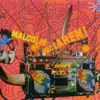 Duck RockMalcolm McLaren198312 tracks
 -
 FansMalcolm McLaren19846 tracks
 -
 Swamp ThingMalcolm McLaren19858 tracks
 -
 Round the Outside! Round the Outside!Malcolm McLaren199010 tracks
 -
 ParisMalcolm McLaren199423 tracks
 - Duck Rock (40th Anniversary Edition)Malcolm McLaren202312 tracks
Deep Dive
Overview
Malcolm McLaren was an English fashion designer, entrepreneur, and music manager whose influence on rock and pop culture extended far beyond any single genre or role. Over five decades, he shaped the Sex Pistols, managed New York Dolls, Adam and the Ants, and Bow Wow Wow—acts whose visual identity and commercial trajectory bore his unmistakable stamp. As a solo recording artist in his own right, McLaren released a series of albums across new wave and dance music styles, beginning with Duck Rock in 1983. His career represents a rare hybrid: the entrepreneur-provocateur-musician whose creative interventions in fashion, band management, and pop music itself made him a figure of singular cultural consequence, for better and worse.
McLaren’s primary significance lies in his curation and amplification of punk and new wave aesthetics. He did not invent those movements, but he packaged, politicized, and commercialized them with an eye toward fashion, scandal, and historical timing that no mere musician could have matched. His solo work, though secondary to his managerial legacy, extended those same provocative principles into the recording studio and dance floor.
Formation Story
Malcolm Robert Andrew McLaren was born in 1946 into postwar Britain. He emerged from the art and fashion worlds rather than the conventional music-industry pipeline—a background that would define his entire approach to rock and pop. He studied at Harrow Art School and immersed himself in the London fashion and design scene, establishing himself as a tailor and entrepreneur before rock music became his dominant preoccupation. By the early 1970s, McLaren had begun to perceive the intersection of fashion, youth rebellion, and music as a single unified cultural product. He opened a boutique called “Sex” on King’s Road, Chelsea, which became a hub for punks, fetishists, and art-school provocateurs. This shop was his laboratory; the clothes he designed and sold were inseparable from the punk ideology he would later amplify through band management.
His entrée into rock management came through the New York Dolls, a proto-punk band whom he briefly managed in the mid-1970s. Though that stint was brief, it established him as a figure willing to blur the line between rock music and haute couture. His real turning point came with the Sex Pistols, whom he assembled, managed, and marketed into the most explosive and controversial rock act of the mid-1970s—a band whose every utterance, performance, and sartorial gesture was filtered through McLaren’s design sensibility and contrarian vision.
Breakthrough Moment
McLaren’s breakthrough as a solo recording artist arrived in 1983 with Duck Rock, an album that announced his willingness to make records as well as manage others. The album blended new wave, hip-hop, and dance music—a mixture that reflected both the era’s increasingly fragmented pop landscape and McLaren’s own eclectic taste in sound design. Duck Rock demonstrated that McLaren could translate his conceptual and visual acumen into a finished record, even if the album was more a patchwork of collaborations and production ideas than a coherent artistic statement. The album’s dance-inflected sound and its art-school conceptualism marked it as the work of an outsider to traditional rock-music norms—which was precisely McLaren’s position.
The album’s emergence in 1983, nearly a decade after the Sex Pistols’ collapse, signaled that McLaren remained culturally active and willing to reinvent himself. While Duck Rock did not achieve mainstream commercial dominance, it announced McLaren as a recording artist in his own right and set the template for his subsequent solo work: eclectic, dance-and-rhythm-oriented, influenced by hip-hop and electronic music, and always conscious of fashion and provocation as aesthetic values.
Peak Era
McLaren’s peak era as a recording artist spanned the mid-to-late 1980s and early 1990s. Between 1983 and 1994, he released Duck Rock, Fans (1984), Swamp Thing (1985), and later Round the Outside! Round the Outside! (1990), The Largest Movie House in Paris (1994), and Paris (1994). During this period, McLaren operated at the intersection of new wave, dance, and post-punk aesthetics, working with various producers and collaborators who shared his experimental bent. The early-to-mid-1980s records reflected a fascination with club culture, hip-hop, and electronic music production—sounds that were themselves being commercialized and packaged during the MTV and emerging digital era. McLaren’s solo work during these years represented a form of cultural commentary through sound and spectacle, maintaining his long-standing preoccupation with scandal, fashion, and the collision between high art and low commerce.
By the 1990s, McLaren’s solo recording career had become more sporadic and less visible in the mainstream rock conversation, even as his historical reputation as a manager and cultural provocateur continued to grow. The three albums released in 1990 and 1994 occupied a smaller cultural footprint than his early 1980s work, but they confirmed his ongoing commitment to recording and performing as part of his multifaceted creative practice.
Musical Style
As a solo artist, McLaren drew on new wave and dance idioms, often incorporating hip-hop beats, electronic production, and art-school conceptualism. His voice was untrained and often treated as a textural element rather than a virtuosic instrument—a choice consistent with punk and new wave’s skepticism of traditional musicianship. His albums were collaborative affairs, relying heavily on producers, programmers, and session musicians to realize his often abstract sonic ideas. There was no singular “Malcolm McLaren sound” in the way one might describe a conventional rock artist’s voice and style; instead, his solo work embodied a philosophy of eclecticism, sampling, and post-modern pastiche that reflected 1980s and 1990s dance and electronic music innovation.
Genre-wise, McLaren’s recordings inhabited the spaces between new wave, club culture, hip-hop production, and pop experimentation. He was never a rock purist, and his solo records confirmed this sensibility: they were urban, rhythm-driven, and often more concerned with texture and concept than with traditional song structure or melodic memorability. His approach mirrored his managerial philosophy—to provoke, to appropriate, to remix, and to collapse boundaries between high and low culture.
Major Albums
Duck Rock (1983)
McLaren’s debut solo album announced him as a recording artist, blending new wave, hip-hop, and dance music into an eclectic first statement. The album’s aesthetic eclecticism and its engagement with emerging hip-hop and club culture signaled McLaren’s continued evolution as a taste-maker and producer of pop artifacts.
Fans (1984)
Released the year following Duck Rock, Fans continued McLaren’s exploration of new wave and electronic music, deepening his engagement with dance and production-oriented songwriting.
Swamp Thing (1985)
The third album in McLaren’s early 1980s run, Swamp Thing further refined his approach to electronic and dance-inflected production, maintaining his outsider perspective on rock and pop music.
Round the Outside! Round the Outside! (1990)
After a five-year gap, McLaren returned with this album, signaling his continued presence in the recording world even as his moment of maximum cultural visibility had passed.
The Largest Movie House in Paris (1994) and Paris (1994)
McLaren released two albums in 1994, both of which represented his continued work in the studio and his engagement with evolving electronic and urban music forms.
Signature Songs
- “Buffalo Gals” — A collaborative dance track that became McLaren’s most commercially visible solo recording, demonstrating his ear for club culture and hip-hop-influenced production.
- “Madam Butterfly” — A track that blended operatic and electronic elements, exemplifying McLaren’s fascination with high-low cultural collision.
- “Double Dutch” — A playful engagement with hip-hop and children’s game culture, reflecting McLaren’s interest in appropriation and urban vernacular.
Influence on Rock
McLaren’s influence on rock and pop culture operated primarily through his managerial and design work rather than his solo recordings, but the two were inseparable. He demonstrated that rock music could be managed and packaged as a total visual and ideological product, not merely as songs and performances. The punk subculture itself—its aesthetic, its values, its commercial presentation—bore his fingerprints. Through the Sex Pistols, he showed that rock could be genuinely transgressive and genuinely commercial at the same time; through Bow Wow Wow and Adam and the Ants, he proved that new wave and electronic music could occupy mainstream pop space without compromising their art-school origins.
As a solo artist, McLaren’s influence was more modest but still resonant within 1980s dance and electronic music communities. His willingness to blend genres, to treat rock and pop as malleable cultural forms, and to prioritize concept and spectacle over traditional musicianship aligned him with postmodern and post-punk sensibilities that would echo through subsequent decades. He modeled a form of artistic practice in which the artist-as-provocateur, the artist-as-curator, and the artist-as-businessman could coexist without contradiction.
Legacy
Malcolm McLaren died in 2010 at the age of 64, leaving behind a cultural legacy that extends far beyond his recorded output. The Sex Pistols’ induction into the Rock and Roll Hall of Fame and the ongoing critical reassessment of punk’s origins and meaning have ensured that McLaren’s role remains a subject of historical debate. His solo recordings, while less celebrated than his managerial achievements, represent an important document of 1980s and 1990s electronic, dance, and new wave music experimentation. A 40th Anniversary Edition of Duck Rock was released in 2023, suggesting renewed interest in his solo work and a recognition that his albums merit reconsideration alongside his more celebrated production and management career.
McLaren’s broader influence on fashion, celebrity management, and the fusion of art and commerce continues to resonate. He proved that rock music could be a vehicle for fashion, ideology, and provocation simultaneously—a lesson that subsequent generations of artist-entrepreneurs have absorbed and built upon. His model of the manager-as-auteur, the fashion-designer-as-pop-strategist, and the artist willing to work across multiple genres and media remains singular in rock history.
Fun Facts
- McLaren released three studio albums in the 1980s (Duck Rock, Fans, and Swamp Thing) before a five-year recording silence, demonstrating his shifting focus between management, fashion, and active recording.
- His record labels across his career included Gee Street Records, Charisma, Epic Records, and Island Records, reflecting his ability to work across major and independent label infrastructure.
- McLaren maintained an official website well into the 2000s, positioning himself as a continuing presence in digital culture even as his active recording career remained intermittent.
- He remained a controversial figure in British and international culture, with debates over his role in punk and new wave continuing long after the movements themselves had passed into historical memory.