
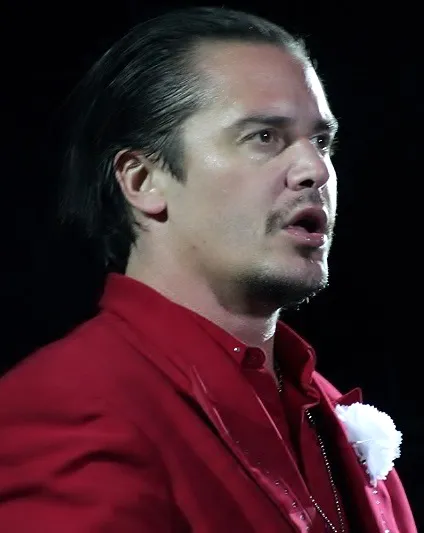
Photo by tatu43 , licensed under CC BY 2.0 · Wikimedia Commons
Rank #373
Mike Patton
From Wikipedia
Michael Allan Patton is an American singer, songwriter, producer, and voice actor, best known as the lead vocalist of the rock bands Faith No More and Mr. Bungle. He has also fronted and/or played with Tomahawk, The Dillinger Escape Plan, Fantômas, Moonchild Trio, Kaada/Patton, Dead Cross, Lovage, Mondo Cane, the X-ecutioners, The Avett Brothers, and Peeping Tom. Consistent collaborators through his varied career include avant-garde jazz saxophonist John Zorn, hip hop producer Dan the Automator and classical violinist Eyvind Kang. Patton saw his largest commercial success with Faith No More; although they scored only one US hit, they scored three UK top 20 singles.
Discography & Previews
Browse through and click an album to open and play 30-second previews streamed from Apple Music.

Adult Themes for Voice
1996 · 34 tracks
- 1 Wuxiapian ↗ 2:10
- 2 "I Killed Him Like a Dog... and He Still Laughed" ↗ 0:55
- 3 Smog ↗ 0:44
- 4 The Man in the Lower Left Hand Corner of the Photograph ↗ 1:50
- 5 Robot Sex (Neon) ↗ 0:26
- 6 Screams of the Asteroid ↗ 0:56
- 7 Robot Sex (B/W) ↗ 0:17
- 8 Porno Holocaust ↗ 1:02
- 9 Inconsolable Widows In Search of Distraction ↗ 3:10
- 10 "Hurry Up and Kill Me... I'm Cold" ↗ 0:08
- 11 Man Alone in a Steambath ↗ 1:07
- 12 Guinea Pig 1 ↗ 0:34
- 13 Guinea Pig 2 ↗ 1:28
- 14 Guinea Pig 3 ↗ 0:18
- 15 Guinea Pig 4 ↗ 1:44
- 16 A Woman with the Skin of the Moon ↗ 0:40
- 17 A Lizard with the Skin of Woman ↗ 1:43
- 18 Catheter ↗ 1:19
- 19 "Fix It So the Bruises Don't Show" ↗ 1:22
- 20 Robot Sex (Watercolors) ↗ 0:25
- 21 Ceremony of Senses, An Alibi in the Red Light District ↗ 0:42
- 22 Butterfly in a Glass Maze ↗ 2:20
- 23 Robot Sex (Florescent) ↗ 0:57
- 24 A Leper with the Face of a Baby Girl ↗ 2:40
- 25 The One Armed vs. 9 Killers ↗ 1:20
- 26 Pillow Biter ↗ 2:48
- 27 Raped on a Bed of Sand ↗ 1:51
- 28 Violence5 ↗ 2:18
- 29 Red Mouth, Black Orgasm ↗ 0:28
- 30 Wuxiapian Fantastique ↗ 0:17
- 31 Smile, a Slap in the Face, a Fart, a Kiss on the Mouth ↗ 0:28
- 32 Private Lessons on Planet Eros ↗ 0:37
- 33 "Pneumonia with Complications" ↗ 0:18
- 34 Orgy in Reverb (10 Kilometers of Lust) ↗ 4:54

Pranzo oltranzista
1997 · 11 tracks
- 1 Elettricita Atmospheriche Candite ↗ 1:20
- 2 Carne Cruda Squarciata Dal Suono Di Sassofono ↗ 2:34
- 3 Vivanda In Scodella ↗ 3:16
- 4 Guerra In Letto ↗ 1:52
- 5 Contorno Talttile (Per Russolo) ↗ 2:04
- 6 I Rumori Nutrienti ↗ 4:27
- 7 Garofani Allo Spiedo ↗ 2:58
- 8 Aerovivanda ↗ 2:34
- 9 Scoppioningola ↗ 3:01
- 10 Latte Alla Luce Verde ↗ 3:26
- 11 Bombe a Mano ↗ 4:01

General Patton vs. The X‐Ecutioners
2005 · 23 tracks
- 1 X-Men Doctrine and Decloration ↗ 1:31
- 2 General P. Counterintellegence ↗ 0:41
- 3 Get Up Punk! 0200 Hours ↗ 3:39
- 4 Roc / Raida: Riot Control Agent / Combat Stress Control ↗ 2:06
- 5 Improvised Explosive Device 0300 Hours ↗ 0:37
- 6 Vaqueros Y Indios! ↗ 1:52
- 7 Precision Guided Needle-Dropping Nad Larynx Munitions (Pgndlm) ↗ 1:55
- 8 Duelling Banjo Marching Drill ↗ 1:55
- 9 Battle Hymn of the Technics Republic ↗ 1:12
- 10 Fire in the Hole! 0400 Hours (Joint Special Task Force Operations Task Force) ↗ 2:14
- 11 Covulsive Antidote for Nerve Agent Autoinjector (Canna) ↗ 0:44
- 12 Modified Combined Obstacle Overlay (MC00) …or... How I Stop Worrying and Love the Turntables ↗ 2:42
- 13 Surprise Swing Insurgency / Tabla and Tongue Twist Counterattack / Dragon Seeks Path ↗ 3:41
- 14 Kamikaze! 0500 Hours (Take a Piece of Me) ↗ 2:17
- 15 We'll Paint This Town -- Throat and Phonograph Fire Support Coordination Measures (Tpfscm) ↗ 1:41
- 16 Imitative Electromagnetic Deception (Ied) / Digital Nonsecure Voice Terminal (Dnvt) ↗ 0:22
- 17 A.W.O.L. Block Party Brawl 0600 Hrs. ↗ 1:50
- 18 Eastside Multichannel Tactical Scratch Communications (Emtsc) ↗ 1:42
- 19 Pimps Up, Aces High! 0700 Hrs. (Westside Swashbuckling Parade) ↗ 1:29
- 20 Warcry / Infrared R'n'b Hallucination / Jungle Operations Exfiltration System ↗ 3:03
- 21 Loser on Line (Hate the Player, Hate the Game) ↗ 3:34
- 22 Low Altitude Vocal Parachute Extraction System (Lavpes) ↗ 1:04
- 23 Battle Damage Assessment and Repair / White Flag Surrender / Wake Me Up in Heaven ↗ 4:53

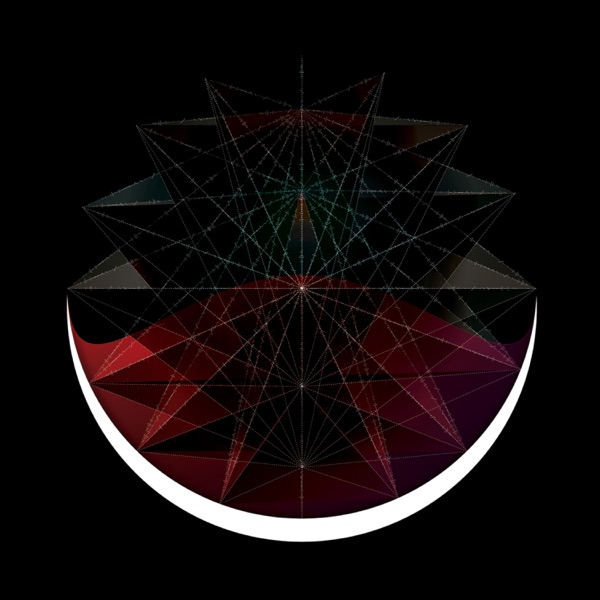
Laborintus II
2012 · 3 tracks
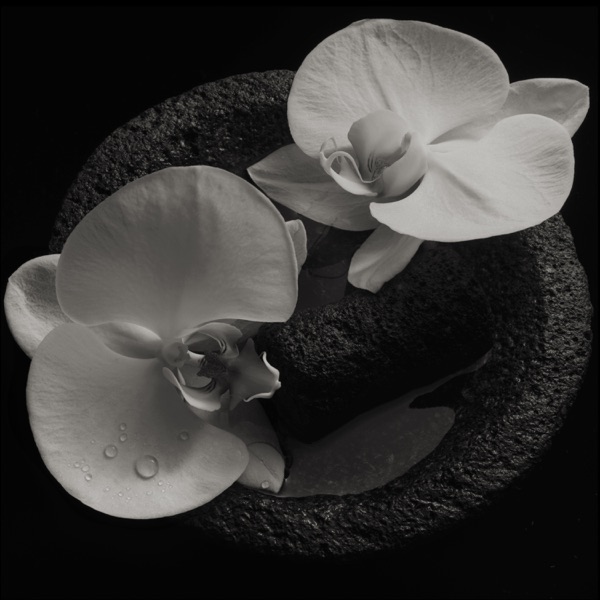
Corpse Flower
2019 · 12 tracks
-
 Adult Themes for VoiceMike Patton199634 tracks
 -
 Pranzo oltranzistaMike Patton199711 tracks
 -
 General Patton vs. The X‐EcutionersMike Patton200523 tracks
 -
 Mondo caneMike Patton201011 tracks
 -
 Laborintus IIMike Patton20123 tracks
 -
 Corpse FlowerMike Patton201912 tracks
Deep Dive
Overview
Mike Patton stands as one of rock’s most technically accomplished and stylistically restless vocalists. Born in 1968, he rose to prominence as the lead singer of Faith No More, a band that merged funk, metal, and avant-garde impulses into a sound that defied easy categorization. Beyond his work with that group, Patton has maintained a prolific parallel career spanning multiple ensembles and collaborative projects—Mr. Bungle, Fantômas, Tomahawk, Dead Cross, and numerous others—each exploring different registers of experimental, jazz-inflected, and avant-garde rock. His voice itself is his primary instrument: a four-octave span capable of everything from operatic soaring to guttural growls to deadpan spoken-word delivery. Few artists in rock have cultivated such deliberate artistic restlessness or resisted the gravitational pull of commercial formula so consistently.
Formation Story
Mike Patton grew up in Northern California during the 1970s and 1980s, coming of age in a region already known for its underground and experimental music scenes. He was drawn to rock music early but refused the genre’s traditional boundaries. His musical foundation was eclectic: influenced by the angular post-punk and new wave of the late 1970s, the technical complexity of progressive rock, and the raw energy of metal. He trained his voice extensively, developing the flexibility and control that would become his signature. Patton’s entry into rock prominence came through Faith No More, where he replaced the band’s original vocalist and brought a new dimension to their existing funk-metal template. This partnership, beginning in the late 1980s, would define much of his public identity while simultaneously launching the parallel projects that would occupy his creative life.
Breakthrough Moment
Faith No More’s commercial breakthrough came with their 1989 album “The Real Thing,” but it was their 1992 follow-up “Angel Dust” that positioned Patton as a major voice in alternative metal. The album showcased his range in service of increasingly experimental compositions, moving away from the funk-metal accessibility of their earlier work toward something far stranger and more uncompromising. Although Faith No More never achieved massive American chart success, their influence rippled through alternative rock and metal circles. The band scored three UK top 20 singles, establishing a foothold in European markets that reflected their artistry over mere commercial viability. Simultaneously, Patton founded Mr. Bungle in 1985, which released their eponymous debut in 1991 to cult acclaim, establishing him as a figure willing to pursue multiple simultaneous visions.
Peak Era
Patton’s creative peak stretched across the 1990s and into the 2000s, a period during which he juggled Faith No More’s touring and recording demands with an expanding constellation of side projects. By the late 1990s, he had established creative partnerships with key collaborators: avant-garde saxophonist John Zorn, hip-hop producer Dan the Automator, and classically trained violinist Eyvind Kang. These relationships would define much of his output across multiple ensembles. His solo work began in earnest in 1996 with “Adult Themes for Voice,” followed by “Pranzo oltranzista” in 1997, establishing him as a serious artist in his own right beyond any single band identity. Throughout this period, Patton released music on multiple labels—Warner Bros. Records (through Faith No More), Tzadik Records (John Zorn’s label, for avant-garde work), and Ipecac Recordings—each imprint representing a different facet of his artistic personality.
Musical Style
Patton’s voice is the organizing principle of his work across all his projects. He possesses a four-octave range that allows him to navigate from operatic tenor passages to bass-range growls within a single performance. His phrasing is theatrical without being precious; he treats each note as a compositional choice rather than a vehicle for standard rock-vocal mannerisms. In Faith No More and Mr. Bungle, he deployed this range across funk-metal and avant-garde metal contexts, creating vocal lines that competed with the instrumental writing rather than sitting submissively atop it. His approach to rhythm is percussive and conversational; he frequently employs staccato articulation, rhythmic fragmentation, and spoken-word passages. Across his collaborations with Zorn, he explored free jazz frameworks and extended vocal techniques. With Dan the Automator, he worked in hip-hop and electronic contexts, proving his adaptability outside rock entirely. His solo records, particularly “Mondo cane” (2010) and “Laborintus II” (2012), drew on classical vocal traditions and found-sound aesthetics. Patton’s signature approach is refusal: refusal of genre boundaries, refusal of vocal cliché, refusal of easy repetition.
Major Albums
Faith No More—“Angel Dust” (1992)
The album that proved Faith No More’s ambitions extended far beyond funk-metal accessibility, showcasing Patton’s dramatic vocal range across some of the band’s strangest and most memorable compositions.
Mr. Bungle—Self-titled (1991)
A panoramic instrumental and vocal showcase that established Patton and his primary collaborative partner Trey Spruance as artists willing to deconstruct rock conventions at will.
Adult Themes for Voice (1996)
Patton’s first formal solo venture, demonstrating that his artistic vision extended well beyond band contexts and into experimental and avant-garde territories.
Mondo cane (2010)
A solo record marked by lush orchestration, Italian film soundtrack aesthetics, and Patton’s use of his voice as pure instrument rather than narrative vehicle.
Corpse Flower (2019)
Patton’s most recent solo work, continuing his exploration of experimental production and unconventional vocal textures in contemporary contexts.
Signature Songs
- “Epic” (Faith No More, 1989) — The band’s signature funk-metal anthem, featuring one of Patton’s most recognizable vocal performances and an iconic music video.
- “Digging the Grave” (Faith No More, 1997) — A showcase of Patton’s ability to deliver narrative-driven vocals across complex, shifting instrumental arrangements.
- “Kashmir” (Faith No More cover of Led Zeppelin) — His reinterpretation demonstrates his approach to established rock canon through experimental recontextualization.
- “Goodbye” (Mr. Bungle) — An avant-garde deconstruction featuring Patton’s voice as compositional element alongside Spruance’s fractured guitar work.
Influence on Rock
Patton’s career has exerted influence primarily through demonstration: by existing as a major-label rock artist (Faith No More) while simultaneously pursuing uncompromising experimental work, he demonstrated that these paths need not be mutually exclusive. He proved that virtuosity and accessibility were not locked in zero-sum competition. His work with John Zorn established pathways for rock musicians to engage seriously with jazz and avant-garde music without condescension or kitsch. The sheer range of his collaborations—spanning metal, jazz, hip-hop, and classical contexts—normalized the idea of rock artists working fluidly across genres. Subsequent experimental metal and alternative rock acts have drawn inspiration from his model of committed artistic eclecticism. His approach to vocal technique has influenced metal and experimental vocalists seeking alternatives to standard genre conventions.
Legacy
Mike Patton remains active in the 2020s, continuing to release new solo work and maintain his various ensemble projects. His career spans more than three decades without significant compromise to his artistic vision, a rarity in rock music. Faith No More’s continued touring and occasional new recordings have maintained his profile in mainstream rock circles, while his experimental work ensures his presence in avant-garde and jazz communities. Streaming platforms have allowed his vast discography—spanning dozens of albums across multiple projects and labels—to reach audiences who might previously have needed specialized knowledge to navigate his output. His influence is felt most directly in contemporary experimental metal and art-rock contexts, where artists citing his work draw both technical inspiration and permission to refuse genre boundaries. Patton’s refusal of a singular artistic identity, once potentially commercially limiting, has come to seem prophetic in an era when artists across genres maintain multiple simultaneous projects.
Fun Facts
- Patton has worked as a voice actor and vocal performer for film and television, extending his virtuosic range into narrative and character contexts beyond conventional rock formats.
- His collaborations span some of rock and experimental music’s most distinctive figures: John Zorn’s Tzadik label became a primary outlet for his avant-garde work, while partnerships with Dan the Automator placed him in hip-hop production contexts.
- Mr. Bungle’s instrumental complexity and genre-hopping approach predated the band’s commercial visibility by years, establishing Patton and Spruance as architects of experimental approaches that metal and progressive rock acts would later adopt.
- Patton’s record label relationships—from Warner Bros. with Faith No More to Ipecac Recordings to Tzadik—reflect the compartmentalization of his career, with different imprints representing different artistic territories rather than a unified discography.