
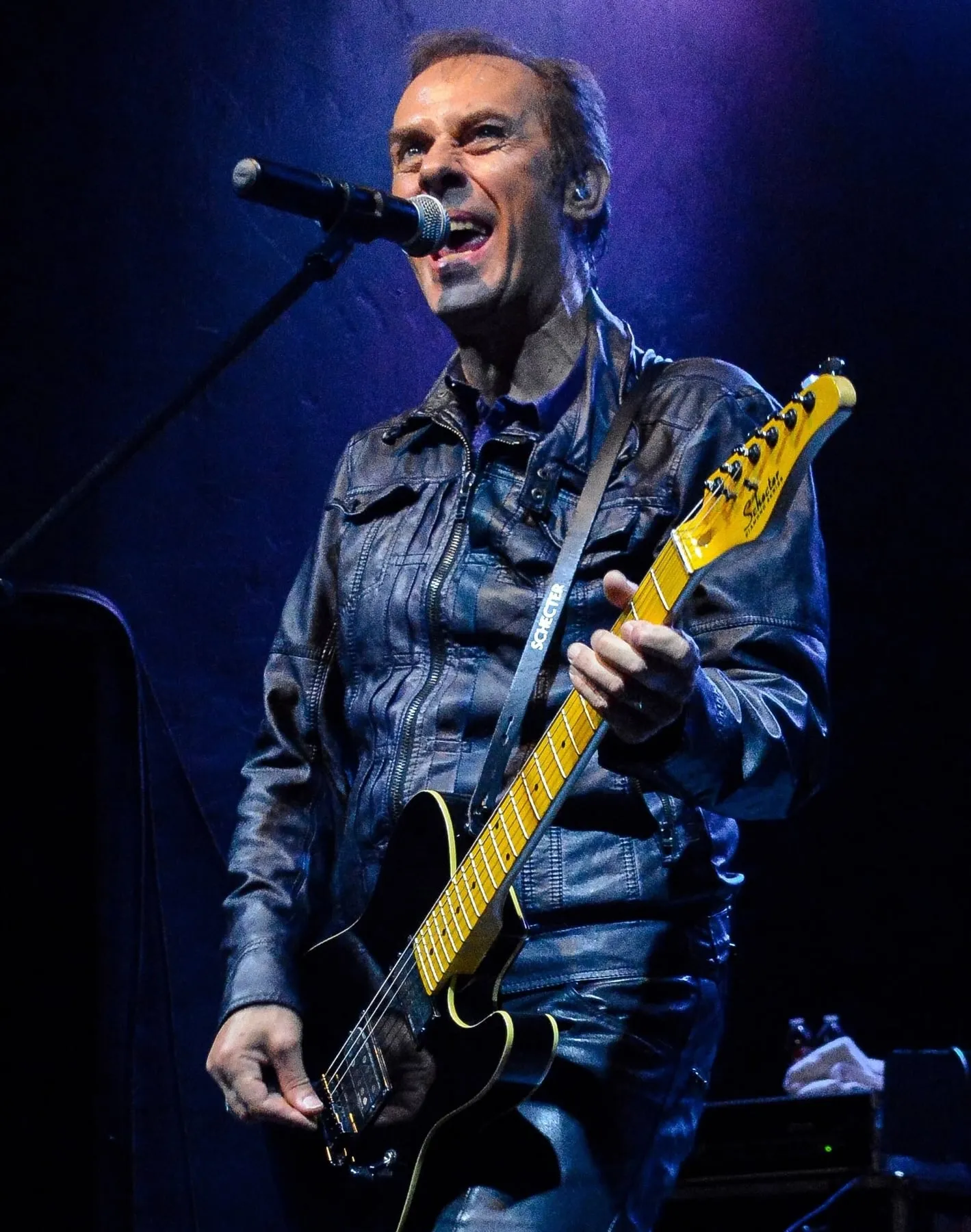
Photo by saul torres , licensed under CC BY-SA 2.0 · Wikimedia Commons
Rank #391
Peter Murphy
From Wikipedia
Peter John Joseph Murphy is an English singer and songwriter. He is the vocalist for the post-punk band Bauhaus, which he co-founded with Daniel Ash in 1978. After Bauhaus disbanded, Murphy formed Dalis Car with Japan's bassist Mick Karn and released one album, The Waking Hour (1984). He went on to release a number of solo albums, including Should the World Fail to Fall Apart (1986) and Love Hysteria (1988).
Discography & Previews
Browse through and click an album to open and play 30-second previews streamed from Apple Music.

Should the World Fail to Fall Apart
1986 · 10 tracks

Love Hysteria
1988 · 11 tracks
- 1 All Night Long ↗ 5:45
- 2 His Circle and Hers Meet ↗ 6:01
- 3 Dragnet Drag ↗ 5:49
- 4 Socrates the Python ↗ 6:42
- 5 Indigo Eyes ↗ 5:55
- 6 Time Has Got Nothing to Do with It ↗ 5:20
- 7 Blind Sublime ↗ 3:56
- 8 My Last Two Weeks ↗ 6:38
- 9 Fun Time ↗ 3:48
- 10 I've Got a Miniature Secret Camera ↗ 4:25
- 11 Fun Time (In Cabaret) ↗ 5:59

Deep
1989 · 10 tracks
- 1 Deep Ocean Vast Sea ↗ 4:10
- 2 Shy ↗ 4:36
- 3 Crystal Wrists ↗ 4:09
- 4 Marlene Dietrich’s Favourite Poem ↗ 5:21
- 5 Seven Veils ↗ 5:59
- 6 The Line Between the Devils Teeth (And That Which Cannot Be Repeat) ↗ 5:37
- 7 Cuts You Up ↗ 5:27
- 8 A Strange Kind of Love (Version 1) ↗ 3:48
- 9 Roll Call ↗ 6:35
- 10 Roll Call (Reprise) ↗ 8:19

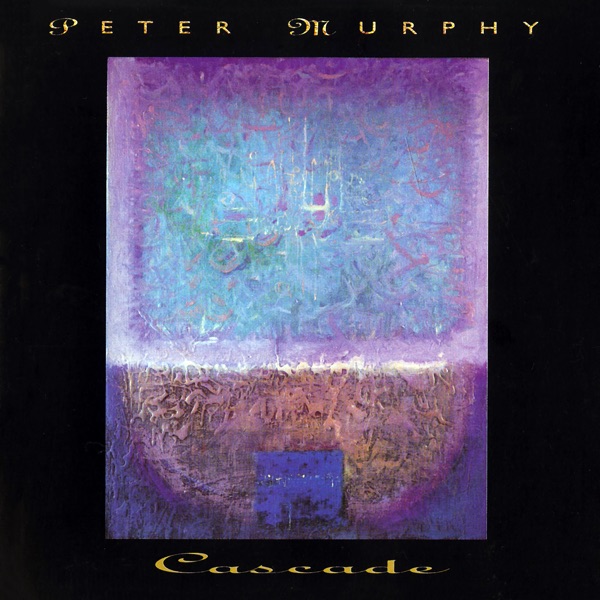
Cascade
1995 · 11 tracks

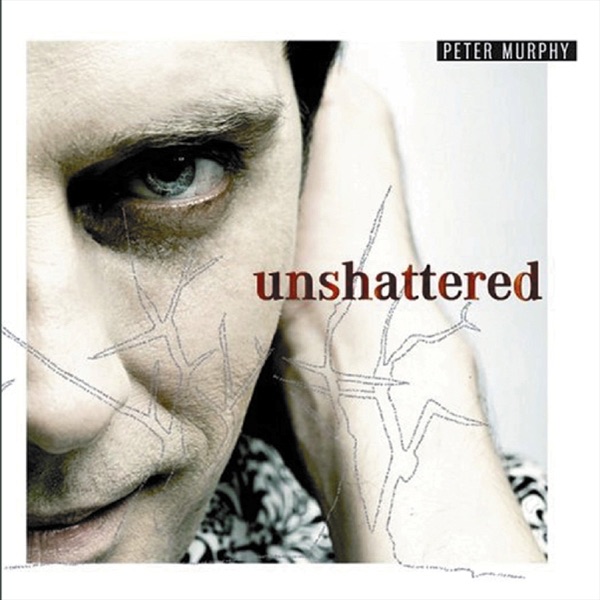
Unshattered
2004 · 11 tracks


Silver Shade
2025 · 12 tracks
-
 Should the World Fail to Fall ApartPeter Murphy198610 tracks
 -
 Love HysteriaPeter Murphy198811 tracks
 -
 DeepPeter Murphy198910 tracks
 -
 Holy SmokePeter Murphy199210 tracks
 -
 CascadePeter Murphy199511 tracks
 -
 DustPeter Murphy20029 tracks
 -
 UnshatteredPeter Murphy200411 tracks
 -
 NinthPeter Murphy201111 tracks
 -
 LionPeter Murphy201411 tracks
 -
 Silver ShadePeter Murphy202512 tracks
Deep Dive
Overview
Peter Murphy is an English post-punk vocalist whose career spans nearly five decades, anchored by his role as the founding voice of Bauhaus and an extensive solo discography that began in 1986. Born in 1957, Murphy emerged from the late-1970s post-punk movement as one of the genre’s most distinctive and theatrical performers, known for his commanding baritone and often-ethereal stage presence. His work—both as Bauhaus’s frontman and as a solo artist—helped define the aesthetic and sound of post-punk and gothic rock, establishing a template for vocalists who prioritized mood, restraint, and emotional intensity over technical showmanship.
Formation Story
Murphy’s entry into rock music came through the post-punk scene that crystallized in Britain in the mid-to-late 1970s. He co-founded Bauhaus in 1978 alongside guitarist Daniel Ash, becoming the band’s lyricist and vocalist. The formation of Bauhaus marked a turning point: the group would become one of the defining bands of post-punk and gothic rock, establishing Murphy’s reputation as a vocalist capable of conveying darkness, despair, and theatrical grandeur within spare, economical arrangements. His work with Bauhaus set the foundation for everything that followed in his solo career, establishing the thematic and sonic vocabulary he would continue to explore as an independent artist.
Breakthrough Moment
Murphy’s initial breakthrough came through Bauhaus’s releases and live performances in the early 1980s, which built a dedicated cult following and positioned him as a central figure in post-punk. After Bauhaus disbanded, he formed Dalis Car in collaboration with Mick Karn, the bassist from Japanese band Japan, releasing the album The Waking Hour in 1984. This side project demonstrated Murphy’s willingness to explore new collaborative partnerships and sonic territories. His formal solo career launched in 1986 with Should the World Fail to Fall Apart, establishing him as a solo recording artist with a distinct artistic vision independent of Bauhaus, though deeply rooted in the post-punk language they had helped pioneer.
Peak Era
Murphy’s most creatively fertile period as a solo artist spanned the late 1980s through the mid-1990s. The albums Love Hysteria (1988), Deep (1989), Holy Smoke (1992), and Cascade (1995) represent a sustained period of artistic output during which Murphy refined his post-punk sensibilities while experimenting with production approaches, orchestration, and lyrical themes. These albums established him as more than a one-project artist, proving his ability to sustain a solo career with substantive material. His work during this era was characterized by atmospheric production, introspective songwriting, and the continued use of his baritone voice as a primary compositional and emotional instrument.
Musical Style
Murphy’s vocal approach is his most distinctive asset: a deep, resonant baritone capable of both whispered intimacy and operatic grandeur, deployed with theatrical restraint. His solo material embraces post-punk’s foundational elements—sparse arrangements, emphasis on mood over technical display, art-school sensibility—while incorporating elements of art rock, electronic production, and atmospheric textures. Throughout his discography, Murphy’s songwriting privileges emotional atmosphere and lyrical introspection over conventional song structures. His style evolved across his solo albums, moving from the relatively austere post-punk framework of his earliest releases toward increasingly layered production and orchestral elements, yet always maintaining the gothic sensibility and dramatic vocal delivery that defined his approach. The influence of his Bauhaus work remains evident throughout: a commitment to darkness, theatricality, and emotional authenticity over commercial accessibility.
Major Albums
Should the World Fail to Fall Apart (1986)
Murphy’s solo debut established his voice and vision as an independent artist, introducing the thematic preoccupations and post-punk aesthetic that would define his subsequent work.
Love Hysteria (1988)
This album deepened Murphy’s exploration of emotional intensity and atmospheric production, solidifying his position as a solo artist capable of sustaining substantial, cohesive bodies of work.
Deep (1989)
Released a year after Love Hysteria, Deep continued Murphy’s investigation of post-punk frameworks while expanding his sonic palette.
Holy Smoke (1992)
This mid-career album demonstrated Murphy’s continued evolution, balancing the atmospheric and theatrical elements that defined his earlier work with more developed production approaches.
Cascade (1995)
Murphy’s fifth solo album showcased a mature artist at the height of his powers, synthesizing his post-punk roots with a decade of solo career development.
Signature Songs
- “Cuts You Up” — A standout moment from his solo career, demonstrating Murphy’s ability to blend accessibility with artistic integrity.
- “In the Night” — Exemplifies Murphy’s gift for crafting atmospherically dense compositions built around his distinctive vocal delivery.
- “Bauhaus” (as Bauhaus) — The signature composition that first introduced Murphy’s artistic vision to a wider audience.
Influence on Rock
Murphy’s influence extends across post-punk, gothic rock, and alternative music more broadly. As Bauhaus’s frontman, he helped establish the visual and sonic grammar of gothic rock—a template that countless artists have since adopted. His solo career, while less widely acknowledged than his Bauhaus work, demonstrated that post-punk could sustain serious artistic development outside of the original movement’s most celebrated projects. His vocal approach—the emphasis on emotional delivery, restraint, and theatricality—became a touchstone for singers across alternative rock, influencing vocalists who prioritized atmosphere and mood over technical display. Murphy’s work, both solo and with Bauhaus, helped establish post-punk as a serious artistic framework rather than a time-bound movement, proving its durability and depth.
Legacy
Peter Murphy remains an influential figure in post-punk and gothic rock, with both his Bauhaus work and his extensive solo catalog continuing to reach audiences through streaming platforms and reissues. His approach to composition and vocal performance established a template that has proven remarkably durable, influencing generations of artists working in alternative and post-punk idioms. The sustained output evident in his discography—from Should the World Fail to Fall Apart in 1986 through recent live recordings released in 2025—demonstrates a career-long commitment to artistic expression. His work, both as a band member and as a solo artist, remains foundational to any understanding of post-punk’s evolution and cultural significance. Bauhaus’s continued reputation, bolstered by Murphy’s ongoing presence and occasional reunion performances, ensures that his foundational contributions to rock music remain visible and accessible to new listeners.
Fun Facts
- Murphy’s collaboration with Mick Karn on Dalis Car marked an early instance of cross-cultural post-punk exchange, bringing together artists from British and Japanese music scenes at a pivotal moment in both countries’ alternative music development.
- His solo albums have been released across multiple independent and major label imprints, including Beggars Banquet Records and Nettwerk, reflecting his sustained relationship with the alternative and independent music establishment across nearly four decades.
- Murphy’s career demonstrates the viability of post-punk as a long-term artistic framework; his albums from 1986 through 2025 represent one of rock music’s most sustained explorations of the genre’s thematic and sonic possibilities.