
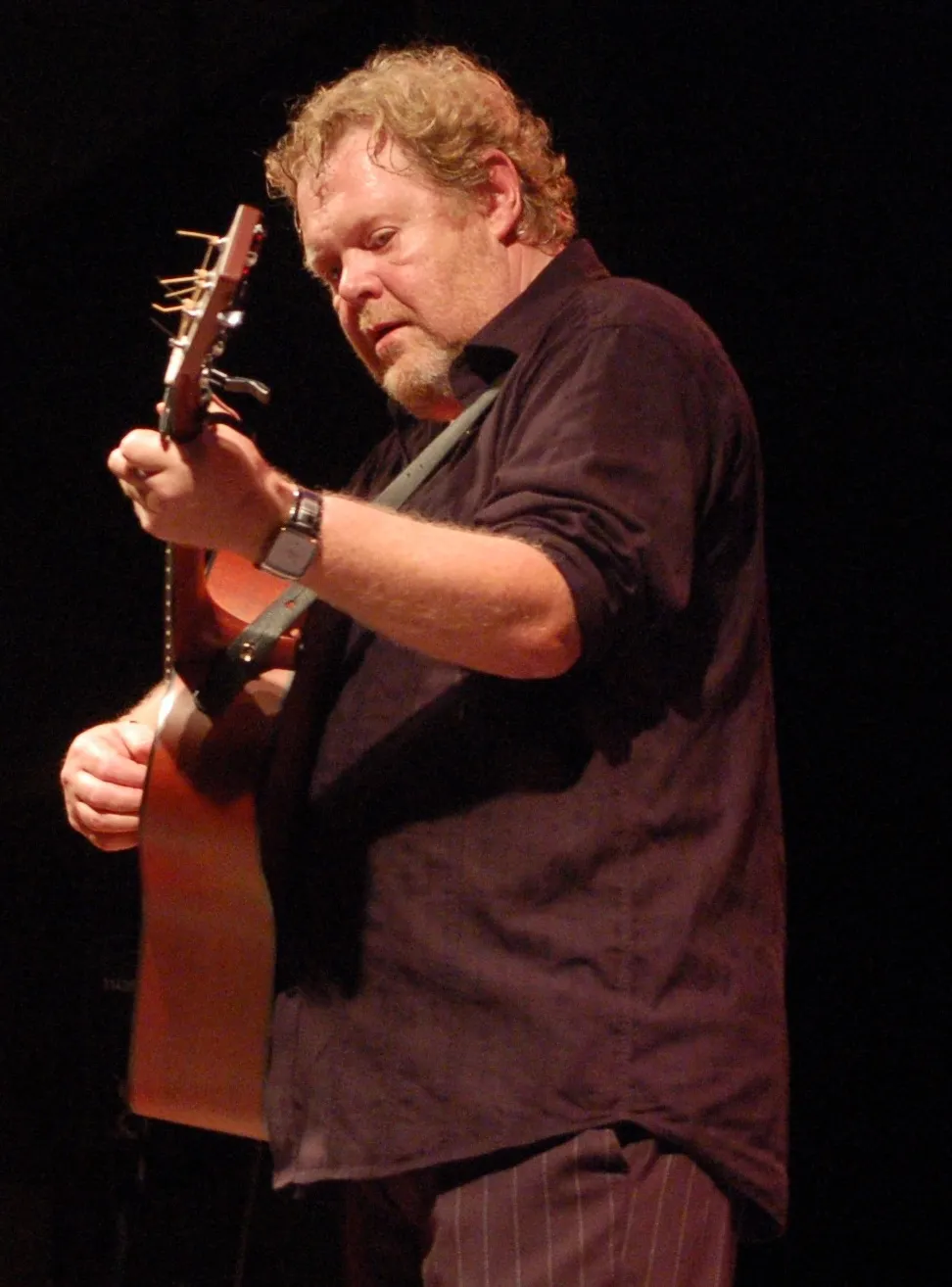
Photo by Arne List , licensed under CC BY-SA 3.0 · Wikimedia Commons
Rank #443
Sebastian
From Wikipedia
Knud Grabow Christensen, better known by his stage name Sebastian, is a Danish singer, guitarist and songwriter.
Deep Dive
Overview
Sebastian, born Knud Grabow Christensen, is a Danish singer, guitarist, and songwriter whose career spans from the 1950s into the twenty-first century. Operating largely within the Scandinavian music landscape, Sebastian established himself as a rock musician and composer whose work reflected the folk and popular-song traditions of Denmark alongside contemporary rock idioms. His prolific recording output—more than two dozen studio albums—documents a career of sustained artistic engagement across multiple decades.
Formation Story
Knud Grabow Christensen emerged as a musician in Denmark during the formative years of European rock music. Adopting the stage name Sebastian, he built a career as a singer and guitarist rooted in the Danish cultural context. Beginning in the early 1950s as a performer, Sebastian developed his craft as both an interpreter and composer, working within the framework of Scandinavian rock and popular music. His choice to foreground himself as a solo artist rather than within a band structure allowed him to maintain creative autonomy across his extended career.
Breakthrough Moment
Sebastian’s recorded career began in earnest with the release of Den store flugt in 1972, marking his entry into the studio album format at an age when many artists were already in decline. The early 1970s proved to be a productive period, with Over havet, under himlen (1973) and Blød lykke (1974) following in quick succession. These early recordings established the foundation for a body of work that would continue to grow throughout the 1970s and beyond, demonstrating that his artistic momentum was not bound by the youth-driven cycles that governed much of rock music.
Peak Era
The late 1970s and early 1980s represented Sebastian’s most creatively fertile period. Between 1975 and 1984, he released nine studio albums, including Gøgleren, Anton og de andre (1975), Ulvehøjen (1977), and the double release of Tiderne skifter and Cirkus Fantastica in 1979. This sustained output reflected an artist working at full capacity, exploring varied thematic and musical territories with each new release. Stjerne til støv (1981) and Tusind og en nat (1984) rounded out a decade of remarkable productivity, positioning Sebastian as a consistent and significant voice in Danish rock and popular music.
Musical Style
Sebastian’s sound drew from rock fundamentals while remaining open to the narrative and folkloric elements embedded in Danish cultural tradition. As a guitarist and vocalist, he worked across arrangements that could accommodate both intimate, song-focused material and fuller rock instrumentation. His songwriting emphasized storytelling and thematic coherence, evident in album titles such as Gøgleren, Anton og de andre (The Juggler, Anton and the Others) and Cirkus Fantastica, which suggested narrative or character-driven approaches to composition. Over his long career, his style evolved in response to changing musical fashions while maintaining a core commitment to guitar-driven rock and songwriter craft.
Major Albums
Den store flugt (1972)
Sebastian’s debut studio album, marking the beginning of his recorded legacy at a maturity that set him apart from typical rock-music career trajectories.
Tiderne skifter (1979)
Released in a year of exceptional productivity, this album exemplified Sebastian’s ability to command studio time and deliver thematically coherent work.
Cirkus Fantastica (1979)
The second album of 1979 demonstrated Sebastian’s range and commitment to exploring varied musical and narrative territories within a single calendar year.
Stjerne til støv (1981)
A mid-career statement that consolidated the artistic gains of the previous decade while pointing toward continued creative engagement.
Øjeblikkets Mester (2011)
A late-period album that proved Sebastian remained an active recording artist well into his later years, maintaining his prolific output across six decades.
Hjertedanser (2023)
Sebastian’s most recent documented album release, demonstrating that his creative engagement extended into his ninth decade of life.
Signature Songs
- “Den store flugt” — The title track of his debut, establishing the narrative-driven songwriting that would become a hallmark of his approach.
- “Gøgleren” — A signature composition reflecting Sebastian’s interest in character and storytelling within rock song structure.
- “Ulvehøjen” — The centerpiece of a thematically titled album, showcasing his ability to build conceptual frameworks around guitar-based rock composition.
- “Tiderne skifter” — A title-track statement reflecting on time and change, themes that would recur throughout his catalog.
Influence on Rock
Sebastian’s influence operated primarily within the Danish and broader Scandinavian rock context rather than achieving international mainstream prominence. His work contributed to establishing the viability of the solo singer-songwriter-guitarist model within Northern European rock music, demonstrating that sustained careers could be built on storytelling, compositional craft, and cultural rootedness rather than chart dominance. By maintaining an active recording presence across five decades, Sebastian provided a model of artistic longevity that transcended the youth-centered commercial cycles of international rock.
Legacy
Sebastian’s career represents one of sustained artistic engagement and prolific output. With more than two dozen studio albums released between 1972 and 2023, his discography documents an evolving relationship with rock music across multiple generational cycles. His work in Danish popular and rock music positioned him as a significant figure within Scandinavian musical culture, even as his profile remained largely outside the international rock mainstream. His continued recording activity into his ninth decade—including albums such as Øjeblikkets Mester (2011), Sange Til Drømmescenariet (2017), and Hjertedanser (2023)—distinguished him as an artist of remarkable creative persistence.
Fun Facts
- Sebastian adapted material from Astrid Lindgren’s beloved children’s literature, releasing Sebastian’s Pippi - Frit Efter Astrid Lindgren (1998), demonstrating his willingness to work across genres and audiences.
- His 1991 release Ronja Røverdatter Soundtrack represented a foray into soundtrack composition, another facet of his multifaceted creative practice.
- Sebastian maintained an official website at sebastian.info, reflecting his early adoption of digital platforms to maintain direct connection with audiences.
- His album Piratpladen (1990) appeared alongside another release the same year, Miraklernes tid, exemplifying his continued high productivity in his middle creative decades.