

Photo by Olaf Tausch , licensed under CC BY 3.0 · Wikimedia Commons
Rank #320
Suzanne Vega
From Wikipedia
Suzanne Nadine Vega is an American singer-songwriter of folk-inspired music. Vega's music career spans 40 years. In the mid-1980s and 1990s, she released four singles that entered the Top 40 on the UK singles chart, "Marlene on the Wall", "Left of Center", "Luka" and "No Cheap Thrill".
Discography & Previews
Browse through and click an album to open and play 30-second previews streamed from Apple Music.


Solitude Standing
1987 · 11 tracks

Days of Open Hand
1990 · 11 tracks
- 1 Tired Of Sleeping ↗ 4:23
- 2 Men In A War ↗ 4:48
- 3 Rusted Pipe ↗ 4:16
- 4 Book Of Dreams ↗ 3:23
- 5 Institution Green ↗ 6:16
- 6 Those Whole Girls (Run In Grace) ↗ 3:09
- 7 Room Off The Street ↗ 3:01
- 8 Big Space (Espacio Grande) ↗ 3:48
- 9 Predictions ↗ 4:59
- 10 Fifty-Fifty Chance (Fifty Fifty) ↗ 2:37
- 11 Pilgrimage ↗ 5:10

99.9 F°
1992 · 12 tracks
- 1 Rock in This Pocket (Song of David) ↗ 3:31
- 2 Blood Makes Noise ↗ 2:28
- 3 In Liverpool ↗ 4:41
- 4 99.9 F ↗ 3:16
- 5 Blood Sings ↗ 3:18
- 6 Fat Man and Dancing Girl ↗ 2:19
- 7 (If You Were) in My Movie ↗ 3:06
- 8 As a Child ↗ 2:56
- 9 Bad Wisdom ↗ 3:24
- 10 When Heroes Go Down ↗ 1:55
- 11 As Girls Go ↗ 3:27
- 12 Song of Sand ↗ 3:05

Nine Objects of Desire
1996 · 12 tracks

Songs in Red and Gray
2001 · 13 tracks
- 1 Penitent ↗ 4:17
- 2 Widow's Walk ↗ 3:34
- 3 (I'll Never Be) Your Maggie May ↗ 3:47
- 4 It Makes Me Wonder ↗ 4:00
- 5 Soap and Water ↗ 3:03
- 6 Songs in Red and Gray ↗ 4:17
- 7 Last Year's Troubles ↗ 3:35
- 8 Priscilla ↗ 4:14
- 9 If I Were a Weapon ↗ 2:46
- 10 Harbor Song ↗ 4:19
- 11 Machine Ballerina ↗ 2:57
- 12 Solitaire ↗ 2:08
- 13 St. Clare ↗ 2:30

Beauty & Crime
2007 · 12 tracks

Tales From the Realm of the Queen of Pentacles
2014 · 10 tracks
- 1 Crack in the Wall ↗ 4:23
- 2 Fool's Complaint ↗ 2:40
- 3 I Never Wear White ↗ 3:08
- 4 Portrait of the Knight of Wands ↗ 4:19
- 5 Don't Uncork What You Can't Contain ↗ 3:31
- 6 Jacob and the Angel ↗ 4:05
- 7 Silver Bridge ↗ 3:47
- 8 Song of the Stoic ↗ 4:05
- 9 Laying on of Hands / Stoic 2 ↗ 3:53
- 10 Horizon (There Is a Road) ↗ 2:51

Lover, Beloved: Songs From an Evening With Carson McCullers
2016 · 10 tracks

Einstein on the Beach
2025 · 12 tracks
- 1 Einstein on the Beach (Concert Version, 2022): Knee 1 ↗ 8:07
- 1 Einstein on the Beach (Concert Version, 2022): Trial / Prison ↗ 20:21
- 2 Einstein on the Beach (Concert Version, 2022): Train ↗ 27:10
- 2 Einstein on the Beach (Concert Version, 2022): Dance 2 ↗ 15:06
- 3 Einstein on the Beach (Concert Version, 2022): All Men Are Equal ↗ 5:25
- 3 Einstein on the Beach (Concert Version, 2022): Knee 4 ↗ 8:16
- 4 Einstein on the Beach (Concert Version, 2022): Knee 2 ↗ 5:35
- 4 Einstein on the Beach (Concert Version, 2022): Building ↗ 6:05
- 5 Einstein on the Beach (Concert Version, 2022): Night Train ↗ 20:13
- 5 Einstein on the Beach (Concert Version, 2022): Spaceship ↗ 15:16
- 6 Einstein on the Beach (Concert Version, 2022): Knee 3 ↗ 6:55
- 6 Einstein on the Beach (Concert Version, 2022): Knee 5 ↗ 8:34

-
 Suzanne VegaSuzanne Vega198510 tracks
 -
 Solitude StandingSuzanne Vega198711 tracks
 -
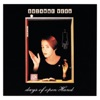 Days of Open HandSuzanne Vega199011 tracks
 -
 99.9 F°Suzanne Vega199212 tracks
 -
 Nine Objects of DesireSuzanne Vega199612 tracks
 -
 Songs in Red and GraySuzanne Vega200113 tracks
 -
 Beauty & CrimeSuzanne Vega200712 tracks
 -
 Tales From the Realm of the Queen of PentaclesSuzanne Vega201410 tracks
 -
 Lover, Beloved: Songs From an Evening With Carson McCullersSuzanne Vega201610 tracks
 -
 Einstein on the BeachSuzanne Vega202512 tracks
 -
 Flying With AngelsSuzanne Vega202510 tracks
Deep Dive
Overview
Suzanne Vega is an American singer-songwriter whose four-decade career has been defined by folk-inspired compositions and an unsentimental, narrative-driven approach to songwriting. Emerging from the folk revival of the mid-1980s, she achieved mainstream success in the late 1980s and 1990s with a string of Top 40 UK singles, including “Marlene on the Wall,” “Left of Center,” “Luka,” and “No Cheap Thrill.” Her work has bridged the gap between acoustic folk traditions and alternative rock sensibilities, establishing her as a significant figure in the singer-songwriter lineage that extends from the 1970s through the contemporary era.
Formation Story
Suzanne Nadine Vega was born in 1959, coming of age during the cultural ferment of the 1960s and 1970s. She entered the music world as a solo acoustic artist, drawing inspiration from folk idioms and the singer-songwriter tradition. Her emergence as a recording artist coincided with the folk-influenced alternative rock movement of the mid-1980s, a period when acoustic guitars and introspective lyricism found new audiences beyond traditional folk circuits. Unlike many of her contemporaries, Vega approached her craft with a literary sensibility, constructing carefully observed character studies and domestic narratives rather than pursuing the confessional autobiography that dominated much singer-songwriter work of the era.
Breakthrough Moment
Vega’s debut album, released in 1985, introduced her distinctive voice and songwriting approach. The single “Marlene on the Wall” became her first significant chart success, establishing her in the UK and opening doors for international recognition. The song’s matter-of-fact examination of everyday details—in this case, the presence of a poster on a wall—exemplified her restrained, observational style. Subsequent singles from her early career, particularly “Left of Center” from 1987, solidified her commercial footing. However, it was “Luka,” released during the late 1980s boom in alternative rock crossover hits, that became her signature song and reached the widest audience. The track’s stark depiction of domestic abuse marked a watershed moment in her career, proving that uncompromising songwriting could achieve mainstream success.
Peak Era
Vega’s most commercially successful and creatively vital period spanned the late 1980s through the mid-1990s. Solitude Standing (1987) consolidated the promise of her debut, while Days of Open Hand (1990), 99.9 F° (1992), and Nine Objects of Desire (1996) demonstrated her continued evolution as both a lyricist and interpreter of modern American life. These albums found her collaborating with various producers and exploring production textures beyond her initial stripped-down acoustic approach, without abandoning the clarity and precision that defined her voice. Her ability to maintain artistic credibility while achieving Top 40 chart placements in the UK made her an unusual success story in an era when crossover often meant compromise.
Musical Style
Suzanne Vega’s music is characterized by its fusion of folk traditions with alternative rock sensibilities. Her vocal delivery is restrained and measured, eschewing both the vocal acrobatics of rock singers and the mannered phrasing of some folk interpreters. Lyrically, she draws on close observation of behavior and environment, often adopting narrative perspectives that distance her from the emotional content of her songs. The instrumentation in her work ranges from sparse acoustic guitar arrangements to fuller production incorporating strings, electronics, and alternative rock textures. She writes economically, favoring precise language and concrete imagery over metaphorical elaboration. This approach—which might be described as literary realism set to music—distinguishes her from the more emotionally expansive singer-songwriter tradition while maintaining her deep roots in folk music’s commitment to narrative and social observation.
Major Albums
Suzanne Vega (1985)
Her self-titled debut established her voice as a significant new presence in American songwriting, introducing the observational clarity and folk-inflected arrangements that would define her career.
Solitude Standing (1987)
This album deepened her exploration of character-driven songwriting while expanding her production palette, achieving both critical and commercial success and cementing her status as more than a one-hit wonder.
Days of Open Hand (1990)
Released as the alternative rock moment broadened, this album showcased her continued evolution and her ability to adapt her folk-based approach to contemporary production values without diluting her essential artistic vision.
99.9 F° (1992)
This album represented her work during the height of her commercial popularity, demonstrating her skill at balancing commercial appeal with artistic integrity across a full-length release.
Nine Objects of Desire (1996)
Continuing her streak of strong albums throughout the 1990s, this work solidified her legacy as a consistent and thoughtful artist beyond any single hit song.
Signature Songs
- “Marlene on the Wall” — Her first chart success, a deceptively simple observation of domestic detail that established her observational songwriting method.
- “Luka” — A stark narrative about domestic abuse that became her most widely recognized song and broke through to mainstream American radio.
- “Left of Center” — A late-1980s hit that showcased her ability to work with producers while maintaining her distinctive artistic voice.
- “No Cheap Thrill” — One of her four UK Top 40 singles, demonstrating her continued commercial success in the early 1990s.
Influence on Rock
Suzanne Vega’s career helped legitimize the singer-songwriter tradition within alternative rock, proving that acoustic instrumentation and restrained vocal delivery could coexist with contemporary rock commercial success. Her emphasis on narrative specificity and emotional understatement influenced subsequent generations of folk-influenced alternative artists who emerged in the 1990s and beyond. Her work demonstrated that the folk revival was not a nostalgic return to 1960s models but could be an ongoing dialogue with contemporary life and contemporary production techniques. The clarity and precision of her songwriting also influenced the broader alternative rock movement’s engagement with literary sensibilities and linguistic precision.
Legacy
Across four decades of active recording, Suzanne Vega has maintained a steady artistic presence and recording schedule, with recent albums including Close-Up series releases, Tales From the Realm of the Queen of Pentacles (2014), Lover, Beloved: Songs From an Evening With Carson McCullers (2016), and new releases in 2025 including Einstein on the Beach and Flying With Angels. Her continued productivity demonstrates a career built on sustained artistic vision rather than a burst of early success followed by decline. She remains active on streaming platforms and in concert, with a catalog that spans from her 1985 debut to her most recent work, providing a nearly complete document of American singer-songwriter practice across the final decades of the twentieth century and into the twenty-first.
Fun Facts
- Vega’s record labels included independent and major imprints spanning from Fast Folk in her early career through Cooking Vinyl, Blue Note, and A&M Records, reflecting her career’s span across different eras and distribution models.
- Her 2010-2012 Close-Up series consisted of four thematic albums—People & Places, Love Songs, States of Being, and Songs of Family—representing an ambitious reframing of her catalog and artistic output.
- The song “Luka” originated from her observations of a neighbor’s child, transforming a moment of social proximity into a broader statement about domestic violence and social invisibility.