

Photo by Justin Higuchi from Los Angeles, CA, USA , licensed under CC BY 2.0 · Wikimedia Commons
Rank #426
Tori Amos
From Wikipedia
Tori Amos is an American singer-songwriter and pianist. She is a classically trained musician with a mezzo-soprano vocal range. A child prodigy, Amos entered the Peabody Institute's preparatory division at five, but left at eleven, coming of age as a pianist in Washington, D.C. bars. Amos was the lead singer of the short-lived 1980s pop-rock group Y Kant Tori Read before achieving her breakthrough as a solo artist in the early 1990s. Her songs focus on a broad range of topics, including sexuality, feminism, politics, and religion.
Discography & Previews
Browse through and click an album to open and play 30-second previews streamed from Apple Music.

Little Earthquakes
1991 · 12 tracks
- 1 Crucify (2015 Remastered Version) ↗ 4:59
- 2 Girl (2015 Remastered Version) ↗ 4:07
- 3 Silent All These Years (2015 Remastered Version) ↗ 4:11
- 4 Precious Things (2015 Remastered Version) ↗ 4:27
- 5 Winter (2015 Remastered Version) ↗ 5:41
- 6 Happy Phantom (2015 Remastered Version) ↗ 3:13
- 7 China (2015 Remastered Version) ↗ 4:59
- 8 Leather (2015 Remastered Version) ↗ 3:12
- 9 Mother (2015 Remastered Version) ↗ 6:59
- 10 Tear In Your Hand (2015 Remastered Version) ↗ 4:38
- 11 Me and a Gun (2015 Remastered Version) ↗ 3:43
- 12 Little Earthquakes (2015 Remastered Version) ↗ 6:54

Under the Pink
1994 · 12 tracks
- 1 Pretty Good Year (2015 Remastered) ↗ 3:26
- 2 God (2015 Remastered) ↗ 3:56
- 3 Bells for Her (2015 Remastered) ↗ 5:19
- 4 Past the Mission (2015 Remastered) ↗ 4:06
- 5 Baker Baker (2015 Remastered) ↗ 3:20
- 6 The Wrong Band (2015 Remastered) ↗ 3:02
- 7 The Waitress (2015 Remastered) ↗ 3:09
- 8 Cornflake Girl (2015 Remastered) ↗ 5:06
- 9 Icicle (2015 Remastered) ↗ 5:48
- 10 Cloud On My Tongue (2015 Remastered) ↗ 4:44
- 11 Space Dog (2015 Remastered) ↗ 5:10
- 12 Yes, Anastasia (2015 Remastered) ↗ 9:36

Boys for Pele
1996 · 18 tracks
- 1 Beauty Queen / Horses (Remastered) ↗ 6:08
- 2 Blood Roses (Remastered) ↗ 3:56
- 3 Father Lucifer (Remastered) ↗ 3:43
- 4 Professional Widow (Remastered) ↗ 4:32
- 5 Mr. Zebra (Remastered) ↗ 1:07
- 6 Marianne (Remastered) ↗ 4:10
- 7 Caught a Lite Sneeze (Remastered) ↗ 4:25
- 8 Muhammad My Friend (Remastered) ↗ 3:49
- 9 Hey Jupiter (Remastered) ↗ 5:12
- 10 Way Down (Remastered) ↗ 1:13
- 11 Little Amsterdam (Remastered) ↗ 4:29
- 12 Talula (Remastered) ↗ 4:08
- 13 Not the Red Baron (Remastered) ↗ 3:51
- 14 Agent Orange (Remastered) ↗ 1:26
- 15 Doughnut Song (Remastered) ↗ 4:21
- 16 In the Springtime of His Voodoo (Remastered) ↗ 5:34
- 17 Putting the Damage On (Remastered) ↗ 5:11
- 18 Twinkle (Remastered) ↗ 3:13

To Venus and Back
1999 · 24 tracks
- 1 Bliss ↗ 3:43
- 1 Precious Things (Live) ↗ 7:37
- 2 Juarez ↗ 3:48
- 2 Cruel (Live) ↗ 6:48
- 3 Concertina ↗ 3:56
- 3 Cornflake Girl (Live) ↗ 6:32
- 4 Glory of the 80's ↗ 4:03
- 4 Bells for Her (Live) ↗ 5:43
- 5 Lust ↗ 3:54
- 5 Girl (Live) ↗ 4:15
- 6 Suede ↗ 4:58
- 6 Cooling (Live) ↗ 5:09
- 7 Josephine ↗ 2:30
- 7 Mr. Zebra (Live) ↗ 1:18
- 8 Riot Poof ↗ 3:28
- 8 Cloud on My Tongue (Live) ↗ 4:59
- 9 Datura ↗ 8:25
- 9 Sugar (Live) ↗ 5:10
- 10 Spring Haze ↗ 4:45
- 10 Little Earthquakes (Live) ↗ 7:38
- 11 1000 Oceans ↗ 4:19
- 11 Space Dog (Live) ↗ 5:47
- 12 The Waitress (Live) ↗ 10:24
- 13 Purple People (Live) ↗ 4:11

Strange Little Girls
2001 · 12 tracks

Scarlet’s Walk
2002 · 18 tracks
- 1 Amber Waves (2023 Remaster) ↗ 3:39
- 2 A Sorta Fairytale (2023 Remaster) ↗ 5:30
- 3 Wednesday (2023 Remaster) ↗ 2:30
- 4 strange (2023 Remaster) ↗ 3:07
- 5 Carbon (2023 Remaster) ↗ 4:36
- 6 Crazy (2023 Remaster) ↗ 4:26
- 7 wampum prayer (2023 Remaster) ↗ 0:46
- 8 don't make me come to Vegas (2023 Remaster) ↗ 4:52
- 9 Sweet Sangria (2023 Remaster) ↗ 4:03
- 10 Your Cloud (2023 Remaster) ↗ 4:31
- 11 Pancake (2023 Remaster) ↗ 3:56
- 12 I Can't See New York (2023 Remaster) ↗ 7:16
- 13 mrs. jesus (2023 Remaster) ↗ 3:06
- 14 Taxi Ride (2023 Remaster) ↗ 4:02
- 15 Another Girl's Paradise (2023 Remaster) ↗ 3:36
- 16 Scarlet's Walk (2023 Remaster) ↗ 4:18
- 17 Virginia (2023 Remaster) ↗ 3:57
- 18 Gold Dust (2023 Remaster) ↗ 5:56
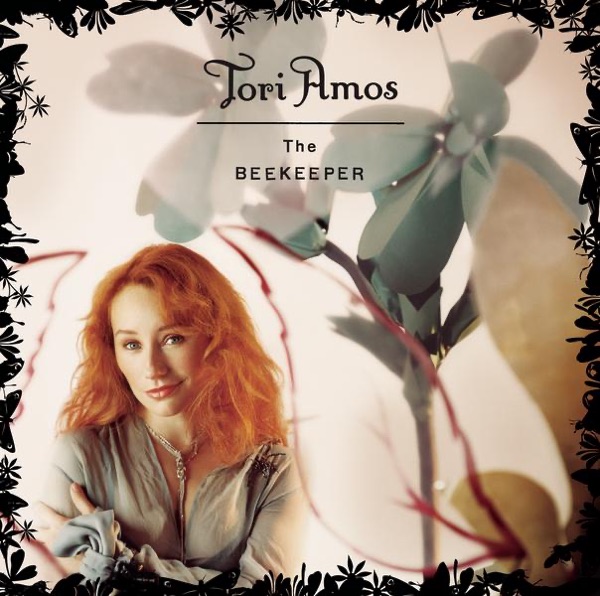
The Beekeeper
2005 · 19 tracks
- 1 Parasol ↗ 3:54
- 2 Sweet the Sting ↗ 4:15
- 3 The Power of Orange Knickers ↗ 3:36
- 4 Jamaica Inn ↗ 4:03
- 5 Barons of Suburbia ↗ 5:20
- 6 Sleeps With Butterflies ↗ 3:36
- 7 General Joy ↗ 4:13
- 8 Mother Revolution ↗ 3:59
- 9 Ribbons Undone ↗ 4:30
- 10 Cars and Guitars ↗ 3:45
- 11 Witness ↗ 6:04
- 12 Original Sinsuality ↗ 2:02
- 13 Ireland ↗ 3:48
- 14 The Beekeeper ↗ 6:49
- 15 Martha's Foolish Ginger ↗ 4:22
- 16 Hoochie Woman ↗ 2:34
- 17 Goodbye Pisces ↗ 3:36
- 18 Marys of the Sea ↗ 5:09
- 19 Toast ↗ 3:42

American Doll Posse
2007 · 23 tracks
- 1 Yo George ↗ 1:25
- 2 Big Wheel ↗ 3:18
- 3 Bouncing Off Clouds ↗ 4:08
- 4 Teenage Hustling ↗ 4:00
- 5 Digital Ghost ↗ 3:50
- 6 You Can Bring Your Dog ↗ 4:04
- 7 Mr. Bad Man ↗ 3:19
- 8 Fat Slut ↗ 0:40
- 9 Girl Disappearing ↗ 3:59
- 10 Secret Spell ↗ 4:03
- 11 Devils and Gods ↗ 0:52
- 12 Body and Soul ↗ 3:55
- 13 Fathers Son ↗ 4:00
- 14 Programmable Soda ↗ 1:25
- 15 Code Red ↗ 5:26
- 16 Roosterspur Bridge ↗ 3:59
- 17 Beauty of Speed ↗ 4:08
- 18 Almost Rosey ↗ 5:22
- 19 Velvet Revolution ↗ 1:18
- 20 Dark Side of the Sun ↗ 4:16
- 21 Posse Bonus ↗ 1:45
- 22 Smokey Joe ↗ 4:17
- 23 Dragon ↗ 5:03

Abnormally Attracted to Sin
2009 · 17 tracks
- 1 Give ↗ 4:13
- 2 Welcome to England ↗ 4:05
- 3 Strong Black Vine ↗ 3:27
- 4 Flavor ↗ 4:05
- 5 Not Dying Today ↗ 4:01
- 6 Maybe California ↗ 4:24
- 7 Curtain Call ↗ 4:52
- 8 Fire to Your Plain ↗ 3:01
- 9 Police Me ↗ 3:53
- 10 That Guy ↗ 4:02
- 11 Abnormally Attracted to Sin ↗ 5:33
- 12 500 Miles ↗ 4:05
- 13 Mary Jane ↗ 2:42
- 14 Starling ↗ 4:02
- 15 Fast Horse ↗ 3:52
- 16 Ophelia ↗ 4:42
- 17 Lady In Blue ↗ 7:12

Midwinter Graces
2009 · 12 tracks
- 1 What Child, Nowell ↗ 3:45
- 2 Star of Wonder ↗ 3:51
- 3 A Silent Night With You ↗ 3:22
- 4 Candle - Coventry Carol ↗ 3:18
- 5 Holly, Ivy and Rose ↗ 4:45
- 6 Harps of Gold ↗ 3:11
- 7 Snow Angel ↗ 3:43
- 8 Jeanette, Isabella ↗ 4:28
- 9 Pink and Glitter ↗ 4:57
- 10 Emmanuel ↗ 3:00
- 11 Winter's Carol ↗ 5:20
- 12 Our New Year ↗ 4:14

Night of Hunters
2011 · 14 tracks
- 1 Shattering Sea (Instrumental) ↗ 5:39
- 2 SnowBlind (Instrumental) ↗ 3:15
- 3 Battle of Trees (Instrumental) ↗ 8:42
- 4 Fearlessness (Instrumental) ↗ 6:31
- 5 Cactus Practice (Instrumental) ↗ 4:27
- 6 Star Whisperer (Instrumental) ↗ 9:53
- 7 Job's Coffin (Instrumental) ↗ 3:32
- 8 Nautical Twilight (Instrumental) ↗ 3:17
- 9 Your Ghost (Instrumental) ↗ 5:38
- 10 Edge of the Moon (Instrumental) ↗ 4:51
- 11 The Chase (Instrumental) ↗ 3:02
- 12 Night of Hunters (Instrumental) ↗ 5:33
- 13 Seven Sisters (Instrumental) ↗ 2:44
- 14 Carry (Instrumental) ↗ 4:07

Gold Dust
2012 · 14 tracks
- 1 Flavor ↗ 4:07
- 2 Yes, Anastasia ↗ 4:19
- 3 Jackie's Strength ↗ 4:34
- 4 Cloud On My Tongue ↗ 4:24
- 5 Precious Things ↗ 4:47
- 6 Gold Dust ↗ 5:47
- 7 Star of Wonder ↗ 3:48
- 8 Winter ↗ 5:47
- 9 Flying Dutchman ↗ 6:21
- 10 Programmable Soda ↗ 1:28
- 11 Snow Cherries from France ↗ 3:02
- 12 Marianne ↗ 4:10
- 13 Silent All These Years ↗ 4:35
- 14 Girl Disappearing ↗ 4:07

Unrepentant Geraldines
2014 · 15 tracks
- 1 America ↗ 4:11
- 2 Trouble's Lament ↗ 3:44
- 3 Wild Way ↗ 2:55
- 4 Wedding Day ↗ 3:45
- 5 Weatherman ↗ 4:41
- 6 16 Shades of Blue ↗ 3:52
- 7 Maids of Elfen-Mere ↗ 2:53
- 8 Promise ↗ 4:05
- 9 Giant's Rolling Pin ↗ 4:11
- 10 Selkie ↗ 4:05
- 11 Unrepentant Geraldines ↗ 6:57
- 12 Oysters ↗ 5:14
- 13 Rose Dover ↗ 3:56
- 14 Invisible Boy ↗ 4:55
- 15 White Telephone To God ↗ 2:26


Ocean to Ocean
2021 · 11 tracks

In Times of Dragons
2026 · 17 tracks
- 1 Shush ↗ 6:16
- 2 In Times of Dragons ↗ 4:51
- 3 Provincetown ↗ 5:07
- 4 St. Teresa ↗ 6:20
- 5 Gasoline Girls ↗ 2:57
- 6 Ode to Minnesota ↗ 1:35
- 7 Fanny Faudrey ↗ 1:47
- 8 Veins ↗ 4:00
- 9 Strawberry Moon ↗ 4:10
- 10 Song of Sorrow ↗ 6:20
- 11 Flood ↗ 4:03
- 12 Pyrite ↗ 3:34
- 13 Tempest ↗ 5:18
- 14 Angelshark ↗ 3:48
- 15 Blue Lotus ↗ 6:03
- 16 Stronger Together ↗ 3:14
- 17 23 Peaks ↗ 6:43
-
 Little EarthquakesTori Amos199112 tracks
 -
 Under the PinkTori Amos199412 tracks
 -
 Boys for PeleTori Amos199618 tracks
 -
 To Venus and BackTori Amos199924 tracks
 -
 Strange Little GirlsTori Amos200112 tracks
 -
 Scarlet’s WalkTori Amos200218 tracks
 -
 The BeekeeperTori Amos200519 tracks
 -
 American Doll PosseTori Amos200723 tracks
 -
 Abnormally Attracted to SinTori Amos200917 tracks
 -
 Midwinter GracesTori Amos200912 tracks
 -
 Night of HuntersTori Amos201114 tracks
 -
 Gold DustTori Amos201214 tracks
 -
 Unrepentant GeraldinesTori Amos201415 tracks
 -
 Native InvaderTori Amos201713 tracks
 -
 Ocean to OceanTori Amos202111 tracks
 -
 In Times of DragonsTori Amos202617 tracks
Deep Dive
Overview
Tori Amos is an American singer-songwriter and pianist whose intricate, lyrically unflinching approach to art rock and alternative music redefined what solo piano-driven rock could express. Born in 1963, Amos emerged from classical training and the Washington, D.C. bar scene to become one of the 1990s’ most distinctive voices—a mezzo-soprano whose songs navigate sexuality, feminism, religion, and politics with rare specificity and emotional intelligence. Her breakthrough solo work beginning in 1991 established her as a cerebral, uncompromising artist willing to explore subjects most mainstream rock avoided, earning her a devoted international fanbase across three decades of recorded output.
Formation Story
Tori Amos was a child prodigy who entered the Peabody Institute’s preparatory division at age five, setting her on a trajectory of classical music mastery. However, at eleven she left formal training, a pivotal moment that freed her from institutional constraint. She came of age as a pianist in Washington, D.C. bars during the late 1970s and early 1980s, absorbing not just classical technique but the live performance culture of a vibrant regional music scene. This hybrid formation—rigorous early classical education combined with street-level bar performance—gave her both technical command and an unpolished, emotionally direct sensibility. Her first recorded project, the short-lived 1980s pop-rock group Y Kant Tori Read, was a commercial and artistic dead end, but it provided crucial experience in songwriting and the mechanisms of the music industry before she found her true voice as a solo artist.
Breakthrough Moment
Amos’s solo breakthrough arrived with the 1991 album Little Earthquakes, a starkly introspective collection built around her piano and voice. The album’s emotional candor—songs dealing with abuse, sexuality, and religious doubt—stood apart from the guitar-driven grunge and hip-hop that dominated early-1990s radio. Little Earthquakes found an audience among college radio listeners and alternative rock fans hungry for something more lyrically complex and sonically refined than typical rock fare. The album’s success in the United Kingdom and subsequent international touring cemented her reputation as a serious artist rather than a pop fluke, establishing the foundation for the more conceptually ambitious work that followed.
Peak Era
Amos’s creative and commercial peak spanned the mid-to-late 1990s, beginning with the 1994 album Under the Pink and continuing through Boys for Pele (1996), From the Choirgirl Hotel (1998), and To Venus and Back (1999). During this five-year window, she released albums with increasing production ambition and thematic coherence, moving beyond the sparse arrangement of Little Earthquakes toward more orchestral and electronic textures. These albums demonstrated her evolving artistry: each explored a distinct emotional or conceptual landscape while maintaining her core identity as a piano-centered songwriter with an unflinching lyrical gaze. By 1999, Amos had established herself not merely as a successful alternative artist but as one of the era’s most intellectually rigorous musicians, capable of sustaining career momentum without compromise to commercial pressure.
Musical Style
Amos’s sound is fundamentally defined by the piano—her instrument of classical training—positioned as a rock instrument rather than relegated to accompaniment. Her mezzo-soprano voice carries both vulnerability and command, capable of tenderness and sudden intensity within a single phrase. Her songwriting approach blends art-rock’s structural complexity with pop melody, refusing simple verse-chorus-verse formulas in favor of arrangements that build, digress, and recombine motifs. Production-wise, she has worked with varying degrees of electronic augmentation and orchestral layering, moving between spare intimate recordings and densely layered alternative rock productions. Her lyrics operate on multiple registers: personal narratives often carry broader cultural and spiritual weight, and she approaches subjects like sexuality, religion, and politics with specificity rather than sloganeering. This combination of classical training, alternative-rock sensibility, and literary lyrical ambition places her at the intersection of art rock and singer-songwriter traditions, though her commercial visibility and emotional accessibility distinguish her from more purely avant-garde contemporaries.
Major Albums
Little Earthquakes (1991)
Her debut solo album established the template: sparse piano arrangements, confessional vocals, and unflinching emotional honesty. The record’s clarity and directness made it a landmark for 1990s alternative rock and alternative music radio.
Under the Pink (1994)
The follow-up deepened her sonic palette with orchestral strings, electronic textures, and more ambitious production while maintaining the emotional core of her songwriting. It confirmed her as a major artist rather than a one-album wonder.
Boys for Pele (1996)
A more sprawling, conceptually complex work that continued her exploration of female sexuality and anger with increased musical eclecticism, solidifying her status as one of the decade’s most significant alternative artists.
From the Choirgirl Hotel (1998)
A return to more cohesive song structures and direct emotional communication, this album balanced experimental impulses with accessibility and demonstrated her growing maturity as a composer and arranger.
To Venus and Back (1999)
Released late in her creative peak, this album consolidated her artistic vision across a diverse range of songs and production styles, showing her ability to sustain quality and innovation across a full career arc.
Strange Little Girls (2001)
A notable experiment: a collection of covers of songs written by men, reinterpreted from female perspectives, demonstrating how lyrical meaning shifts depending on who sings it and from what vantage point.
Signature Songs
- **