

Photo by Raph_PH , licensed under CC BY 2.0 · Wikimedia Commons
Rank #148
Feist
From Wikipedia
Leslie Feist, known mononymously as Feist, is a Canadian indie pop singer and songwriter, performing both as a solo artist and as a member of the indie rock group Broken Social Scene.
Discography & Previews
Browse through and click an album to open and play 30-second previews streamed from Apple Music.


The Reminder
2007 · 15 tracks
- 1 So Sorry ↗ 3:12
- 2 I Feel It All ↗ 3:39
- 3 My Moon My Man ↗ 3:48
- 4 The Park ↗ 4:34
- 5 The Water ↗ 4:46
- 6 Sealion ↗ 3:40
- 7 Past In Present ↗ 2:53
- 8 The Limit To Your Love ↗ 4:21
- 9 1234 ↗ 3:04
- 10 Brandy Alexander ↗ 3:36
- 11 Intuition ↗ 4:37
- 12 Honey Honey ↗ 3:26
- 13 How My Heart Behaves ↗ 4:25
- 14 Sealion (Chromeo Remix) ↗ 3:45
- 15 The Water (Red Demos) ↗ 4:13

Metals
2011 · 13 tracks
- 1 The Bad In Each Other ↗ 4:45
- 2 Graveyard ↗ 4:18
- 3 Caught a Long Wind ↗ 4:55
- 4 How Come You Never Go There ↗ 3:25
- 5 A Commotion ↗ 3:53
- 6 The Circle Married the Line ↗ 3:23
- 7 Bittersweet Melodies ↗ 3:57
- 8 Anti-Pioneer ↗ 5:33
- 9 Undiscovered First ↗ 4:59
- 10 Cicadas and Gulls ↗ 3:16
- 11 Comfort Me ↗ 4:04
- 12 Get It Wrong, Get It Right ↗ 3:39
- 13 Pine Moon ↗ 4:53

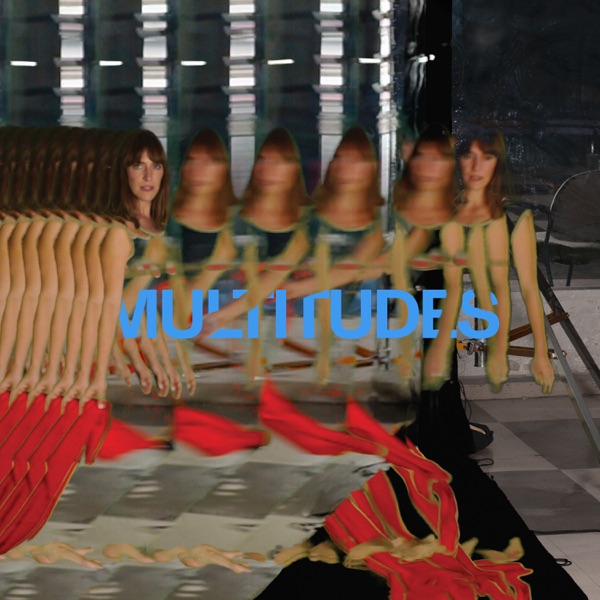
Multitudes
2023 · 12 tracks
- 1 In Lightning ↗ 3:26
- 2 Forever Before ↗ 5:17
- 3 Love Who We Are Meant To ↗ 3:55
- 4 Hiding Out In The Open ↗ 3:21
- 5 The Redwing ↗ 3:18
- 6 I Took All Of My Rings Off ↗ 3:56
- 7 Of Womankind ↗ 3:52
- 8 Become The Earth ↗ 4:17
- 9 Borrow Trouble ↗ 4:05
- 10 Martyr Moves ↗ 3:25
- 11 Calling All The Gods ↗ 3:49
- 12 Song For Sad Friends ↗ 3:49
-
 Let It DieFeist200411 tracks
 -
 The ReminderFeist200715 tracks
 -
 MetalsFeist201113 tracks
 -
 PleasureFeist201711 tracks
 -
 MultitudesFeist202312 tracks
Deep Dive
Overview
Leslie Feist, performing mononymously as Feist, is a Canadian singer-songwriter whose work spans indie pop, anti-folk, indie folk, and pop rock. Emerging in the late 1990s, she has built a career as both a solo artist and as a member of the Toronto-based indie rock collective Broken Social Scene, establishing herself as a distinctive voice in North American alternative music. Her solo catalogue demonstrates a restless artistic sensibility, moving between sparse acoustic arrangements and richly textured electronic production across six studio albums released between 1999 and 2023.
Formation Story
Feist’s path to rock music began in Canada during the 1970s and developed through immersion in the country’s folk and indie rock traditions. She entered the music industry as a solo artist in her own right, finding her voice within the broader ecosystem of Canadian independent music rather than as part of a pre-existing scene collective. By the late 1990s, she had established herself as a songwriter and performer, releasing her debut album Monarch: Lay Your Jewelled Head Down in 1999. This early solo work set the trajectory for a career marked by artistic autonomy and continual stylistic exploration, even as she maintained long-running connections with collaborative projects like Broken Social Scene.
Breakthrough Moment
Feist’s breakthrough as a solo artist came with the release of Let It Die in 2004, an album that announced her arrival to a wider audience beyond the Canadian indie underground. The record’s blend of intimate songwriting and carefully crafted production introduced her particular combination of folk-influenced songcraft and modern pop sensibility. Following this success, The Reminder arrived in 2007, further solidifying her position in indie pop and establishing her as a consistent creative force. The album’s refined approach to melody and arrangement demonstrated her growing sophistication as both songwriter and producer, earning her recognition across North American alternative radio and critical circles.
Peak Era
The period from 2007 through 2011, spanning The Reminder and Metals, represented Feist’s most visible and commercially successful phase. Metals, released in 2011, continued her trajectory of precise songwriting and subtle sonic detail, confirming her status as one of Canada’s most significant contemporary indie artists. During these years, she balanced her solo work with her involvement in Broken Social Scene, navigating the demands of both solo and collaborative creation while maintaining a distinctive artistic voice that marked her solo output as distinct from her collective work.
Musical Style
Feist’s sound draws from folk music traditions and anti-folk sensibilities while embracing elements of indie pop, pop rock, and electronic production. Her vocal delivery is characteristically restrained and precise, often set against arrangements that privilege space and clarity over density. Early solo work such as Monarch and Let It Die emphasized acoustic guitar and intimate vocal presence, establishing a foundation in traditional songwriting forms. Over time, particularly evident in The Reminder and Metals, her production choices became more adventurous, incorporating electronic textures, layered vocal harmonies, and rhythmic complexity while maintaining the lyrical introspection and melodic sophistication that define her approach. Her songwriting often deals in subtlety rather than explicit statement, building emotional resonance through carefully observed detail and nuanced vocal phrasing.
Major Albums
Monarch: Lay Your Jewelled Head Down (1999)
Feist’s debut established her as a solo artist with a gift for intimate songwriting grounded in folk traditions, announcing her arrival on the Canadian indie scene.
Let It Die (2004)
This album marked her breakthrough to broader recognition, combining folk-influenced songcraft with modern pop production to create a signature sound that would define her solo career.
The Reminder (2007)
Feist’s most refined statement to that point, The Reminder demonstrated her skill at blending melody and arrangement, solidifying her reputation as one of Canada’s finest contemporary songwriters.
Metals (2011)
Continuing her exploration of electronic textures and rhythmic sophistication, Metals deepened her sonic palette while maintaining the emotional directness of her earlier work.
Pleasure (2017)
Released after a six-year interval, Pleasure marked her return to solo recording with renewed energy and fresh sonic directions.
Multitudes (2023)
Feist’s most recent album demonstrates the continued evolution of her artistic vision, confirming her status as an active and engaged creator more than two decades into her solo career.
Signature Songs
- “Lonely Lonely Lonely” — A track from her early catalogue that showcases her ability to convey emotional depth through sparse arrangement and carefully modulated vocal performance.
- “The Reminder” — Title track that exemplifies the album’s refined approach to pop songwriting grounded in folk sensibilities.
- “The Limit to Your Love” — A notable entry in her discography that demonstrates her skill at building emotional resonance through restrained instrumentation.
Influence on Rock
Feist’s work as a solo artist has influenced a generation of Canadian indie and pop artists operating in the space between folk tradition and contemporary electronic production. Her dual role as both solo artist and collaborator within Broken Social Scene helped model a path for musicians balancing individual creative vision with collective participation. The specificity of her songwriting approach and her refusal to chase explicit commercial formulas while remaining engaged with pop music sensibilities has resonated with contemporary singer-songwriters working across indie pop and alternative rock contexts. Her records have circulated within indie rock communities and mainstream alternative audiences, contributing to the broader ecosystem of North American indie pop without compromising her distinctive artistic voice.
Legacy
Feist’s career spanning from 1999 to the present positions her as a significant figure in Canadian popular music and North American indie rock. Her sustained output across six studio albums, without abandoning her artistic principles for commercial expediency, has established her as a model of artistic longevity and creative integrity. The longevity of her catalogue across streaming platforms and continued touring and recording activity into 2023 confirm her ongoing relevance as both historical figure and active creator. Her body of work documents the evolution of indie pop and folk-influenced songwriting across two decades, from the early internet era of Canadian indie music through the contemporary streaming age.
Fun Facts
- Feist has maintained a long-running association with Broken Social Scene, the Toronto-based indie rock collective, while sustaining a parallel solo career that operates according to its own artistic logic.
- Her record labels have included both major-label infrastructure (Interscope Records, Cherrytree Records) and independent Canadian label Arts & Crafts Productions, reflecting her navigation between different scales of music industry operation.
- The span between her 2011 album Metals and her 2017 return with Pleasure marks a significant creative pause, demonstrating her willingness to step back from recording rather than maintain a standard release schedule.
- Her official website, listentofeist.com, has served as a consistent point of connection with her fanbase across two decades of internet evolution.