

Photo by Georges Biard , licensed under CC BY-SA 3.0 · Wikimedia Commons
Rank #214
Vanessa Paradis
From Wikipedia
Vanessa Chantal Paradis is a French singer, model and actress. Paradis first achieved acclaim at the age of 14 with the international success of her single "Joe le taxi" (1987). At age 18, she was awarded France's highest honours as both a singer and an actress with the Prix Romy Schneider and the César Award for Most Promising Actress for Jean-Claude Brisseau's Noce Blanche, as well as the Victoires de la Musique for Best Female Singer for her album Variations sur le même t'aime.
Discography & Previews
Browse through and click an album to open and play 30-second previews streamed from Apple Music.

Vanessa Paradis
1992 · 11 tracks
- 1 Natural High ↗ 3:22
- 2 I'm Waiting for the Man ↗ 3:26
- 3 Silver and Gold ↗ 2:44
- 4 Be My Baby ↗ 3:42
- 5 Lonely Rainbows ↗ 2:33
- 6 Sunday Mondays ↗ 3:57
- 7 Your Love Has Got a Handle On My Mind ↗ 3:57
- 8 The Future Song ↗ 4:56
- 9 Paradis ↗ 3:04
- 10 Just As Long As You Are There ↗ 3:25
- 11 Gotta Have It ↗ 2:17

Love Songs
2013 · 21 tracks
- 1 L'au-delà ↗ 3:19
- 2 Love Song ↗ 3:31
- 3 C'est quoi ? ↗ 3:11
- 4 Les espaces & les sentiments ↗ 3:07
- 5 Prends garde à moi ↗ 4:04
- 6 Tu pars comme on revient ↗ 2:56
- 7 The Dark It Comes ↗ 4:01
- 8 Rocking Chair ↗ 4:20
- 9 Station quatre Septembre ↗ 3:29
- 10 Tu vois c' que je vois ↗ 3:09
- 11 La crème ↗ 2:40
- 12 Le rempart ↗ 3:11
- 13 Mi Amor ↗ 3:07
- 14 New Year ↗ 3:08
- 15 Tu Si Na Cosa Grande ↗ 2:51
- 16 Sombreros ↗ 4:23
- 17 Être celle ↗ 3:38
- 18 Doorway ↗ 2:58
- 19 La chanson des vieux cons ↗ 4:44
- 20 Les roses roses ↗ 3:49
- 21 Attention à toi ↗ 2:33

Les Sources
2018 · 12 tracks

Le retour des beaux jours
2025 · 12 tracks
-
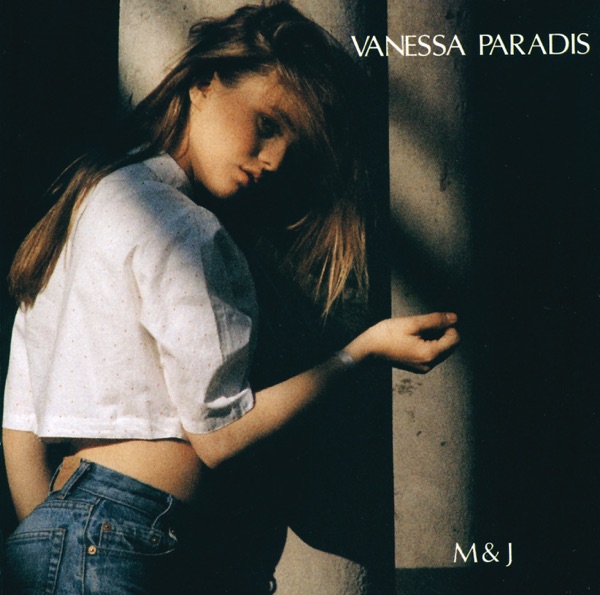
 M & JVanessa Paradis198810 tracks
 -
 Vanessa ParadisVanessa Paradis199211 tracks
 -
 Love SongsVanessa Paradis201321 tracks
 -
 Les SourcesVanessa Paradis201812 tracks
 -
 Le retour des beaux joursVanessa Paradis202512 tracks
Deep Dive
Overview
Vanessa Chantal Paradis emerged as a French pop phenomenon in the mid-1980s, becoming one of the few artists to achieve simultaneous success as a recording artist, actress, and international cultural figure while still a teenager. Born in 1972, Paradis represents a particular strain of French pop sensibility—playful, melodically sophisticated, and unafraid of crossing into cinema and fashion—that gave shape to European pop culture in the late 20th century. Her international breakthrough with the 1987 single “Joe le taxi” introduced her to global audiences as a fresh, youthful voice at an age when most artists are still developing their craft.
Formation Story
Vanessa Paradis was born in France in 1972 into a cultural milieu that encouraged artistic ambition across multiple disciplines. Rather than emerging from a traditional rock scene, she came of age during the new wave and electronic pop era of the 1980s, when French pop and electronic music occupied a distinctive position in the international marketplace. Her early career trajectory placed her at the intersection of music, modeling, and cinema—a path that reflected both her youth and the cultural expectations of European entertainers in that era. By her early teens, Paradis was already working as a model and entertainer, positioning herself within the entertainment apparatus that would launch her recording career before her fifteenth birthday.
Breakthrough Moment
The international success of “Joe le taxi” in 1987, when Paradis was just fourteen years old, marks the pivotal moment in her career arc. The single catapulted her from French television presence to global recognition, demonstrating that youthful pop could cross linguistic and cultural boundaries with the right combination of melody, charm, and production sheen. The song’s success opened doors across the entertainment industry simultaneously. Within a year of the single’s release, her debut album M & J arrived in 1988, establishing her as a recording artist in her own right rather than a one-hit novelty.
Peak Era
Paradis’s peak creative and commercial period extended from 1988 through the early 1990s, during which she released three studio albums in rapid succession and consolidated her status as a multi-disciplinary entertainer. Her second album, Variations sur le même t’aime (1990), earned her the Victoires de la Musique for Best Female Singer, affirming her standing within the French music establishment. The same year, she received the Prix Romy Schneider and a César Award for Most Promising Actress for her role in Jean-Claude Brisseau’s film Noce Blanche, cementing her credentials in cinema. By 1992, with the release of her self-titled album Vanessa Paradis, she had established herself as a fixture of European pop culture, no longer merely a teenage phenomenon but a developing artist with sustained commercial momentum.
Musical Style
Paradis’s sound draws from pop rock, indie pop, and new age music sensibilities, creating a distinctly European aesthetic that eschews the heavy production and vocal power ballad conventions dominating English-language pop in the 1980s and 1990s. Her vocal approach is characteristically playful and conversational rather than technically virtuosic, favoring clarity and charm over range or power. The production of her early work reflects the synthesizer-inflected pop sound of the late 1980s, with emphasis on melodic hooks and rhythm that prioritize listenability and international radio appeal. Over her extended career, her sound has evolved to incorporate elements of indie pop and art-pop sensibilities, allowing her to mature artistically beyond the manufactured-pop framework that launched her fame. The through-line in her work remains a commitment to strong melodic songwriting and a refusal to chase trends aggressively, maintaining a distinctly French pop identity even as the global pop landscape shifted repeatedly.
Major Albums
M & J (1988)
Her debut album, released in the immediate aftermath of “Joe le taxi“‘s success, introduced Paradis as a recording artist capable of sustaining interest beyond a single hit, establishing the pop-rock foundation for her career.
Variations sur le même t’aime (1990)
The album that won her the Victoires de la Musique for Best Female Singer, demonstrating her growth as a vocalist and songwriter while maintaining the melodic sophistication that distinguished her from other teen pop acts.
Vanessa Paradis (1992)
Her self-titled effort represented a consolidation of her artistic identity and commercial position, confirming her transition from prodigy to established artist as she entered her twenties.
Bliss (2000)
Released after an extended gap from her recording career, Bliss signaled her return to active music-making and reflected the artistic evolution of a maturing performer reengaging with the studio after pursuing film and other projects.
Divinidylle (2007)
This album demonstrated her willingness to explore contemporary art-pop and indie sensibilities, moving beyond the straightforward pop-rock of her youth toward more experimental production and arrangement choices.
Signature Songs
- “Joe le taxi” (1987) — The international breakthrough single that introduced Paradis to global audiences at age fourteen and remains her most recognizable song worldwide.
- “Be My Baby” — A standout track showcasing her ability to deliver emotionally direct pop songwriting with melodic sophistication.
- “Variations sur le même t’aime” — The title track from her award-winning second album, demonstrating her maturation as a vocalist.
- “Sunday Mondays” — A notable track that displayed her evolving artistic sensibility during her peak period.
Influence on Rock
While Paradis’s direct influence on rock music proper is limited—her work belongs more centrally to the pop continuum—her career demonstrated the viability of the French pop tradition and the possibility of sustaining multi-disciplinary celebrity across music, film, and fashion simultaneously. She influenced the landscape of European pop in the 1990s by proving that sophisticated pop production and artistic integrity could coexist with commercial success and mass-market appeal. Her example paved the way for later French artists to achieve international recognition without conforming entirely to Anglo-American pop conventions. She occupies a particular cultural position as an exemplar of the European pop singer-actress, a tradition distinct from the Anglo-American rock star model.
Legacy
Vanessa Paradis’s legacy rests on her status as a French cultural icon who achieved sustained international visibility across four decades of entertainment, from her breakthrough as a teenager in the late 1980s through her continued recording and performance work into the 2020s. Her most recent album, Le retour des beaux jours (2025), indicates her ongoing engagement with music-making, resisting the obsolescence that often claims pop artists who achieve early fame. She remains a significant figure in French popular culture and a touchstone for understanding European pop music’s distinct identity during the final decades of the 20th century. Her ability to transition from child star to respected adult artist, while maintaining a presence in both music and cinema, distinguishes her from many contemporaries who faded from cultural relevance.
Fun Facts
- Paradis achieved César Award recognition for her acting at eighteen years old, making her one of the few musicians to earn major film awards simultaneously with music industry recognition.
- Her career spans from 1987 to the present, encompassing multiple eras of pop music production and demonstrating remarkable longevity in an industry often hostile to artists who begin their careers as teenagers.
- She recorded for Barclay Records throughout her career, maintaining a long-term relationship with the label through multiple stylistic evolutions and industry shifts.