
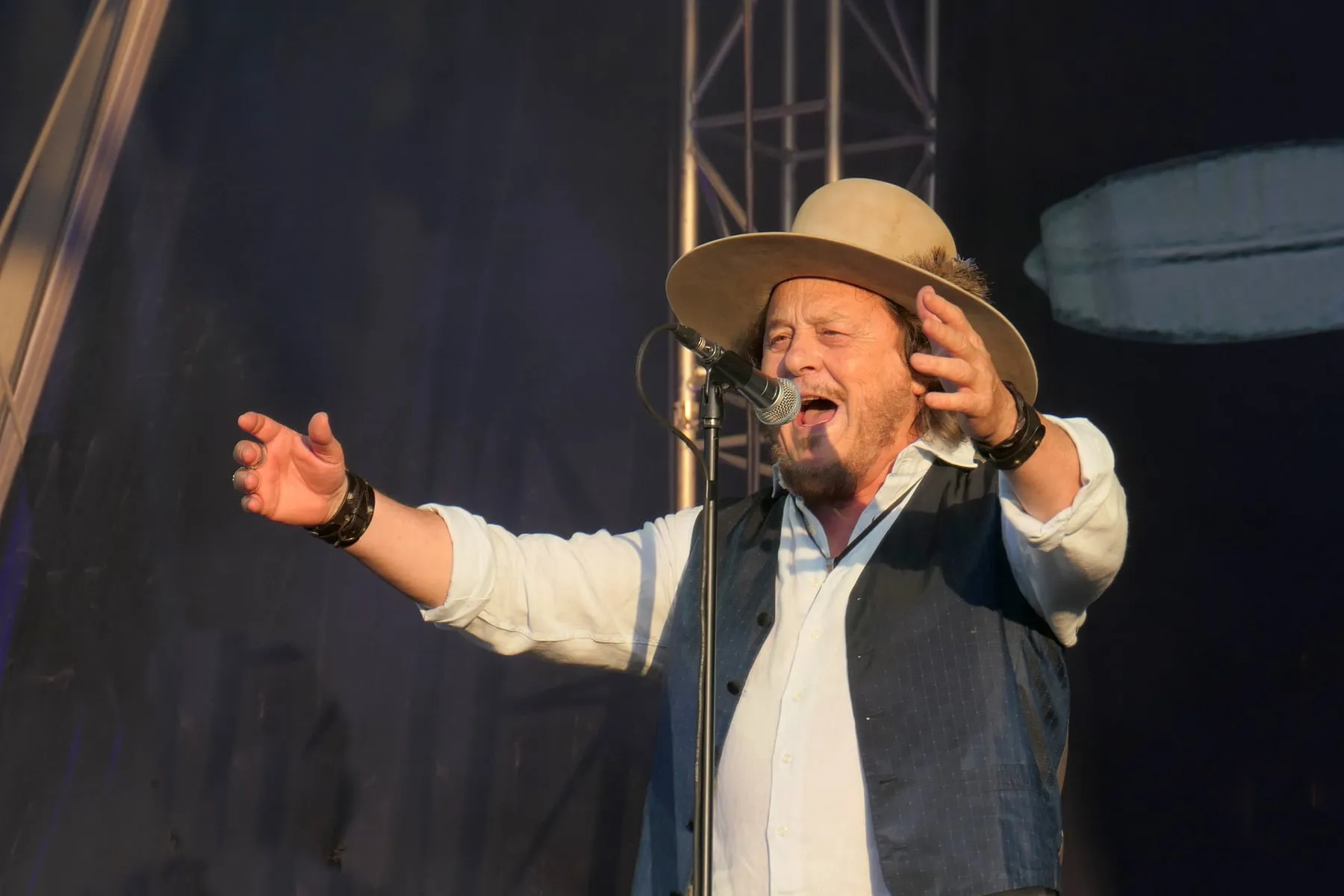
Photo by Meyer-Konstanz , licensed under CC BY-SA 4.0 · Wikimedia Commons
Rank #409
Zucchero
From Wikipedia
Adelmo Fornaciari, known professionally as Zucchero Fornaciari or simply Zucchero, is an Italian singer, musician and songwriter. His stage name is the Italian word for "sugar", as his primary school teacher used to call him. His music is largely inspired by gospel, soul, blues and rock music, and alternates between Italian ballads and more rhythmic R&B-boogie-like pieces. He is credited as the "father of Italian blues", introducing blues to the big stage in Italy. He is one of the few European blues artists who still enjoys great international success.
Discography & Previews
Browse through and click an album to open and play 30-second previews streamed from Apple Music.
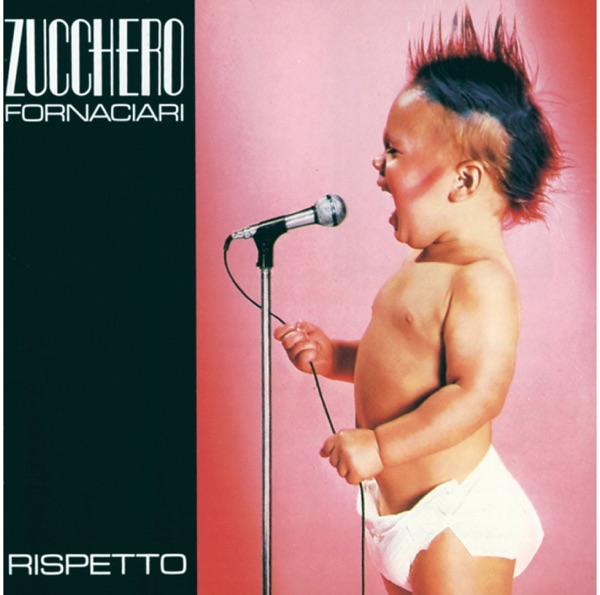
Rispetto
1986 · 11 tracks
- 1 Introduction (feat. Medicina Blues Band) ↗ 0:34
- 2 Rispetto ↗ 5:05
- 3 Come il sole all' improvviso ↗ 3:56
- 4 Tra uomo e Donna ↗ 4:21
- 5 Nella casa c'era ↗ 5:49
- 6 Una ragione per vivere ↗ 0:54
- 7 Solo seduto sulla panchina del porto guardo le navi partir ↗ 3:49
- 8 Torna a casa ↗ 3:39
- 9 Nuovo meraviglioso amico ↗ 4:09
- 10 Canzone triste (Canzone d'amore) ↗ 3:59
- 11 No-No (Non gli dire no) ↗ 3:41

Blue’s
1987 · 11 tracks
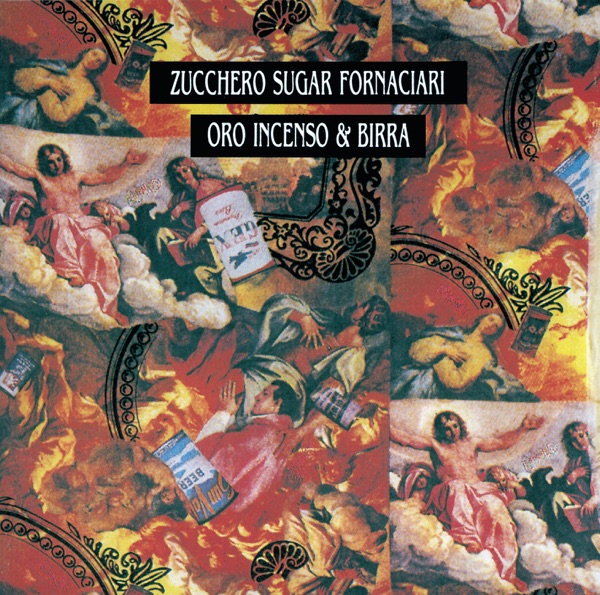
Oro, incenso & birra
1989 · 9 tracks
Zucchero
1991 · 9 tracks

Shake
2001 · 11 tracks
- 1 Baila Morena (Spanish Version) ↗ 4:05
- 2 Music in Me ↗ 3:22
- 3 Porca l'Oca ↗ 3:28
- 4 Ali d'Oro (feat. John Lee Hooker) ↗ 4:56
- 5 Hasta el Fondo (feat. Barry White) ↗ 4:43
- 6 Scintille ↗ 5:15
- 7 Sento le Campane ↗ 3:12
- 8 No Seré Yo ↗ 4:35
- 9 Rossa Mela Della Sera ↗ 5:05
- 10 Shake ↗ 3:53
- 11 Aromas Perdidos ↗ 4:54

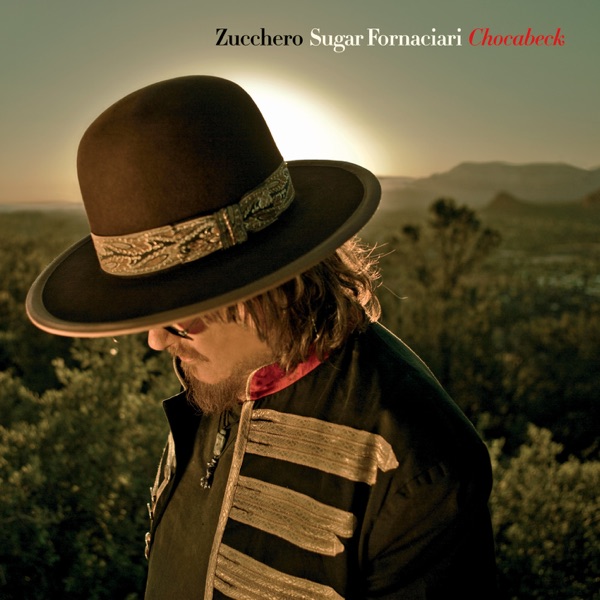
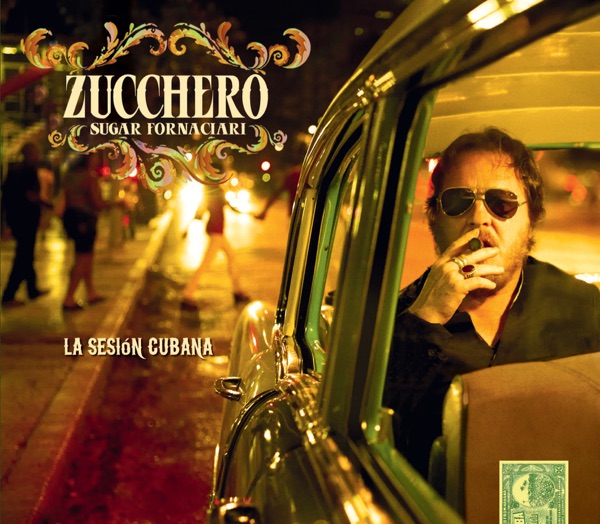
La sesión cubana
2012 · 14 tracks
- 1 Nena ↗ 4:40
- 2 Baila (Sexy Thing) ↗ 3:58
- 3 Un Kilo ↗ 3:31
- 4 Never Is A Moment ↗ 3:50
- 5 Guantanamera (Guajira) ↗ 3:52
- 6 Cuba libre ↗ 3:31
- 7 L'urlo ↗ 3:06
- 8 Everybody's Got to Learn Sometime ↗ 4:22
- 9 Love Is All Around (Still) ↗ 4:06
- 10 Così celeste ↗ 4:32
- 11 Pana (feat. Bebe) ↗ 3:46
- 12 Ave Maria no morro (feat. Djavan) ↗ 3:36
- 13 Sabor a ti ↗ 3:12
- 14 Love Is All Around ↗ 4:05
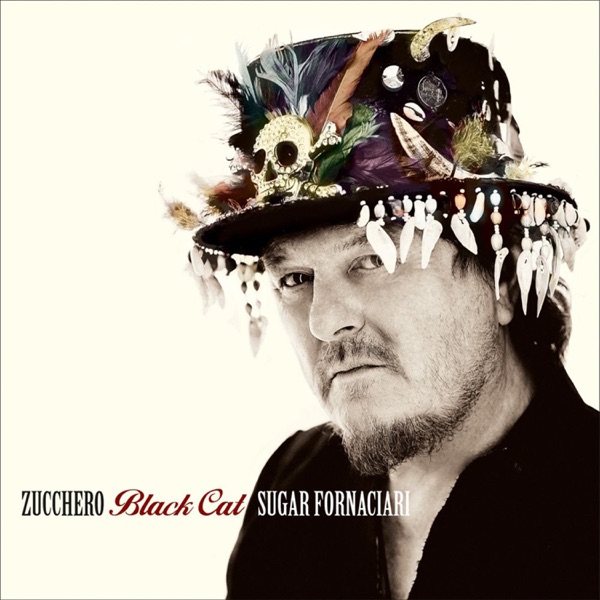
Black Cat
2016 · 13 tracks
- 1 Partigiano reggiano ↗ 3:00
- 2 13 buone ragioni ↗ 3:26
- 3 Ti voglio sposare ↗ 3:08
- 4 Streets of Surrender (S.O.S.) [feat. Mark Knopfler] ↗ 3:57
- 5 Ten More Days ↗ 3:21
- 6 L'anno dell'amore ↗ 3:25
- 7 Hey Lord ↗ 4:03
- 8 Fatti di sogni ↗ 3:34
- 9 La tortura della luna ↗ 3:35
- 10 Turn the World Down ↗ 3:54
- 11 Terra incognita ↗ 4:17
- 12 Voci (Namanama Version) ↗ 3:47
- 13 Ci si arrende (feat. Mark Knopfler) ↗ 3:57

Inacustico: D.O.C. & More
2021 · 25 tracks
- 1 Spirito Nel Buio (Acoustic Version) ↗ 3:40
- 1 Voci (Acoustic Version) ↗ 3:44
- 2 Soul Mama (Acoustic Version) ↗ 3:27
- 2 Il Suono Della Domenica (Acoustic Version) ↗ 3:36
- 3 Cose Che Già Sai (feat. Frida Sundemo) [Acoustic Version] ↗ 4:05
- 3 Blu (Acoustic Version) ↗ 5:13
- 4 Testa O Croce (Acoustic Version) ↗ 4:08
- 4 È Un Peccato Morir (Acoustic Version) ↗ 3:41
- 5 Freedom (Acoustic Version) ↗ 4:04
- 5 Dindondio (Acoustic Version) ↗ 4:21
- 6 Vittime Del Cool (Acoustic Version) ↗ 3:36
- 6 L'Amore È Nell'Aria (Acoustic Version) ↗ 3:32
- 7 Sarebbe Questo Il Mondo (Acoustic Version) ↗ 4:09
- 7 È Delicato (Acoustic Version) ↗ 3:31
- 8 La Canzone Che Se Ne Va (Acoustic Version) ↗ 4:52
- 8 Ci Si Arrende (Acoustic Version) ↗ 3:57
- 9 Badaboom (Bel Paese) [Acoustic Version] ↗ 3:17
- 9 Wonderful Life (Acoustic Version) ↗ 5:16
- 10 Tempo Al Tempo (Acoustic Version) ↗ 3:50
- 10 Love Is All Around (Acoustic Version) ↗ 4:08
- 11 Nella Tempesta (Acoustic Version) ↗ 3:26
- 11 Hai Scelto Me (Acoustic Version) ↗ 2:28
- 12 My Freedom (Acoustic Version) ↗ 4:03
- 13 Someday (Acoustic Version) ↗ 3:36
- 14 Don't Let It Be Gone (feat. Frida Sundemo) [Acoustic Version] ↗ 4:06
-
 RispettoZucchero198611 tracks
 -
 Blue’sZucchero198711 tracks
 -
 Oro, incenso & birraZucchero19899 tracks
 - ZuccheroZucchero19919 tracks
-
 ShakeZucchero200111 tracks
 -
 FlyZucchero200611 tracks
 -
 ChocabeckZucchero201011 tracks
 -
 La sesión cubanaZucchero201214 tracks
 -
 Black CatZucchero201613 tracks
 -
 Inacustico: D.O.C. & MoreZucchero202125 tracks
Deep Dive
Overview
Adelmo Fornaciari, known professionally as Zucchero or Zucchero Fornaciari, is an Italian singer, musician, and songwriter born in 1955. His stage name—Italian for “sugar,” bestowed upon him by a primary school teacher—belies the serious artistic mission that has defined his four-decade career: introducing blues and soul to the Italian mainstream and sustaining an international profile as one of Europe’s most enduring blues artists. His music fuses gospel, soul, blues, and rock with Italian balladry and R&B-boogie rhythms, a hybrid that has established him as the foundational figure in Italian blues.
Formation Story
Zucchero emerged from the Italian rock and soul scene of the early 1980s, a landscape where blues and soul music remained marginal despite thriving popularity elsewhere in Europe and the United States. Growing up in a post-war Italy increasingly open to Anglo-American musical influence, Fornaciari gravitated toward the emotional and improvisational language of blues and gospel rather than the pop-oriented rock dominating Italian radio. His early musical identity synthesized these black American idioms with the lyrical sensibility of Italian songwriting, positioning him as a bridge between two distinct musical traditions. This fusion would become his signature and, in time, his cultural contribution: making blues credible and commercially viable in a national market where it had been treated as a foreign curiosity.
Breakthrough Moment
Zucchero’s professional recording career began in 1983 with the album Un po’ di Zucchero (“A Little Zucchero”), which introduced his hybrid sound to an Italian audience. The album demonstrated his ability to balance bluesy intensity with melodic accessibility, a formula that attracted attention from international producers and musicians. In 1985, he collaborated with American session and touring legend Randy Jackson on Zucchero & The Randy Jackson Band, a partnership that lent credibility to his blues credentials and expanded his reach beyond Italy. By the mid-1980s, Zucchero had begun the difficult work of legitimizing blues in a country where the genre had minimal institutional or commercial foothold. His persistence and the quality of his songwriting and performances gradually shifted Italian perceptions, earning him recognition as not merely an enthusiast but as an authentic voice within the blues tradition.
Peak Era
Zucchero’s most creatively and commercially significant period stretched from the late 1980s through the 1990s. Oro, incenso & birra (1989) solidified his status as Italy’s leading blues artist, while the self-titled Zucchero (1991) and Miserere (1992) marked the apex of his international profile. These albums showcased his mature songwriting and vocal command, blending blues-rock intensity with the production sophistication increasingly expected in the global market. Bluesugar (1998) extended this run, demonstrating his ability to refresh his sound while remaining rooted in blues and soul fundamentals. Throughout this period, Zucchero toured extensively across Europe and internationally, building an audience that recognized him not as a novelty Italian blues artist but as a legitimate exponent of the form. His commercial and artistic success during these years fundamentally altered the perception of blues in Italy, establishing it as a genre worthy of serious attention rather than an imported footnote.
Musical Style
Zucchero’s sound is built on a foundation of American blues, soul, and gospel, grafted onto Italian songwriting traditions and arranged with a sophistication drawn from European rock and pop production. His voice is a supple baritone capable of both raw, gritty blues phrasing and smooth, soulful delivery; he employs vibrato and melismatic runs derived from soul and gospel singers rather than from traditional European vocal training. Instrumentation typically centers on guitar-driven arrangements with prominent organ or keyboards, rhythm sections anchored by steady grooves rather than the swing feel of American blues, and occasional orchestral or string arrangements that evoke Italian ballad traditions. His songwriting tends toward thematic coherence—storytelling rather than the open-ended narrative of American blues—and often incorporates Italian language alongside English, a bilingual approach that underscores his role as a cultural intermediary. Over his career, the production around his core blues identity evolved from relatively sparse 1980s arrangements toward the fuller, more polished productions of the 1990s and 2000s, though the blues-soul essence remained constant.
Major Albums
Oro, incenso & birra (1989)
This album cemented Zucchero’s position as Italy’s pre-eminent blues artist, balancing soulful rock-blues with Italian sensibility and achieving significant recognition across Europe. It marked the moment when his earlier promise crystallized into undeniable artistic achievement.
Zucchero (1991)
The self-titled album represented Zucchero at the height of his international visibility, showcasing mature songwriting and arranging that appealed to both blues purists and mainstream European audiences. It became his most commercially successful work and remains his signature statement.
Miserere (1992)
Following his self-titled breakthrough, Miserere deepened his exploration of soul and blues with orchestral and production sophistication, proving that his 1991 success was not a one-off achievement but reflective of a durable artistic vision.
Bluesugar (1998)
This album extended Zucchero’s blue-eyed soul approach into the late 1990s, updating his sound with contemporary production while maintaining blues authenticity. It demonstrated his ability to adapt without abandoning his core identity.
Shake (2001)
Released in the early 2000s, Shake continued his evolution, incorporating more contemporary R&B and rock elements while preserving the blues foundation that had sustained his career for nearly two decades.
Signature Songs
- “Un po’ di Zucchero” — The title track from his 1983 debut that introduced listeners to his distinctive fusion of blues intensity and Italian melodicism.
- “Miserere” — A signature ballad that became one of his most recognizable pieces and a staple of his live performances.
- Songs from his 1991 self-titled album — Tracks that achieved greatest international circulation and remain his best-known work to global audiences.
Influence on Rock
Zucchero’s primary influence has been the legitimization and Italianization of blues as a serious genre in a market where it had been peripheral. By demonstrating that a non-American artist could command credibility within blues traditions while bringing a distinctly European sensibility to the form, he broadened the geography of blues respectability and opened pathways for other European blues artists. His success challenged the implicit assumption that blues belonged exclusively to American and British performers, showing instead that the form could be both authentic and locally inflected. His spanning of Italian and English languages, and his integration of Italian ballad traditions with American blues, created a template for cross-cultural musical fusion that influenced subsequent European rock and blues musicians navigating between local and international traditions.
Legacy
Zucchero has sustained an active recording and touring career from 1983 to the present, releasing studio albums through the 2020s including Black Cat (2016), D.O.C. (2019), and the acoustic album Inacustico: D.O.C. & More (2021), followed by Discover and Discover II in 2021 and 2024. His longevity and consistent output across four decades mark him as one of the few European blues artists to maintain both creative output and international commercial viability across generations of listeners. He remains the foundational figure in Italian blues history, credited with introducing the genre to mainstream Italian audiences and sustaining its presence in European rock and popular music. His recordings remain available through major streaming platforms and are continuously discovered by new audiences, and his tours continue to draw both longtime fans and newer listeners. Zucchero’s career stands as a singular achievement in European blues: not as an imitator of American forms but as an artist who successfully indigenized the tradition, making it Italian without diluting its essential blues identity.
Fun Facts
- His primary school teacher’s casual nickname—calling him “Zucchero” (sugar)—became his permanent professional identity, adopted as his stage name throughout his entire recording career.
- Zucchero’s 1985 collaboration with American session musician Randy Jackson was one of the few times he has formally credited a collaborator in an album title, signaling the importance of that partnership in establishing his blues credentials internationally.
- He has maintained his official website (www.zucchero.it) as a direct channel to fans, reflecting his long-term engagement with his audience across the internet era.
- Despite being born in 1955 and beginning his career in 1983, Zucchero continued releasing new studio albums into the 2020s, demonstrating artistic persistence across four decades of evolving popular music trends.