
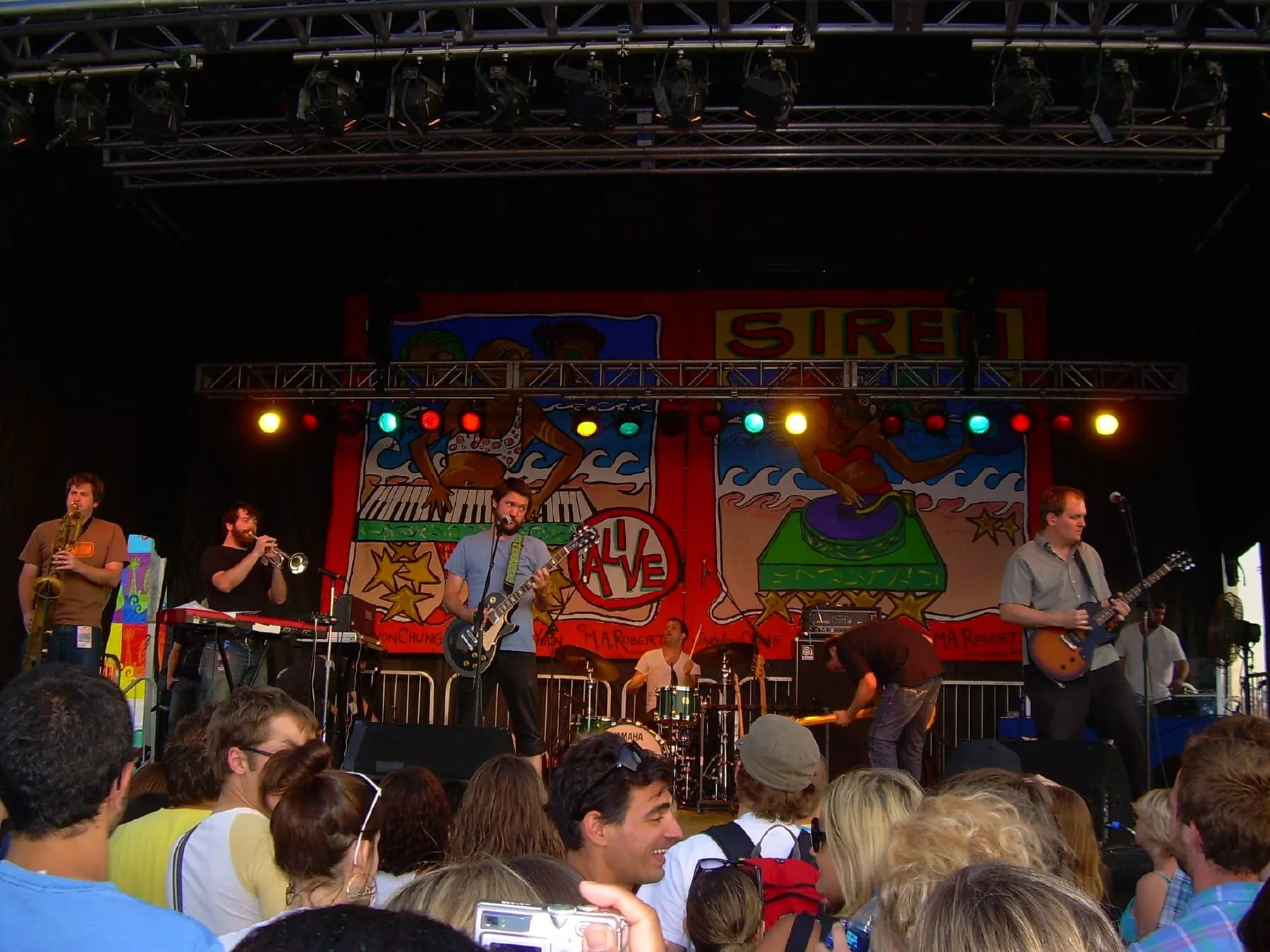
Photo by Taken by flickr user abbynormy (thanks). , licensed under CC BY 2.0 · Wikimedia Commons
Rank #489
Cursive
Omaha emo-leaning indie-rock band of literate concept albums.
From Wikipedia
Cursive is an American indie rock band from Omaha, Nebraska. Stylistically described as emo and post-hardcore, Cursive came to prominence with 2000's Domestica and found commercial and critical success with 2003's The Ugly Organ. The band has released ten studio albums, a compilations album, and a mix of singles and EPs since 1997. They have released recordings on several labels, including 15 Passenger Records, Saddle Creek Records, and Big Scary Monsters (UK).
Members
- Tim Kasher
Discography & Previews
Browse through and click an album to open and play 30-second previews streamed from Apple Music.

Such Blinding Stars for Starving Eyes
1997 · 11 tracks
- 1 After the Movies (Remastered) ↗ 4:27
- 2 Downhill Racers (Remastered) ↗ 4:36
- 3 Ceilings Crack (Remastered) ↗ 3:41
- 4 The Dirt of the Vineyard (Remastered) ↗ 4:09
- 5 Target Group (Remastered) ↗ 4:26
- 6 Eight Light Minutes (Remastered) ↗ 2:24
- 7 Vermont (Remastered) ↗ 3:42
- 8 Dedication to Desertion (Remastered) ↗ 3:11
- 9 Warped the Wood Floors (Remastered) ↗ 3:49
- 10 Retirement (Remastered) ↗ 3:51
- 11 The Farewell Party (Remastered) ↗ 3:55

The Storms of Early Summer: Semantics of Song
1998 · 11 tracks
- 1 The Rhyme Scheme ↗ 3:44
- 2 A Career in Transcendence ↗ 2:18
- 3 The Road to Financial Stability ↗ 2:34
- 4 Tempest ↗ 2:34
- 5 Break in the New Year ↗ 4:03
- 6 Proposals ↗ 5:06
- 7 Semantics of Sermon ↗ 2:52
- 8 A Little Song and Dance ↗ 3:17
- 9 When Summer's Over Will We Dream of Spring ↗ 3:53
- 10 Northern Winds ↗ 3:01
- 11 Absence Makes the Day Go Longer ↗ 4:35
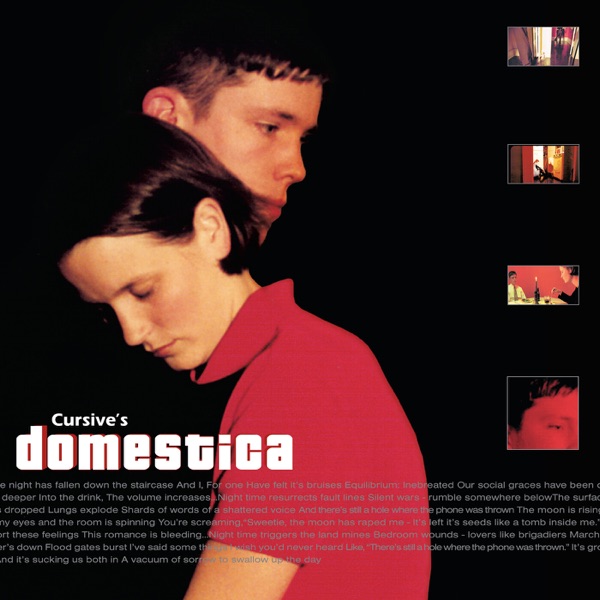
Domestica
2000 · 9 tracks

The Ugly Organ
2003 · 12 tracks
- 1 The Ugly Organist ↗ 0:53
- 2 Some Red-Handed Sleight of Hand ↗ 1:53
- 3 Art Is Hard ↗ 2:46
- 4 The Recluse ↗ 3:03
- 5 Herald! Frankenstein ↗ 0:47
- 6 Butcher the Song ↗ 3:31
- 7 Driftwood: A Fairy Tale ↗ 4:41
- 8 A Gentleman Caller ↗ 3:19
- 9 Harold Weathervein ↗ 2:59
- 10 Bloody Murderer ↗ 2:52
- 11 Sierra ↗ 3:25
- 12 Staying Alive ↗ 10:04

Happy Hollow
2006 · 14 tracks
- 1 Opening the Hymnal / Babies ↗ 2:32
- 2 Dorothy at Forty ↗ 3:03
- 3 Big Bang ↗ 3:57
- 4 Bad Sects ↗ 3:40
- 5 Flag and Family ↗ 2:57
- 6 Dorothy Dreams of Tornados ↗ 2:54
- 7 Retreat! ↗ 3:58
- 8 The Sunks ↗ 2:54
- 9 At Conception ↗ 2:57
- 10 So-So Gigolo ↗ 3:43
- 11 Bad Science ↗ 2:41
- 12 Into the Fold ↗ 4:16
- 13 Rise Up! Rise Up! ↗ 3:23
- 14 Hymns for the Heathen ↗ 2:39


I Am Gemini
2012 · 13 tracks
- 1 This House Alive ↗ 4:13
- 2 Warmer, Warmer ↗ 3:55
- 3 The Sun and Moon ↗ 3:58
- 4 Drunken Birds ↗ 2:33
- 5 Lullaby for No Name ↗ 1:23
- 6 Double Dead ↗ 2:46
- 7 Gemini ↗ 2:28
- 8 Twin Dragon/Hello Skeleton ↗ 5:56
- 9 Wowowow ↗ 3:09
- 10 This House a Lie ↗ 1:31
- 11 The Cat and Mouse ↗ 2:40
- 12 A Birthday Bash ↗ 4:25
- 13 Eulogy for No Name ↗ 4:12
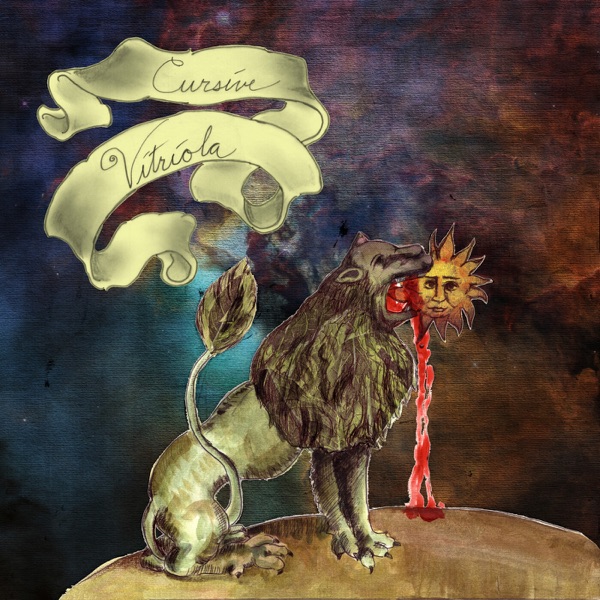

Get Fixed
2019 · 11 tracks

Devourer
2024 · 13 tracks
-
 Such Blinding Stars for Starving EyesCursive199711 tracks
 -
 The Storms of Early Summer: Semantics of SongCursive199811 tracks
 -
 DomesticaCursive20009 tracks
 -
 The Ugly OrganCursive200312 tracks
 -
 Happy HollowCursive200614 tracks
 -
 Mama, I’m SwollenCursive200910 tracks
 -
 I Am GeminiCursive201213 tracks
 -
 VitriolaCursive201810 tracks
 -
 Get FixedCursive201911 tracks
 -
 DevourerCursive202413 tracks
Deep Dive
Overview
Cursive is an American indie rock band from Omaha, Nebraska, formed in 1995. Stylistically positioned between emo and post-hardcore with strong indie rock foundations, the band emerged from the American heartland to become one of the more distinctive voices in early-2000s alternative rock. Their strength lies in concept-driven albums built on literary ambition and instrumental sophistication, distinguishing them from the more straightforward emotional directness that defined much of their era’s emo landscape.
Formation Story
Cursive was formed in Omaha in 1995, a city not typically associated with indie rock prominence at the time. The band’s foundation centered on Tim Kasher, who would become the creative and vocal anchor throughout their career. Emerging from Omaha’s independent music scene, Cursive began recording and releasing material in the mid-1990s, initially appearing on smaller regional labels before establishing a long-term relationship with Saddle Creek Records, the Omaha-based independent label that would become synonymous with their identity.
Breakthrough Moment
Cursive’s initial releases—Such Blinding Stars for Starving Eyes (1997) and The Storms of Early Summer: Semantics of Song (1998)—established their approach but remained largely within underground and regional circuits. The breakthrough arrived with Domestica in 2000, an album that brought the band to wider critical and listener attention. Domestica demonstrated the band’s ability to construct emotionally complex narratives within rock frameworks, earning them recognition beyond their Midwestern base and setting the stage for broader commercial potential.
Peak Era
The period from 2003 to 2009 represented Cursive’s peak era of commercial success and critical validation. The Ugly Organ (2003) became their most acclaimed work, establishing them as serious artistic voices within the indie rock and emo-adjacent landscape. The album’s success was sustained through subsequent releases: Happy Hollow (2006) and Mama, I’m Swollen (2009) continued demonstrating the band’s commitment to ambitious songwriting and thematic depth. During this window, Cursive achieved both critical respect and meaningful commercial traction, appearing on significant festival lineups and building a dedicated fanbase across North America.
Musical Style
Cursive’s sound synthesizes post-hardcore intensity with indie rock’s textural sophistication and emo’s emotional transparency, though their approach differs from typical emo formulas. Their music is characterized by angular guitar work, dynamic shifts from quiet introspection to visceral loudness, and Kasher’s distinctive vocal delivery—ranging from conversational spoken passages to urgent singing. The band employs literary and conceptual frameworks as structural organizing principles rather than mere thematic window dressing, with albums often operating as unified artistic statements exploring psychological and social themes. String arrangements, when employed, add classical textures that elevate their work beyond standard rock formats. Throughout their catalog, Cursive maintained an approach that valued intellectual engagement alongside emotional immediacy, resisting both the simplification of mainstream emo and the obscurantism of avant-garde indie.
Major Albums
Domestica (2000)
The album that established Cursive as more than a regional act, Domestica showcased their ability to balance lyrical ambition with rock immediacy, earning widespread critical recognition within indie and alternative circles.
The Ugly Organ (2003)
Cursive’s most successful and artistically accomplished work, The Ugly Organ combined their sharpest songwriting with production clarity and thematic cohesion, becoming the benchmark against which their subsequent work was measured.
Happy Hollow (2006)
Continuing their commercial and critical momentum, Happy Hollow demonstrated the band’s evolving approach to arrangement and song structure while maintaining their core identity.
I Am Gemini (2012)
Released after a three-year gap, I Am Gemini returned Cursive to concept-album territory with renewed creative ambition, signaling their commitment to artistic development over commercial calculation.
Signature Songs
- “The Ugly Organ” — The title track that exemplifies the band’s ability to marry post-hardcore dynamics with literary sophistication.
- “Domestic” — A standout from their breakthrough album, demonstrating their gift for emotional intensity and dynamic arrangement.
- “Some Ugly Vector” — Showcases Kasher’s ability to balance conversational lyricism with visceral vocal delivery.
- “Art Is Hard” — A meditation on artistic struggle that captures the band’s intellectual approach to rock music.
Influence on Rock
Cursive’s influence extends across the broader landscape of 2000s indie rock and alternative music. Their insistence on conceptual frameworks and literary ambition within rock contexts influenced a generation of bands seeking to balance commercial accessibility with artistic substance. They helped establish Saddle Creek Records as a significant independent label, contributing to Omaha’s emergence as a notable American music city alongside more traditional centers. Their approach to emo—treating it as a vehicle for intellectual exploration rather than solely as an outlet for teenage angst—provided an alternative model for artists working within emo and post-hardcore traditions, demonstrating that the genres could accommodate complexity and nuance without sacrificing emotional authenticity.
Legacy
Cursive has maintained active status since their formation, continuing to record and perform into the 2020s. Vitriola (2018), Get Fixed (2019), and Devourer (2024) demonstrate their ongoing creative engagement, with the band refusing the trajectory of reunion nostalgia that claimed many of their contemporaries. Their influence on the Omaha music scene remains substantial, and their catalog has secured a lasting place within early-2000s indie rock and emo discourse. Streaming platforms have introduced their music to audiences born well after their commercial peak, while critics continue to reassess their early albums as significant documents of their era. The band’s longevity and consistent artistic commitment have established them not as a relic of a particular moment but as enduring practitioners of thoughtful, ambitious rock music.
Fun Facts
- Cursive has released ten studio albums across nearly three decades, maintaining artistic output without extended hiatuses or multiple reunions.
- The band’s association with Saddle Creek Records connected them to a broader Omaha music community that included numerous other influential independent artists.
- Their commitment to concept albums across multiple releases—including the thematically unified I Am Gemini—distinguished them from contemporaries who treated albums as collections of singles.