
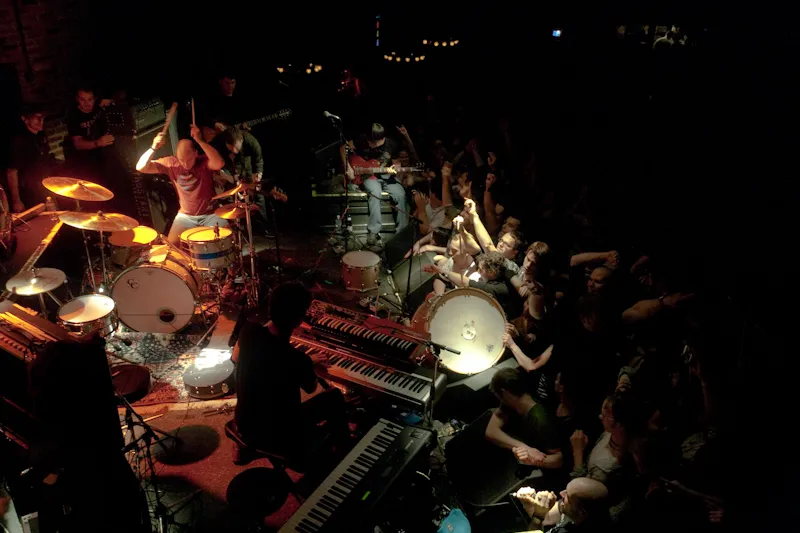
Photo by Joe-rayment , licensed under CC BY 3.0 · Wikimedia Commons
Rank #488
And You Will Know Us by the Trail of Dead
Austin post-hardcore prog-leaning band of cinematic ambition.
From Wikipedia
...And You Will Know Us by the Trail of Dead, are an American alternative rock band from Austin, Texas, formed in 1994. The band's earliest stable lineup consisted of Conrad Keely, Jason Reece, Kevin Allen and Neil Busch, though for most of the band's history Keely and Reece were the core members with other musicians serving for varying lengths of time. Trail of Dead had a cult following and were known for their energetic and protracted live performances. Between 1998 and 2023, the band released eleven studio albums and five EPs along with one live album and twenty-two singles. The artwork for all of the albums was created by Keely using various media. This artwork has recurring mythical and historical themes.
Discography & Previews
Browse through and click an album to open and play 30-second previews streamed from Apple Music.


Madonna
1999 · 13 tracks
- 1 And You Will Know Them... ↗ 0:31
- 2 Mistakes and Regrets ↗ 3:47
- 3 Totally Natural ↗ 4:16
- 4 Blight Takes All ↗ 4:44
- 5 Claire De Lune ↗ 3:26
- 6 Flood of Red ↗ 3:54
- 7 Children of the Hydra's Teeth ↗ 1:23
- 8 Marc David Chapman ↗ 4:10
- 9 Up From Redemption ↗ 0:23
- 10 Aged Dolls ↗ 7:17
- 11 The Day the Air Turned Blue ↗ 1:03
- 12 A Perfect Teenhood ↗ 5:17
- 13 Sigh Your Children ↗ 5:23

Source Tags & Codes
2002 · 11 tracks
- 1 It Was There That I Saw You ↗ 4:02
- 2 Another Morning Stoner ↗ 4:34
- 3 Baudelaire ↗ 4:17
- 4 Homage (EP) ↗ 3:29
- 5 How Near, How Far ↗ 4:00
- 6 Heart in the Hand of the Matter ↗ 4:48
- 7 Monsoon ↗ 5:54
- 8 Days of Being Wild ↗ 3:27
- 9 Relative Ways (EP) ↗ 4:03
- 10 After the Laughter ↗ 1:15
- 11 Source Tags & Codes ↗ 6:09

Worlds Apart
2005 · 12 tracks
- 1 Ode To Isis ↗ 1:17
- 2 Will You Smile Again For Me ↗ 6:51
- 3 Worlds Apart ↗ 2:56
- 4 The Summer Of '91 ↗ 3:12
- 5 The Rest Will Follow ↗ 3:20
- 6 Caterwaul ↗ 4:53
- 7 A Classic Art Showcase ↗ 5:47
- 8 Let It Dive ↗ 4:46
- 9 To Russia, My Homeland ↗ 1:26
- 10 All White ↗ 1:50
- 11 The Best ↗ 4:48
- 12 The Lost City Of Refuge ↗ 3:51

So Divided
2006 · 12 tracks
- 1 Intro: A Song of Fire and Wine ↗ 1:42
- 2 Stand In Silence ↗ 4:34
- 3 Wasted State of Mind ↗ 5:26
- 4 Naked Sun ↗ 6:03
- 5 Gold Heart Mountain Top Queen Directory ↗ 2:14
- 6 So Divided ↗ 6:29
- 7 Life ↗ 5:59
- 8 Eight Day Hell ↗ 2:09
- 9 Witch's Web ↗ 4:11
- 10 Segue: In the Realms of the Unreal ↗ 2:19
- 11 Sunken Dreams ↗ 5:05
- 12 Let It Dive (Demo Version) ↗ 3:50

The Century of Self
2009 · 13 tracks
- 1 The Giants Causeway ↗ 2:38
- 2 The Far Pavilions ↗ 4:54
- 3 Isis Unveiled ↗ 6:27
- 4 Halcyon Days ↗ 6:36
- 5 Bells of Creation ↗ 5:24
- 6 Fields of Coal ↗ 3:42
- 7 Inland Sea ↗ 4:09
- 8 Luna Park ↗ 4:22
- 9 Pictures Of An Only Child ↗ 4:44
- 10 Insatiable One ↗ 2:03
- 11 Ascending ↗ 4:47
- 12 An August Theme ↗ 0:51
- 13 Insatiable (Two) ↗ 3:01

Tao of the Dead
2011 · 12 tracks
- 1 Introduction: Let's Experiment ↗ 2:24
- 2 Pure Radio Cosplay ↗ 5:26
- 3 Summer of All Dead Souls ↗ 4:17
- 4 Cover the Days Like a Tidal Wave ↗ 2:51
- 5 Fall of the Empire ↗ 2:28
- 6 The Wasteland ↗ 2:33
- 7 Spiral Jetty ↗ 1:48
- 8 Weight of the Sun (Or the Post-Modern Prometheus) ↗ 2:19
- 9 Pure Radio Cosplay (Reprise) ↗ 3:18
- 10 Ebb Away ↗ 2:41
- 11 The Fairlight Pendant ↗ 5:44
- 12 Tao of the Dead, Pt. Two: Strange News From Another Planet ↗ 16:32

Lost Songs
2012 · 12 tracks

IX
2014 · 11 tracks
- 1 The Doomsday Book ↗ 3:32
- 2 Jaded Apostles ↗ 4:05
- 3 A Million Random Digits ↗ 3:08
- 4 Lie Without a Liar ↗ 3:22
- 5 The Ghost Within ↗ 3:15
- 6 The Dragonfly Queen ↗ 2:57
- 7 How to Avoid Huge Ships ↗ 4:47
- 8 Bus Lines ↗ 6:09
- 9 Lost in the Grand Scheme ↗ 7:26
- 10 Like Summer Tempests Came His Tears ↗ 3:42
- 11 Sound of the Silk ↗ 5:18

X: The Godless Void and Other Stories
2020 · 12 tracks
- 1 The Opening Crescendo ↗ 2:54
- 2 All Who Wander ↗ 4:56
- 3 Something Like This ↗ 4:36
- 4 Into the Godless Void ↗ 3:58
- 5 Don't Look Down ↗ 4:44
- 6 Gone ↗ 4:05
- 7 Children of the Sky ↗ 4:38
- 8 Who Haunts the Haunter ↗ 5:32
- 9 Eyes of the Overworld ↗ 1:49
- 10 Gravity ↗ 3:51
- 11 Blade of Wind ↗ 5:47
- 12 Through the Sunlit Door ↗ 3:50

XI: Bleed Here Now
2022 · 22 tracks
- 1 Our Epic Attempts ↗ 2:49
- 2 Long Distance Hell ↗ 1:28
- 3 Field Song ↗ 4:32
- 4 Penny Candle ↗ 3:28
- 5 No Confidence ↗ 5:16
- 6 String Theme ↗ 0:38
- 7 Kill Everyone ↗ 1:23
- 8 Growing Divide (feat. Britt Daniel) ↗ 3:24
- 9 Pigments ↗ 0:52
- 10 Golden Sail ↗ 5:31
- 11 A Life Less Melancholy ↗ 1:51
- 12 Taken by the Hand ↗ 11:12
- 13 Contra Mundum ↗ 5:17
- 14 Darkness into Light ↗ 1:30
- 15 Water Tower ↗ 5:07
- 16 Sounds of Horror ↗ 0:57
- 17 Protest Streets ↗ 6:09
- 18 The Widening Gyre ↗ 1:18
- 19 Millennium Actress (feat. Amanda Palmer) ↗ 4:23
- 20 Salt in Your Eyes ↗ 2:28
- 21 English Magic ↗ 2:57
- 22 Calm as the Valley ↗ 2:24
-
 …And You Will Know Us by the Trail of DeadAnd You Will Know Us by the Trail of Dead19978 tracks
 -
 MadonnaAnd You Will Know Us by the Trail of Dead199913 tracks
 -
 Source Tags & CodesAnd You Will Know Us by the Trail of Dead200211 tracks
 -
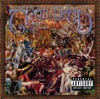 Worlds ApartAnd You Will Know Us by the Trail of Dead200512 tracks
 -
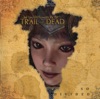 So DividedAnd You Will Know Us by the Trail of Dead200612 tracks
 -
 The Century of SelfAnd You Will Know Us by the Trail of Dead200913 tracks
 -
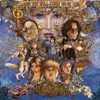 Tao of the DeadAnd You Will Know Us by the Trail of Dead201112 tracks
 -
 Lost SongsAnd You Will Know Us by the Trail of Dead201212 tracks
 -
 IXAnd You Will Know Us by the Trail of Dead201411 tracks
 -
 X: The Godless Void and Other StoriesAnd You Will Know Us by the Trail of Dead202012 tracks
 -
 XI: Bleed Here NowAnd You Will Know Us by the Trail of Dead202222 tracks
Deep Dive
Overview
…And You Will Know Us by the Trail of Dead stand as one of American post-hardcore’s most persistently inventive acts, emerging from Austin, Texas in 1994 with ambitions that extended well beyond standard three-chord intensity. The band positioned themselves at the intersection of post-hardcore’s noise and architecture, indie rock’s DIY ethos, and progressive rock’s formal complexity—a fusion that resulted in sprawling, cinematic compositions layered with mythical and historical imagery. Over three decades of activity, they cultivated a devoted following through legendary live performances, marked by protracted sets and visceral energy that became their calling card.
Formation Story
Trail of Dead coalesced in Austin during the mid-1990s, a moment when the city’s music scene was fragmenting into competing camps of alt-country, underground hip-hop, and experimental rock. The band’s earliest stable lineup of Conrad Keely, Jason Reece, Kevin Allen, and Neil Busch established the core partnership that would define the project: Keely and Reece as the nucleus, with additional musicians rotating through supporting roles across the band’s history. From their inception, the group distinguished itself through Keely’s dual role as both frontman and visual artist, designing all album artwork himself using various media—a commitment that embedded mythology and historical narrative into the visual identity of their records.
Breakthrough Moment
Trail of Dead’s debut self-titled album, …And You Will Know Us by the Trail of Dead, arrived in 1997 on a small independent label, establishing the band’s fundamental sound: dense instrumental arrangements built on layered guitars, propulsive rhythms, and Keely’s often anguished vocals. The record found an immediate audience within underground and college radio circuits, particularly on the West Coast and in indie rock communities attuned to post-hardcore’s growing sophistication. The band’s reputation accelerated through their live shows, which became legendary for their length and intensity—performances that extended far beyond standard rock concert durations and created an almost ritualistic experience for attendees. By the time of their second album, Madonna (1999), Trail of Dead had established themselves as essential figures in the post-hardcore underground.
Peak Era
The period from 2002 to 2009 marked Trail of Dead’s most critically engaged and commercially visible window. Source Tags & Codes (2002) arrived with increased production polish and expanded compositional ambition, establishing the band as serious practitioners of post-hardcore architecture. Worlds Apart (2005) deepened this trajectory, while The Century of Self (2009) showcased a band in full command of their aesthetic vision—bridging the gap between their noise-rock origins and increasingly sophisticated song structures. During this era, the band maintained touring schedules that emphasized their reputation for endurance and intensity, with live performances remaining the primary vehicle for their artistic statement. The artwork accompanying these albums—Keely’s paintings and designs—grew more elaborate, creating a comprehensive visual mythology alongside the music.
Musical Style
Trail of Dead’s sound draws from post-hardcore’s foundational vocabulary of dissonance, dynamics, and structural unpredictability, but filters these elements through a distinctly progressive sensibility. Their compositions often unfold across extended durations, building from minimal, sparse passages into walls of layered guitar, synthesizer, and rhythm section intensity. Keely’s vocals—ranging from sung melodies to angular shouts and whispered passages—function as another textural instrument rather than a traditional lead voice. The band’s instrumentation expanded and contracted across their catalog, incorporating additional layers of keyboards and orchestral elements while maintaining the physical, almost physical weight of live performance. Their approach to production emphasizes clarity within complexity; even in their most densely arranged passages, individual instrumental lines remain audible, creating a stereo image of considerable depth.
Major Albums
Source Tags & Codes (2002)
A high-water mark of post-hardcore ambition, this album consolidated Trail of Dead’s vision of long-form composition and visual-musical integration, establishing them as more than a live phenomenon.
Worlds Apart (2005)
The band’s most expansive statement, Worlds Apart extended their reach into prog-rock territories while maintaining the visceral energy that defined their live presence.
The Century of Self (2009)
Released at the midpoint of their catalog, this album synthesized two decades of songwriting experience, balancing accessibility with the experimental impulses that had always driven their work.
IX (2014)
Marking the band’s numerical naming convention for subsequent releases, IX demonstrated their continued commitment to experimentation and long-form composition after over two decades of activity.
Signature Songs
- “Relative Ways” — A defining example of the band’s ability to balance melody with dissonance and controlled instrumental intensity.
- “How Near How Far” — Showcases Keely’s vocal range and the band’s knack for dynamic arrangement across extended structures.
- “Summer Ride” — Demonstrates their capacity for relative concision while maintaining architectural complexity within post-hardcore frameworks.
- “Catacombs of the Black Vatican” — Exemplifies the mythological and historical themes embedded in both songwriting and visual presentation.
Influence on Rock
Trail of Dead’s enduring significance within post-hardcore derives from their refusal to compress their ambitions into standard song formats. They demonstrated that post-hardcore could accommodate progressive complexity and extended composition without abandoning the genre’s essential character—its emphasis on dynamics, noise, and emotional intensity. Their commitment to visual art as integral to their project influenced a broader wave of post-2000 post-hardcore and alternative rock bands that understood album artwork and mythology as central to their artistic statement. The band’s legendary live performances established a template for how post-hardcore bands could use duration and intensity not as indulgence but as genuine artistic statement, influencing generations of touring acts committed to in-the-moment artistic exploration.
Legacy
By the early 2020s, Trail of Dead had released eleven studio albums spanning more than two and a half decades of continuous activity. The 2020 album X: The Godless Void and Other Stories and 2022’s XI: Bleed Here Now demonstrated their continued creative engagement, even as the broader post-hardcore landscape had shifted beneath them. The band’s influence on independent and alternative rock communities remained significant, particularly among musicians and listeners invested in post-hardcore’s art-rock aspirations. Trail of Dead’s catalog—consistently designed with care in both sonic and visual registers—established them as essential figures in understanding how post-hardcore could sustain artistic ambition across decades without mainstream commercial breakthrough or significant industry recognition. Their work with label Dine Alone Records represented the kind of artist-label partnership that allowed for creative continuity and consistent output.
Fun Facts
- Conrad Keely’s role as the band’s visual artist—creating all album artwork through various media—emerged from his commitment to integrating visual and sonic expression into a unified artistic project.
- The band’s live performances became legendary for their extended durations, transforming Trail of Dead shows into events distinct from standard rock concerts in terms of both temporal commitment and physical intensity.
- Between 1998 and 2023, the band released five extended plays alongside their eleven studio albums, indicating a commitment to releasing material across multiple formats and lengths.
- The band’s choice to number their later albums (IX, X, XI) represented a shift toward a more abstract titling system, moving away from conventional album naming structures.