
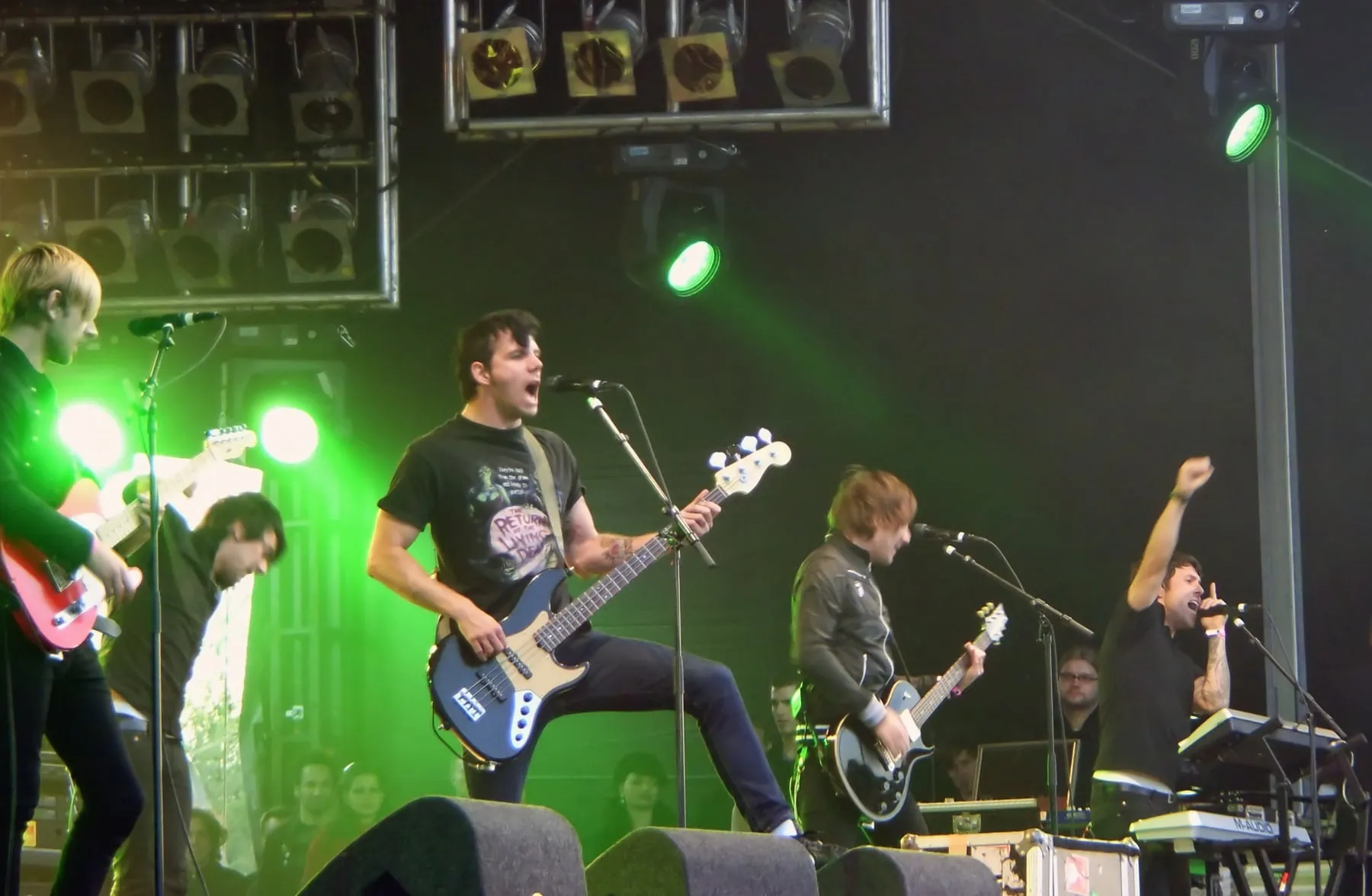
Photo by Danny Lechanteur , licensed under CC BY-SA 3.0 · Wikimedia Commons
Rank #195
Lostprophets
From Wikipedia
Lostprophets were a Welsh rock band from Pontypridd, formed in 1997 by singer Ian Watkins and guitarist Lee Gaze. The group was founded after their former band Fleshbind broke up. They later recruited Mike Chiplin on drums, Mike Lewis as rhythm guitarist, Stu Richardson on bass guitar and Jamie Oliver on turntables and keyboards. Chiplin left the band in 2005, and was replaced by Ilan Rubin between 2006 and 2009, and Luke Johnson thereafter.
Members
- Ian Watkins (?–2013)
Discography & Previews
Browse through and click an album to open and play 30-second previews streamed from Apple Music.

The Fake Sound of Progress
2000 · 11 tracks
- 1 Shinobi Vs Dragon Ninja ↗ 2:47
- 2 The Fake Sound of Progress ↗ 5:32
- 3 Five Is a Four Letter Word ↗ 4:25
- 4 And She Told Me To Leave ↗ 5:56
- 5 Kobrakai ↗ 5:33
- 6 The Handsome Life of Swing ↗ 3:49
- 7 A Thousand Apologies ↗ 4:06
- 8 Still Laughing ↗ 5:43
- 9 For Sure ↗ 4:20
- 10 Awkward ↗ 4:24
- 11 Ode To Summer ↗ 3:16
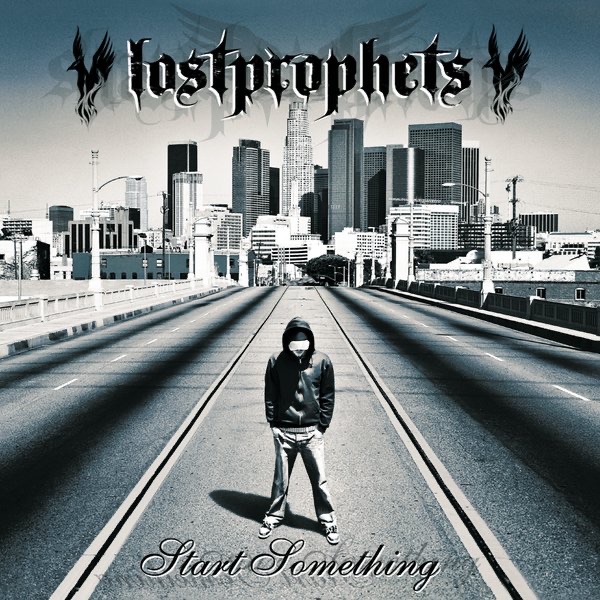
Start Something
2004 · 13 tracks
- 1 We Still Kill the Old Way ↗ 4:21
- 2 To Hell We Ride ↗ 3:40
- 3 Last Train Home ↗ 4:35
- 4 Wake Up (Make a Move) ↗ 3:57
- 5 Burn, Burn ↗ 3:36
- 6 I Don't Know ↗ 3:57
- 7 Hello Again ↗ 4:57
- 8 Goodbye Tonight ↗ 3:54
- 9 Start Something ↗ 3:26
- 10 A Million Miles ↗ 4:25
- 11 Last Summer ↗ 4:07
- 12 Sway ↗ 4:25
- 13 Outro ↗ 6:07
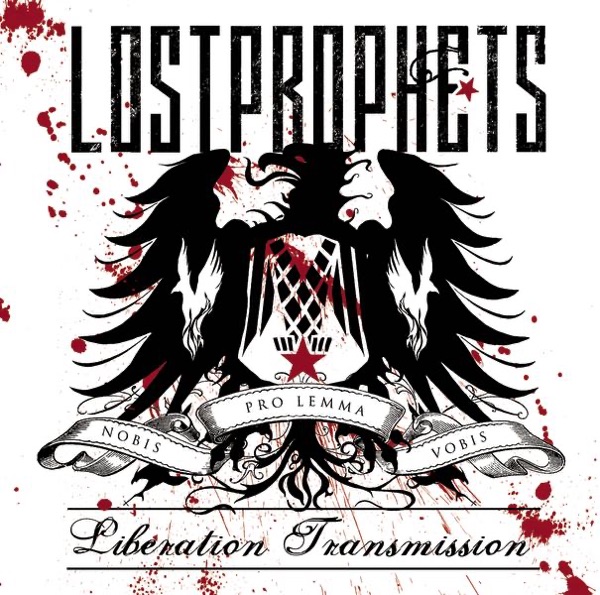
Liberation Transmission
2006 · 12 tracks
- 1 Everyday Combat ↗ 5:11
- 2 A Town Called Hypocrisy ↗ 3:40
- 3 The New Transmission ↗ 3:33
- 4 Rooftops (A Liberation Broadcast) ↗ 4:12
- 5 Can't Stop, Gotta Date With Hate ↗ 3:42
- 6 Can't Catch Tomorrow (Good Shoes Won't Save You This Time) ↗ 3:36
- 7 Everybody's Screaming!!! ↗ 3:53
- 8 Broken Hearts, Torn Up Letters and the Story of a Lonely Girl ↗ 4:04
- 9 4 AM Forever ↗ 4:27
- 10 For All These Times Son, for All These Times ↗ 3:55
- 11 Heaven for the Weather, Hell for the Company ↗ 4:14
- 12 Always All Ways (Apologies, Glances and Messed Up Chances) ↗ 4:25

The Betrayed
2010 · 11 tracks
- 1 If It Wasnt For Hate, We'd Be Dead By Now ↗ 2:19
- 2 Dstryr/Dstryr ↗ 4:29
- 3 Its Not the End of the World, But I Can See It From Here ↗ 4:19
- 4 Where We Belong ↗ 4:37
- 5 Next Stop, Atro City ↗ 3:02
- 6 For Hes a Jolly Good Felon ↗ 4:41
- 7 A Better Nothing ↗ 4:45
- 8 Streets of Nowhere ↗ 3:26
- 9 Dirty Little Heart ↗ 5:42
- 10 Darkest Blue ↗ 3:51
- 11 The Light That Shines Twice As Bright ↗ 5:52

Weapons
2012 · 12 tracks
- 1 Bring Em Down ↗ 4:10
- 2 We Bring an Arsenal ↗ 3:26
- 3 Another Shot ↗ 4:08
- 4 Jesus Walks ↗ 4:35
- 5 A Song For Where I'M From ↗ 3:52
- 6 A Little Reminder That I'LL Never Forget ↗ 4:17
- 7 Better Off Dead ↗ 3:37
- 8 Heart On Loan ↗ 4:08
- 9 Somedays ↗ 3:42
- 10 Cant Get Enough ↗ 15:14
- 11 Weapon (Garage Sessions) ↗ 2:43
- 12 If You Dont Stand For Something, You'LL Fall For Anything (Demo) ↗ 4:40
-
 The Fake Sound of ProgressLostprophets200011 tracks
 -
 Start SomethingLostprophets200413 tracks
 -
 Liberation TransmissionLostprophets200612 tracks
 -
 The BetrayedLostprophets201011 tracks
 -
 WeaponsLostprophets201212 tracks
Deep Dive
Overview
Lostprophets were a Welsh rock band from Pontypridd who emerged from the late-1990s nu-metal and alternative rock landscape. Active from 1997 onward, the group became known for a sound that blended nu-metal aggression with pop-punk sensibility and electronic textures. Fronted by singer Ian Watkins and guitarist Lee Gaze, Lostprophets developed a devoted following across the United Kingdom and beyond, ranking among the most recognizable rock acts from Wales in their era.
Formation Story
Lostprophets came together in Pontypridd, South Wales, in 1997 after their predecessor band Fleshbind dissolved. The group’s creative core was established by Ian Watkins (vocals) and Lee Gaze (guitar), who recruited a rhythm section and additional instrumental layers to realize their expanding sonic ambitions. The early lineup featured Mike Chiplin on drums, Mike Lewis as rhythm guitarist, Stu Richardson on bass guitar, and Jamie Oliver providing turntables and keyboards. This configuration gave the band a distinctive palette: the electronic and turntable elements set them apart from straight nu-metal acts of the period, while the dual-guitar approach anchored their sound in rock tradition. The Pontypridd setting placed them within the Welsh rock heritage, though their musical language belonged firmly to the 1990s international alternative and nu-metal scenes.
Breakthrough Moment
Lostprophets’ recorded debut, The Fake Sound of Progress, arrived in 2000 and established the band’s core aesthetic: aggressive riffing paired with melodic vocal lines, electronic flourishes, and a pop-sensibility that made their songs memorable beyond the verse-chorus-verse template. The album signaled a band confident in their identity and capable of translating their vision to record. By the release of Start Something in 2004, Lostprophets had solidified their position within the broader alternative and nu-metal conversation, building momentum that would carry them through the mid-to-late 2000s.
Peak Era
The band’s most commercially and creatively vital period spanned the mid-2000s through the early 2010s. Following the 2004 success of Start Something, they released Liberation Transmission in 2006, further refining their blend of heavy rhythms and pop hooks. Personnel changes during this stretch saw Mike Chiplin depart in 2005, with drummer duties taken up by Ilan Rubin from 2006 to 2009, then Luke Johnson thereafter. These lineup transitions, while significant internally, did not substantially derail the band’s forward momentum. The Betrayed (2010) and Weapons (2012) represented their final studio offerings, albums that continued to explore the established Lostprophets formula while documenting the band’s evolving sonic textures and thematic concerns.
Musical Style
Lostprophets inhabited the nexus of nu-metal, alternative rock, pop-punk, and electronica—a combination that gave them both accessibility and edge. The core of their sound was the interplay between heavy, syncopated riffs and relatively clean, often hooky vocal melodies. Lee Gaze’s guitar work cycled between crushing breakdowns and angular, dissonant passages, while the dual-rhythm approach (two guitars plus bass) created a thick low-end foundation. The turntables and keyboard contributions from Jamie Oliver distinguished them from peers, adding atmospheric and percussive textures that ranged from industrial-sounding stabs to ambient undercurrents. Ian Watkins’ vocals were generally melodic and expressive, capable of shifting from sung verses to rhythmic chanting and, when needed, more aggressive delivery. Over the course of their albums, they gravitated slightly more toward melodic accessibility, though never abandoning the metallic edge that anchored their identity.
Major Albums
The Fake Sound of Progress (2000)
The band’s debut introduced their signature blend of nu-metal heaviness and pop-rock hooks, establishing the template they would refine for years to come.
Start Something (2004)
A defining record that broadened their appeal while maintaining instrumental complexity and production detail, marking their creative and commercial peak.
Liberation Transmission (2006)
Building on the success of Start Something, this album continued their exploration of melodic alternative rock wrapped in modern production and dynamic arrangements.
The Betrayed (2010)
A later-era statement that documented the band’s ongoing evolution, balancing established stylistic markers with fresh production approaches.
Weapons (2012)
Their final studio album, representing the culmination of their songwriting and a snapshot of the band’s sound in their final active period.
Signature Songs
- Fake Sound of Progress — The album’s defining single, exemplifying the band’s fusion of driving riffs and accessible melody.
- Last Train Home — A standout that showcased their gift for balancing heaviness and radio-friendly structure.
- Shinobi vs. Dragon Ninja — A fan favorite demonstrating the band’s willingness to pursue dynamic song arrangements and energetic performances.
- Weapons — The title track from their final album, encapsulating their refined late-period sound.
Influence on Rock
Lostprophets occupied a distinctive position within the nu-metal and alternative rock landscape of the 2000s, proving that the genres could coexist with pop-punk sensibility and electronic production without sacrificing intensity. Their incorporation of turntables and synthesizers alongside traditional rock instrumentation influenced how subsequent alternative and metal acts approached texture and production. While not the most historically dominant band of their era, they represented a valid path through the crowded alternative-rock terrain, demonstrating that eclecticism and accessibility could be compatible with musical weight.
Legacy
Lostprophets disbanded in 2013, concluding a sixteen-year recorded history that traced the evolution of alternative and nu-metal from the turn of the millennium through the early 2010s. Their five studio albums remain part of the broader archive of 2000s rock, accessible to listeners exploring that decade’s musical diversity. The band’s integration of electronic elements, emphasis on melody, and heavy instrumentation continues to resonate with fans of alternative metal and pop-punk, ensuring their recordings maintain a listening audience across streaming platforms and physical reissues.
Fun Facts
- Lostprophets emerged from Pontypridd, a town in South Wales with a rich musical heritage, giving them roots in one of the United Kingdom’s most prolific rock-producing regions.
- The band’s incorporation of turntables and keyboards as central to their arrangement set them apart from contemporary nu-metal acts that relied primarily on guitar-driven heaviness.
- Their discography spans multiple major record labels, including Sony Music, Epic Records, and Columbia Records, reflecting their movement through the industry as their profile grew.
- The band’s active period of approximately sixteen years allowed them to navigate multiple cycles of industry trends and technological change in music production and distribution.