
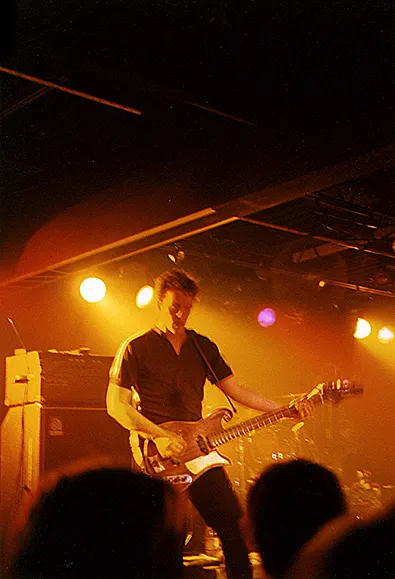
Photo by Grayson Lang / Grayson at en.wikipedia , licensed under CC BY-SA 3.0 · Wikimedia Commons
Rank #473
Morphine
From Wikipedia
Morphine was an American rock band formed by Mark Sandman, Dana Colley, and Jerome Deupree in Cambridge, Massachusetts, in 1989. Drummer Billy Conway replaced Deupree as the band's live drummer in 1991. Deupree recorded the album Cure For Pain, with the exception of the title track which was recorded by Conway, before being permanently replaced by Conway in 1993. Both drummers appeared together during a 15 date US tour in March 1999. After five successful albums and extensive touring, they disbanded after lead vocalist Sandman died of a heart attack onstage in Palestrina, Italy, on July 3, 1999 at the Nel Nome Del Rock Festival. Founding members have reformed into the band Vapors of Morphine, maintaining much of the original style and sound.
Members
- Billy Conway
- Dana Colley
- Jerome Deupree
- Mark Sandman
Discography & Previews
Browse through and click an album to open and play 30-second previews streamed from Apple Music.
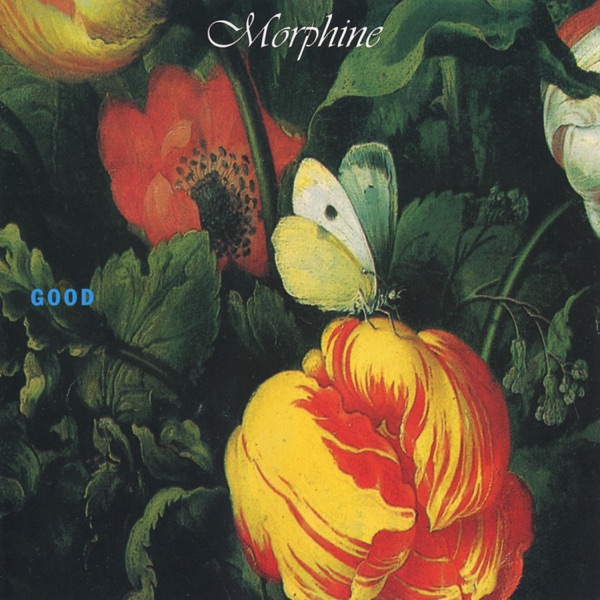
Good
1992 · 13 tracks
- 1 Good ↗ 2:34
- 2 The Saddest Song ↗ 2:53
- 3 Claire ↗ 3:09
- 4 Have a Lucky Day ↗ 3:30
- 5 You Speak My Language ↗ 3:26
- 6 You Look Like Rain ↗ 3:40
- 7 Do Not Go Quietly Unto Your Grave ↗ 3:19
- 8 Lisa ↗ 0:51
- 9 The Only One ↗ 2:44
- 10 Test-Tube Baby / Shoot'm Down ↗ 3:10
- 11 The Other Side ↗ 3:54
- 12 I Know You, Pt. 1 ↗ 2:17
- 13 I Know You, Pt. 2 ↗ 2:47

Cure for Pain
1993 · 13 tracks
- 1 Dawna ↗ 0:44
- 2 Buena ↗ 3:20
- 3 I'm Free Now ↗ 3:25
- 4 All Wrong ↗ 3:41
- 5 Candy ↗ 3:15
- 6 A Head With Wings ↗ 3:40
- 7 In Spite of Me ↗ 2:35
- 8 Thursday ↗ 3:26
- 9 Cure for Pain ↗ 3:14
- 10 Mary Won't You Call My Name? ↗ 2:29
- 11 Let's Take a Trip Together ↗ 3:00
- 12 Sheila ↗ 2:48
- 13 Miles Davis' Funeral ↗ 1:41
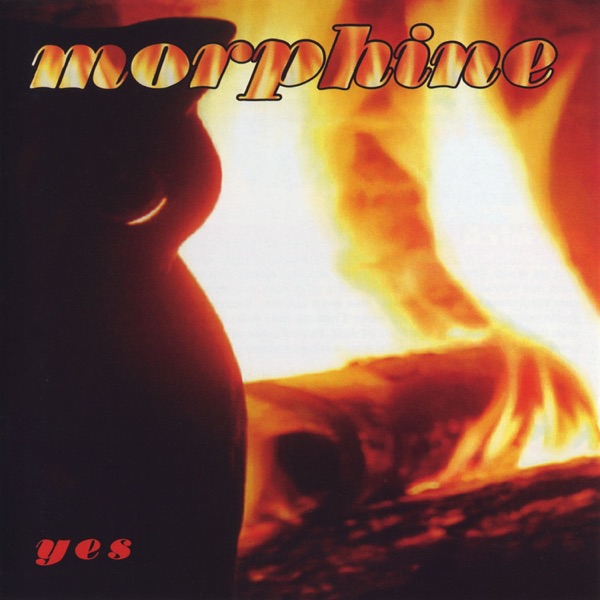

Like Swimming
1996 · 12 tracks

The Night
2000 · 11 tracks
-
 GoodMorphine199213 tracks
 -
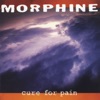 Cure for PainMorphine199313 tracks
 -
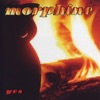 YesMorphine199512 tracks
 -
 Like SwimmingMorphine199612 tracks
 -
 The NightMorphine200011 tracks
Deep Dive
Overview
Morphine was an American rock band that emerged from Cambridge, Massachusetts, in 1989, blending blues rock with jazz fusion and alternative sensibilities into a distinctive sound marked by minimal instrumentation and hypnotic grooves. The band—anchored by vocalist and bassist Mark Sandman, saxophonist Dana Colley, and drummer Billy Conway—built a reputation through relentless touring and five studio albums that carved out a unique space in rock music’s landscape of the 1990s. Their influence extended beyond their twelve-year tenure, establishing a template for stripped-down, improvisational rock that prioritized texture and space over conventional song structures.
Formation Story
Morphine coalesced in Cambridge in 1989 around the creative partnership of Mark Sandman and Dana Colley. The initial lineup included drummer Jerome Deupree, but this configuration proved transitional. Billy Conway assumed drum duties in 1991, becoming the drummer for live performances and ultimately the band’s permanent member by 1993, after Deupree had already recorded much of the band’s second album. This settling of the rhythm section marked the beginning of Morphine’s most cohesive and productive era. The Cambridge scene, known for its art-rock and experimental underground music communities, provided fertile ground for a band willing to strip rock back to essentials and rebuild from fundamentals.
Breakthrough Moment
Morphine’s initial album, Good (1992), introduced the band’s austere palette: a two-string bass, saxophone, and drums, with Sandman’s distinctive vocals delivered in a deadpan, almost spoken-word style. The album generated modest attention in underground and college radio circuits. Their real breakthrough arrived with Cure for Pain (1993), a record that showcased the band’s mature compositional voice and the locked-in interplay between Conway’s propulsive, minimalist drumming and Sandman’s hypnotic bass work. The album, recorded with both Deupree and Conway, solidified Morphine’s reputation as an innovative live draw and studio presence. By the mid-1990s, the band had built a dedicated touring following across North America and Europe, establishing themselves as fixtures of the alternative rock circuit.
Peak Era
Morphine’s most creatively fertile and commercially successful period spanned 1995–1996, bracketed by the albums Yes and Like Swimming. These records demonstrated the band’s ability to sustain their minimalist aesthetic while expanding its emotional range, incorporating elements of funk, soul, and Eastern music into their blues-rock foundation. The band’s live presence during this era became legendary among critics and devoted fans—their sets were known for extended improvisations and a magnetic intensity that came from three musicians operating with surgical precision and telepathic interplay. Extensive touring in this window established Morphine as a must-see act in alternative rock circles, earning respect from peers and critical appreciation for their uncompromising artistic vision.
Musical Style
Morphine’s sound was defined by radical reduction: typically a two-string bass (played in place of conventional six-string), tenor and baritone saxophones, drums, and vocals. Sandman’s bass work functioned as both harmonic anchor and rhythmic engine, played with a percussive attack that sometimes resembled a talking drum or cello more than a traditional rock bass. Colley’s saxophone brought an improvisational sensibility rooted in jazz but filtered through a rock and blues ethos, capable of both delicate, conversational interjections and fierce, overblown catharsis. Conway’s drumming was restrained and architecturally precise, favoring space and silence as much as sound. Sandman’s vocal approach was conversational, almost noir-like, neither powerful nor technically virtuosic but deeply expressive in its emotional economy. The overall texture resembled hypnotic ritual music—grooves built for obsessive repetition, designed to burrow into the listener’s consciousness rather than dazzle with conventional virtuosity. Genre-wise, Morphine blended blues rock’s 12-bar tradition and slow-burn grooves with jazz fusion’s harmonic complexity, noise rock’s textural experimentation, and post-punk’s aesthetic severity.
Major Albums
Good (1992)
Morphine’s debut introduced the band’s signature aesthetic: skeletal arrangements, hypnotic rhythms, and Sandman’s understated vocal delivery. The album established the template that would define their career.
Cure for Pain (1993)
The band’s second album consolidated their creative vision and remains their most acclaimed work, showcasing tighter compositions and the complementary interplay between Sandman’s bass, Colley’s saxophone, and Conway’s drumming.
Yes (1995)
A slight expansion of the Morphine sound, Yes demonstrated the band’s ability to deepen and vary their minimalist palette while maintaining their hypnotic, groove-based foundation.
Like Swimming (1996)
Morphine’s most ambitious record brought new textural and compositional sophistication, incorporating funk grooves and a broader emotional spectrum while staying true to their stripped-down aesthetic.
Signature Songs
- “Buena” — A showcase for the locked-in rhythm section and Colley’s saxophone conversations with Sandman’s bass.
- “Cure for Pain” — The title track exemplifies the band’s ability to create hypnotic grooves from minimal materials.
- “Thursday” — One of the band’s most recognizable compositions, built on a deceptively simple bass line and sparse drumming.
- “In Spite of Me” — Demonstrates Sandman’s emotional vocal range within his signature deadpan delivery style.
Influence on Rock
Morphine’s influence on rock music lay primarily in their demonstration that radical minimalism and unconventional instrumentation could sustain an entire creative project and build a significant following without compromise. They proved that the two-string bass could be a legitimate rock instrument, and their approach influenced subsequent generations of minimalist and experimental rock acts. The band’s emphasis on space, repetition, and groove as alternatives to dense arrangements and conventional verse-chorus structures offered a template that resonated with post-rock musicians and experimental rock practitioners throughout the 1990s and beyond. Their success legitimized the idea that a rock band need not feature guitars or conventional rhythm sections to achieve compelling, moving music.
Legacy
Morphine’s legacy was forever altered by Mark Sandman’s sudden death from a heart attack onstage at the Nel Nome Del Rock Festival in Palestrina, Italy, on July 3, 1999. The band disbanded in its immediate aftermath, leaving behind five studio albums and a reputation as one of the most innovative and uncompromising acts of alternative rock’s golden age. Their final album, The Night (2000), was released posthumously. Since their dissolution, founding members regrouped as Vapors of Morphine, maintaining the original style and sound while honoring Sandman’s memory. Morphine’s music has endured in streaming platforms and physical reissues, accessible to new generations discovering their austere, hypnotic vision. The band’s refusal to follow market trends or embrace conventional rock virtuosity has secured their position as a cult classic act whose influence—particularly on minimalist and jazz-inflected rock—continues to resonate with musicians and listeners uninterested in mainstream rock bombast.
Fun Facts
- Mark Sandman’s two-string bass became so closely associated with Morphine that it became his signature instrument in rock history, defying the conventional wisdom that rock music required standard instrumentation.
- Both Jerome Deupree and Billy Conway shared drumming duties during a 15-date US tour in March 1999, just months before the band’s sudden dissolution.
- Morphine built a particularly devoted following in Europe despite originating in the United States, with their hypnotic live performances becoming legendary on the international touring circuit.