
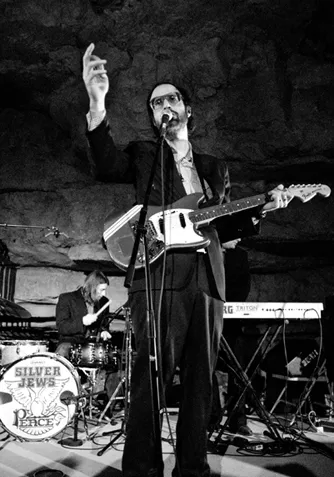
Photo by Rosnaps , licensed under CC BY-SA 3.0 · Wikimedia Commons
Rank #166
Silver Jews
From Wikipedia
Silver Jews were an American indie rock band from Hoboken, New Jersey, formed in 1989 by David Berman alongside Pavement members Stephen Malkmus and Bob Nastanovich. Berman was the only constant band member. During the last few albums, Cassie Berman became a regular member of the band. They disbanded in 2009.
Members
- David Berman
Discography & Previews
Browse through and click an album to open and play 30-second previews streamed from Apple Music.

Starlite Walker
1994 · 11 tracks
- 1 Introduction II ↗ 1:01
- 2 Trains Across the Sea ↗ 3:15
- 3 The Moon Is Number 18 ↗ 3:41
- 4 Advice to the Graduate ↗ 3:19
- 5 Tide to the Oceans ↗ 3:04
- 6 Pan-American Blues ↗ 3:01
- 7 New Orleans ↗ 4:18
- 8 The Country Diary of a Subway Conductor ↗ 2:35
- 9 Living Waters ↗ 2:49
- 10 Rebel Jew ↗ 3:11
- 11 The Silver Pageant ↗ 2:32
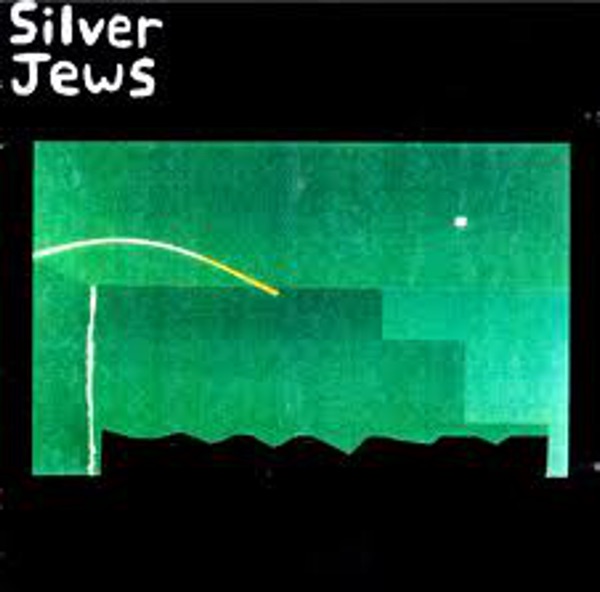
The Natural Bridge
1996 · 10 tracks

American Water
1998 · 12 tracks
- 1 Random Rules ↗ 3:58
- 2 Smith & Jones Forever ↗ 3:18
- 3 Night Society ↗ 2:17
- 4 Federal Dust ↗ 4:01
- 5 People ↗ 4:43
- 6 Blue Arrangements ↗ 4:38
- 7 We Are Real ↗ 4:22
- 8 Send In the Clouds ↗ 5:24
- 9 Like Like the the the Death ↗ 3:59
- 10 Buckingham Rabbit ↗ 4:57
- 11 Honk If You're Lonely ↗ 2:47
- 12 The Wild Kindness ↗ 3:54

Bright Flight
2001 · 10 tracks

Tanglewood Numbers
2005 · 10 tracks
- 1 Punks In the Beerlight ↗ 3:31
- 2 Sometimes a Pony Gets Depressed ↗ 2:37
- 3 K-Hole ↗ 2:39
- 4 Animal Shapes ↗ 3:00
- 5 I'm Getting Back Into Getting Back Into You ↗ 2:34
- 6 How Can I Love You If You Won't Lie Down ↗ 2:02
- 7 The Poor, the Fair and the Good ↗ 4:15
- 8 Sleeping Is the Only Love ↗ 2:56
- 9 The Farmer's Hotel ↗ 7:04
- 10 There Is a Place ↗ 4:20
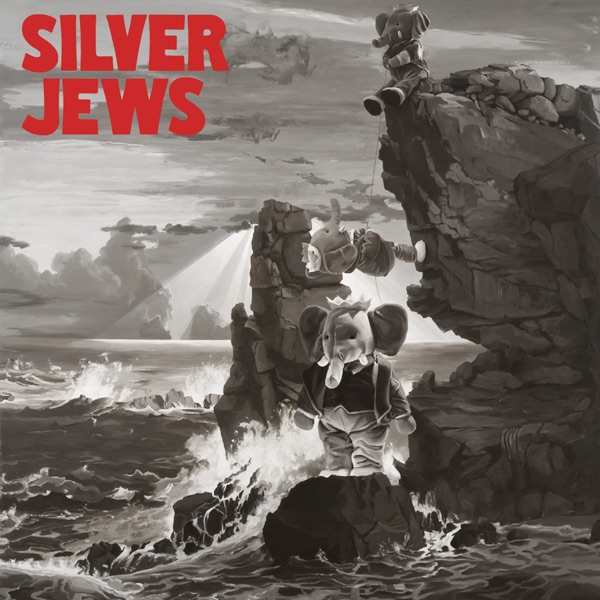
Lookout Mountain, Lookout Sea
2008 · 10 tracks
- 1 What Is Not But Could Be If ↗ 3:08
- 2 Aloysius, Bluegrass Drummer ↗ 1:54
- 3 Suffering Jukebox ↗ 4:21
- 4 My Pillow Is the Threshold ↗ 3:52
- 5 Strange Victory, Strange Defeat ↗ 2:44
- 6 Open Field ↗ 2:39
- 7 San Francisco B.C. ↗ 6:15
- 8 Candy Jail ↗ 2:30
- 9 Party Barge ↗ 2:55
- 10 We Could Be Looking for the Same Thing ↗ 3:35
-
 Starlite WalkerSilver Jews199411 tracks
 -
 The Natural BridgeSilver Jews199610 tracks
 -
 American WaterSilver Jews199812 tracks
 -
 Bright FlightSilver Jews200110 tracks
 -
 Tanglewood NumbersSilver Jews200510 tracks
 -
 Lookout Mountain, Lookout SeaSilver Jews200810 tracks
Deep Dive
Overview
Silver Jews were an American indie rock band that emerged from Hoboken, New Jersey, in 1989 as a project built around the songwriting and vision of David Berman. Though the band featured early collaborations with prominent musicians from the alternative rock scene—most notably Stephen Malkmus and Bob Nastanovich of the influential group Pavement—Berman remained the sole constant throughout the band’s existence. Silver Jews occupied a distinctive position within 1990s and 2000s indie rock, crafting a body of work marked by poetic lyricism and a willingness to explore sonic textures beyond the standard indie-rock template.
Formation Story
Silver Jews materialized in Hoboken in 1989, a period when the New Jersey-based indie scene was generating significant creative ferment. David Berman founded the band with the early participation of Stephen Malkmus and Bob Nastanovich, musicians who were simultaneously building Pavement’s reputation and sound. While Malkmus and Nastanovich would eventually step back from regular involvement to focus on Pavement, Berman’s commitment to Silver Jews remained unwavering. In later years, as the band continued to record and perform, Cassie Berman became a regular contributing member, further shaping the group’s sonic direction. This evolution from a loose collective of indie musicians to a more focused working unit reflected the band’s organic growth and its place within the broader indie rock ecosystem of the 1990s and 2000s.
Breakthrough Moment
Silver Jews’ first full-length studio album, Starlite Walker, arrived in 1994 and announced Berman’s distinctive voice and lyrical sensibility to the indie rock community. The record established the template for much of what would follow: introspective songwriting, unconventional song structures, and a production aesthetic that favored clarity over polish. Two years later, The Natural Bridge (1996) deepened the band’s catalog and consolidated their standing within the Drag City label roster, a home that would remain constant throughout their existence. These early records positioned Silver Jews as serious artists within the indie rock underground, attracting attention from critics and listeners who valued craft and emotional complexity over commercial accessibility.
Peak Era
Silver Jews reached their creative and commercial apex between 1998 and 2005, a period that produced three albums of sustained achievement. American Water (1998) stands as arguably the band’s most fully realized statement, combining Berman’s literary gift for language with some of the most inventive arrangements the band had yet attempted. Bright Flight (2001) and Tanglewood Numbers (2005) further demonstrated the band’s refusal to calcify into a repeatable formula. Throughout this era, Silver Jews maintained a devoted following and critical respect despite never pursuing or achieving mainstream commercial success. The band’s commitment to artistic integrity—releasing albums at a deliberate pace, refusing to chase trends, and prioritizing the quality of their songwriting—became increasingly notable as mainstream indie rock began its shift toward more commercially-oriented production and marketing strategies.
Musical Style
Silver Jews’ sound operated at the intersection of indie rock’s accessibility and art-rock’s formal ambition. Berman’s songwriting was anchored in precise, often oblique lyricism that rewarded close listening; his vocal delivery, somewhat detached and conversational, created a striking contrast with the often-lush instrumental arrangements that surrounded it. The band’s instrumentation evolved across their discography, incorporating strings, brass, and unconventional percussion alongside the core indie-rock lineup of guitar, bass, and drums. Rather than pursuing the lo-fi aesthetic popular among some of their indie-rock contemporaries, Silver Jews favored clarity and definition in their production choices, allowing each element of their songs to occupy distinct sonic space. This approach aligned them more closely with literary-minded indie acts than with the noisier or more guitar-driven wings of alternative rock.
Major Albums
Starlite Walker (1994)
The debut introduced Berman’s lyrical voice and the band’s willingness to structure songs in unexpected ways, establishing their identity as thoughtful artists within the indie underground.
The Natural Bridge (1996)
This album expanded the band’s sonic palette and solidified their position on the Drag City label, attracting a growing audience of devoted indie-rock listeners.
American Water (1998)
Widely regarded as Silver Jews’ finest achievement, American Water merged Berman’s most accomplished songwriting with inventive arrangements that showcased the band’s range and ambition.
Bright Flight (2001)
Continuing their peak creative period, Bright Flight demonstrated the band’s ability to sustain artistic growth while maintaining their distinctive character.
Tanglewood Numbers (2005)
This album capped the band’s peak era with another display of sophisticated songwriting and arrangement, featuring Cassie Berman’s increased involvement in the band’s sound.
Lookout Mountain, Lookout Sea (2008)
The band’s final studio album before their 2009 dissolution, this record served as a closing statement on their long creative journey.
Signature Songs
- “Punks in the Gym” — A standout that exemplifies Berman’s ability to invest seemingly mundane settings with emotional weight and lyrical precision.
- “Nighttime Violence” — Demonstrates the band’s capacity for darker, more atmospheric arrangements in service of introspective songwriting.
- “How Strange It Is to Be Anything at All” — A representative example of the band’s philosophical lyricism and their gift for melody.
- “Peak Season” — Showcases the band’s folk and Americana influences woven into their indie-rock framework.
Influence on Rock
Though Silver Jews never achieved the cultural ubiquity of some of their indie-rock contemporaries, their influence extended across the literary and artistic wings of alternative rock. Their commitment to poetic, narratively complex songwriting offered an alternative to the more visceral or deliberately obscurantist approaches of other indie acts. Musicians and artists throughout the 2000s and beyond drew inspiration from Berman’s refusal to separate intellectual rigor from emotional expression. The band’s alignment with the Drag City label placed them within a lineage of thoughtful indie artists who resisted both major-label pressure and underground-scene orthodoxy. Their recorded legacy became a reference point for indie musicians seeking models of how to sustain artistic integrity across multiple albums without sacrificing accessibility or warmth.
Legacy
Silver Jews disbanded in 2009, ending a twenty-year run that had produced six studio albums of consistently high quality. The band’s discography remains in print and continues to find new listeners through streaming platforms and reissues, testimony to the durability of Berman’s songwriting. Among hardcore indie-rock listeners and critics, Silver Jews are recognized as essential artists whose work deepened and complicated the possibilities of indie rock during a pivotal period in the genre’s development. Their influence persists most clearly in the work of contemporary indie and alternative artists who prioritize narrative complexity, lyrical precision, and emotional honesty over commercial calculation. The band’s decision to disband at the height of their creative powers, rather than outliving their artistic mission, further cemented their status within indie-rock memory as artists who understood the difference between longevity and significance.
Fun Facts
- David Berman was the only constant member across the band’s entire twenty-year existence, giving Silver Jews an unusual degree of creative continuity for an indie-rock project.
- Stephen Malkmus and Bob Nastanovich, both key members of the massively influential band Pavement, were present at Silver Jews’ formation in 1989, illustrating the interconnectedness of the early 1990s indie-rock scene.
- The band released albums at a deliberate, unhurried pace—their discography spans fourteen years from debut to final album with gaps of two to four years between most releases, reflecting a commitment to craft over productivity.
- Cassie Berman’s increasing involvement in the band during the later albums represented an evolution in the project’s dynamics, moving from David Berman’s solo vision toward a true collaborative unit.