
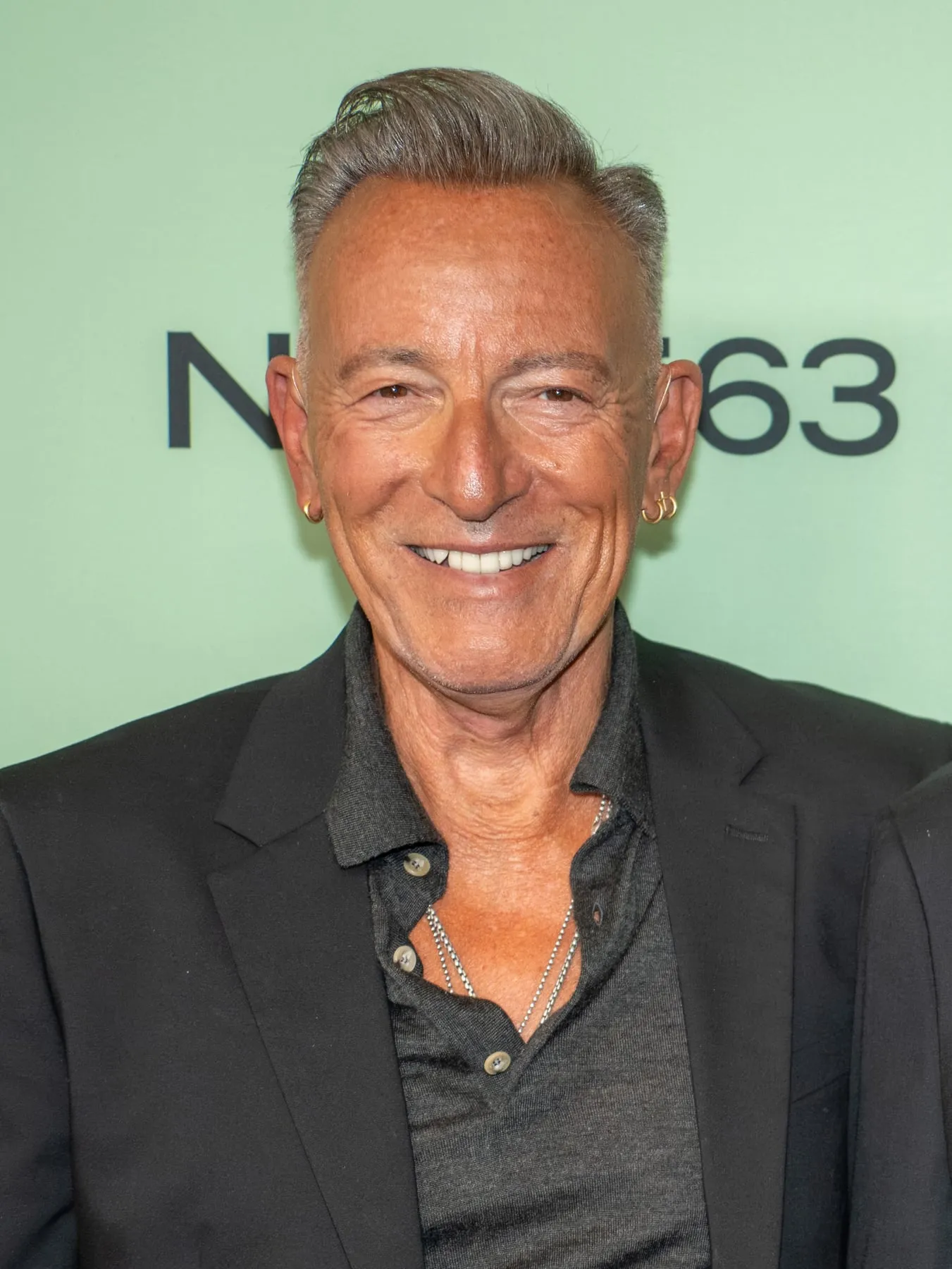
Photo by Bryan Berlin , licensed under CC BY-SA 4.0 · Wikimedia Commons
Rank #8
Bruce Springsteen
From Wikipedia
Bruce Frederick Joseph Springsteen is an American singer, songwriter, and musician. Nicknamed "the Boss", Springsteen has released 21 studio albums spanning six decades; most of his albums feature the E Street Band, his backing band since 1972.
Discography & Previews
Browse through and click an album to open and play 30-second previews streamed from Apple Music.
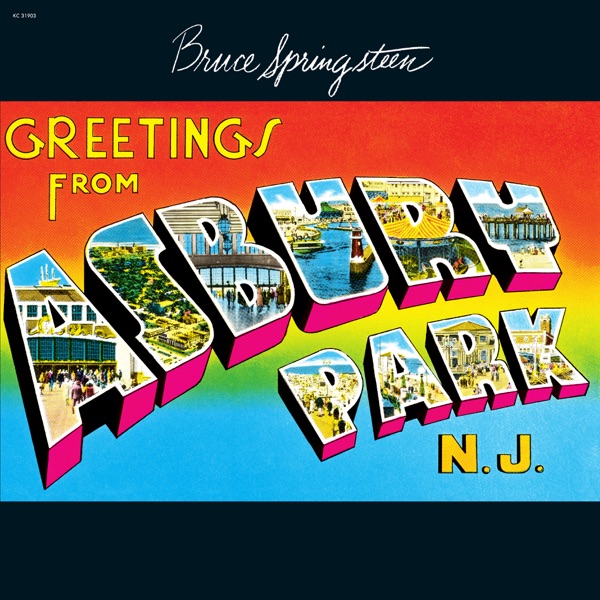
Greetings From Asbury Park, N.J.
1973 · 9 tracks

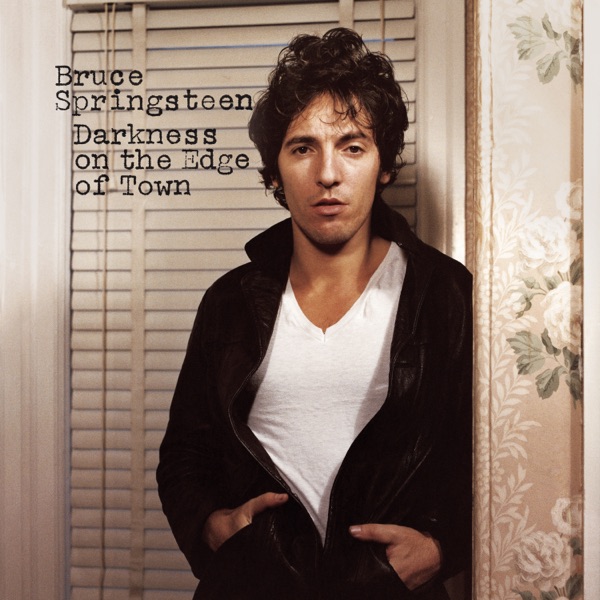
Darkness on the Edge of Town
1978 · 10 tracks

The River
1980 · 20 tracks
- 1 The Ties That Bind ↗ 3:34
- 1 Point Blank ↗ 6:06
- 2 Sherry Darling ↗ 4:03
- 2 Cadillac Ranch ↗ 3:03
- 3 Jackson Cage ↗ 3:04
- 3 I'm a Rocker ↗ 3:37
- 4 Two Hearts ↗ 2:46
- 4 Fade Away ↗ 4:46
- 5 Independence Day ↗ 4:51
- 5 Stolen Car ↗ 3:54
- 6 Hungry Heart ↗ 3:19
- 6 Ramrod ↗ 4:06
- 7 Out In the Street ↗ 4:18
- 7 The Price You Pay ↗ 5:30
- 8 Crush on You ↗ 3:11
- 8 Drive All Night ↗ 8:33
- 9 You Can Look (But You Better Not Touch) ↗ 2:38
- 9 Wreck on the Highway ↗ 3:52
- 10 I Wanna Marry You ↗ 3:31
- 11 The River ↗ 4:59

Born in the U.S.A.
1984 · 12 tracks

Tunnel of Love
1987 · 12 tracks
- 1 Ain't Got You ↗ 2:11
- 2 Tougher Than the Rest ↗ 4:35
- 3 All That Heaven Will Allow ↗ 2:40
- 4 Spare Parts ↗ 3:44
- 5 Cautious Man ↗ 3:58
- 6 Walk Like a Man ↗ 3:44
- 7 Tunnel of Love ↗ 5:13
- 8 Two Faces ↗ 3:03
- 9 Brilliant Disguise ↗ 4:17
- 10 One Step Up ↗ 4:22
- 11 When You're Alone ↗ 3:24
- 12 Valentine's Day ↗ 5:11
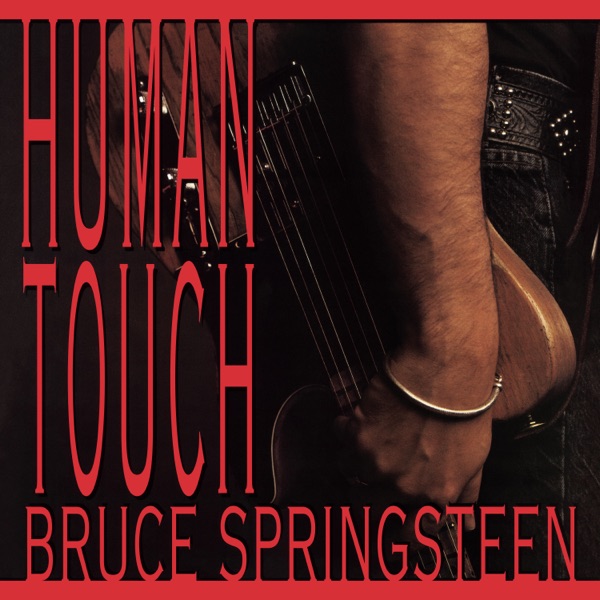
Human Touch
1992 · 14 tracks
- 1 Human Touch ↗ 6:32
- 2 Soul Driver ↗ 4:40
- 3 57 Channels (And Nothin' On) ↗ 2:29
- 4 Cross My Heart ↗ 3:52
- 5 Gloria's Eyes ↗ 3:46
- 6 With Every Wish ↗ 4:39
- 7 Roll of the Dice ↗ 4:18
- 8 Real World ↗ 5:27
- 9 All Or Nothin' At All ↗ 3:23
- 10 Man's Job ↗ 4:38
- 11 I Wish I Were Blind ↗ 4:49
- 12 The Long Goodbye ↗ 3:30
- 13 Real Man ↗ 4:33
- 14 Pony Boy ↗ 2:12


The Ghost of Tom Joad
1995 · 12 tracks
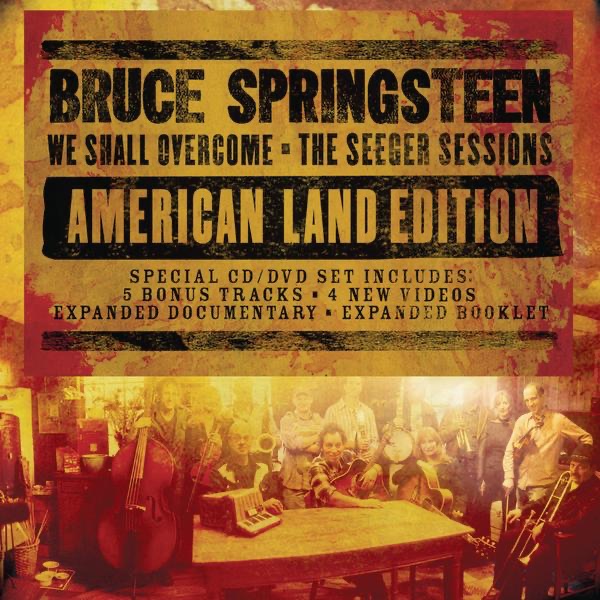
We Shall Overcome: The Seeger Sessions
1998 · 18 tracks
- 1 Old Dan Tucker ↗ 2:31
- 2 Jesse James (Just Ask) ↗ 3:48
- 3 Mrs. McGrath ↗ 4:20
- 4 O Mary Don't You Weep ↗ 6:05
- 5 John Henry ↗ 5:07
- 6 Erie Canal ↗ 4:03
- 7 Jacob's Ladder ↗ 4:28
- 8 My Oklahoma Home ↗ 6:04
- 9 Eyes on the Prize ↗ 5:17
- 10 Shenandoah ↗ 4:53
- 11 Pay Me My Money Down ↗ 4:32
- 12 We Shall Overcome ↗ 4:53
- 13 Froggie Went a Courtin' ↗ 4:36
- 14 Buffalo Gals ↗ 3:12
- 15 How Can I Keep from Singing ↗ 2:20
- 16 How Can a Poor Man Stand Such Times and Live ↗ 3:23
- 17 Bring 'Em Home ↗ 3:36
- 18 American Land ↗ 4:42
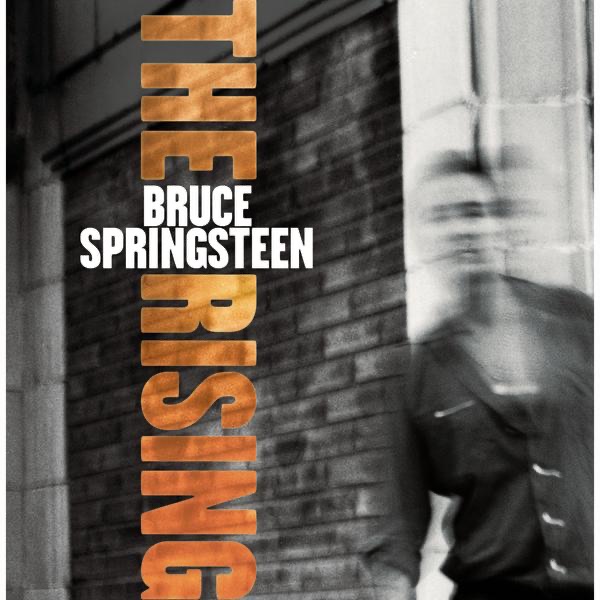
The Rising
2002 · 15 tracks
- 1 Lonesome Day ↗ 4:08
- 2 Into the Fire ↗ 5:05
- 3 Waitin' On a Sunny Day ↗ 4:19
- 4 Nothing Man ↗ 4:24
- 5 Countin' On a Miracle ↗ 4:44
- 6 Empty Sky ↗ 3:35
- 7 Worlds Apart ↗ 6:07
- 8 Let's Be Friends (Skin to Skin) ↗ 4:21
- 9 Further On (Up the Road) ↗ 3:53
- 10 The Fuse ↗ 5:38
- 11 Mary's Place ↗ 6:03
- 12 You're Missing ↗ 5:11
- 13 The Rising ↗ 4:50
- 14 Paradise ↗ 5:39
- 15 My City of Ruins ↗ 5:00

Devils & Dust
2005 · 12 tracks
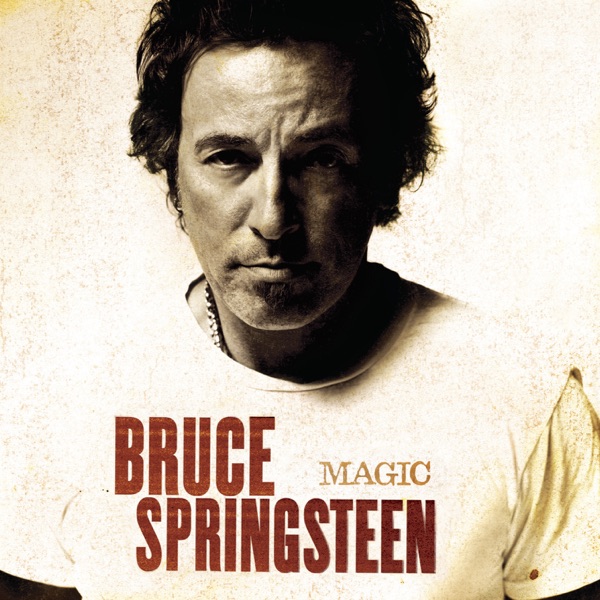
Magic
2007 · 12 tracks
- 1 Radio Nowhere ↗ 3:18
- 2 You'll Be Comin' Down ↗ 3:45
- 3 Livin' In the Future ↗ 3:57
- 4 Your Own Worst Enemy ↗ 3:18
- 5 Gypsy Biker ↗ 4:31
- 6 Girls In Their Summer Clothes ↗ 4:19
- 7 I'll Work for Your Love ↗ 3:35
- 8 Magic ↗ 2:45
- 9 Last to Die ↗ 4:17
- 10 Long Walk Home ↗ 4:34
- 11 Devil's Arcade ↗ 5:20
- 12 Terry's Song ↗ 4:09

Working on a Dream
2008 · 13 tracks
- 1 Outlaw Pete ↗ 8:00
- 2 My Lucky Day ↗ 4:01
- 3 Working On a Dream ↗ 3:30
- 4 Queen of the Supermarket ↗ 4:39
- 5 What Love Can Do ↗ 2:57
- 6 This Life ↗ 4:30
- 7 Good Eye ↗ 3:01
- 8 Tomorrow Never Knows ↗ 2:14
- 9 Life Itself ↗ 4:00
- 10 Kingdom of Days ↗ 4:02
- 11 Surprise, Surprise ↗ 3:24
- 12 The Last Carnival ↗ 3:15
- 13 The Wrestler ↗ 3:49
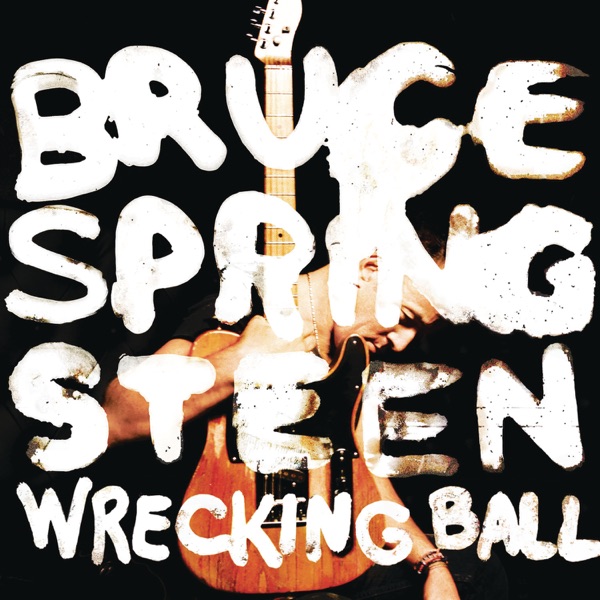
Wrecking Ball
2012 · 11 tracks
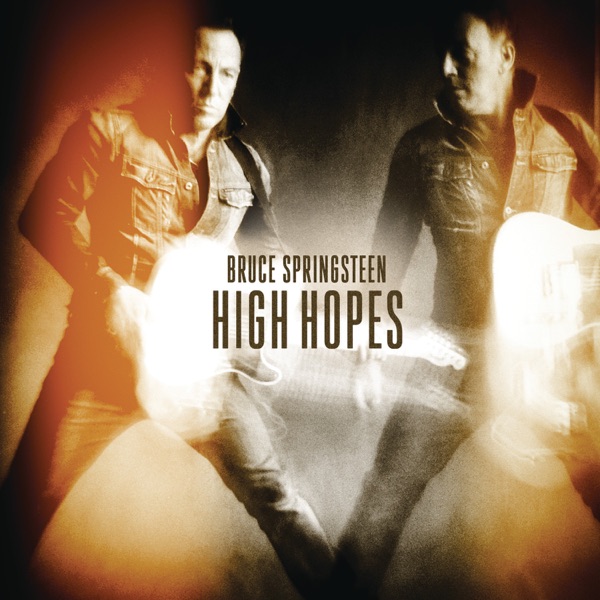
High Hopes
2014 · 12 tracks
- 1 High Hopes ↗ 4:57
- 2 Harry's Place ↗ 4:04
- 3 American Skin (41 Shots) ↗ 7:24
- 4 Just Like Fire Would ↗ 3:56
- 5 Down In the Hole ↗ 4:59
- 6 Heaven's Wall ↗ 3:50
- 7 Frankie Fell In Love ↗ 2:48
- 8 This Is Your Sword ↗ 2:53
- 9 Hunter of Invisible Game ↗ 4:42
- 10 The Ghost of Tom Joad ↗ 7:34
- 11 The Wall ↗ 4:20
- 12 Dream Baby Dream ↗ 5:00

Western Stars
2019 · 13 tracks
- 1 Hitch Hikin' ↗ 3:37
- 2 The Wayfarer ↗ 4:18
- 3 Tucson Train ↗ 3:31
- 4 Western Stars ↗ 4:41
- 5 Sleepy Joe's Café ↗ 3:14
- 6 Drive Fast (The Stuntman) ↗ 4:17
- 7 Chasin' Wild Horses ↗ 5:03
- 8 Sundown ↗ 3:18
- 9 Somewhere North of Nashville ↗ 1:53
- 10 Stones ↗ 4:45
- 11 There Goes My Miracle ↗ 4:05
- 12 Hello Sunshine ↗ 3:56
- 13 Moonlight Motel ↗ 4:16

Letter to You
2020 · 12 tracks
- 1 One Minute You're Here ↗ 2:58
- 2 Letter To You ↗ 4:55
- 3 Burnin' Train ↗ 4:03
- 4 Janey Needs A Shooter ↗ 6:49
- 5 Last Man Standing ↗ 4:06
- 6 The Power Of Prayer ↗ 3:37
- 7 House Of A Thousand Guitars ↗ 4:30
- 8 Rainmaker ↗ 4:57
- 9 If I Was The Priest ↗ 6:51
- 10 Ghosts ↗ 5:55
- 11 Song For Orphans ↗ 6:13
- 12 I'll See You In My Dreams ↗ 3:29
-
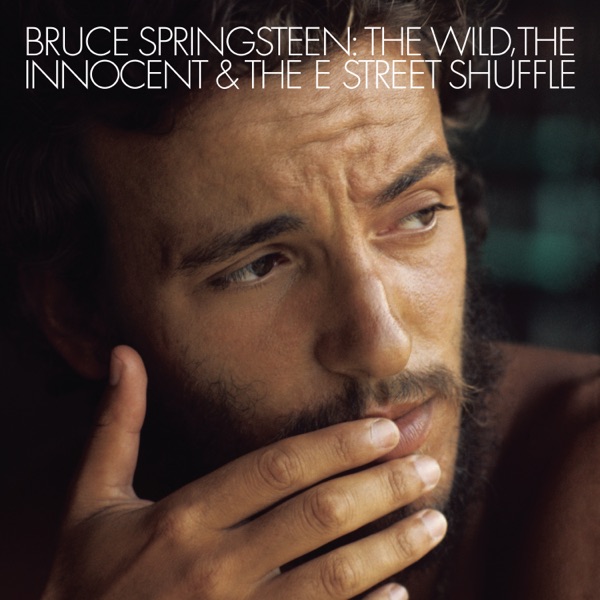
 The Wild, the Innocent & The E Street ShuffleBruce Springsteen19737 tracks
 -
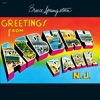 Greetings From Asbury Park, N.J.Bruce Springsteen19739 tracks
 -
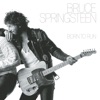 Born to RunBruce Springsteen19758 tracks
 -
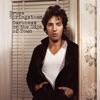 Darkness on the Edge of TownBruce Springsteen197810 tracks
 -
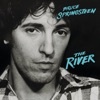 The RiverBruce Springsteen198020 tracks
 -
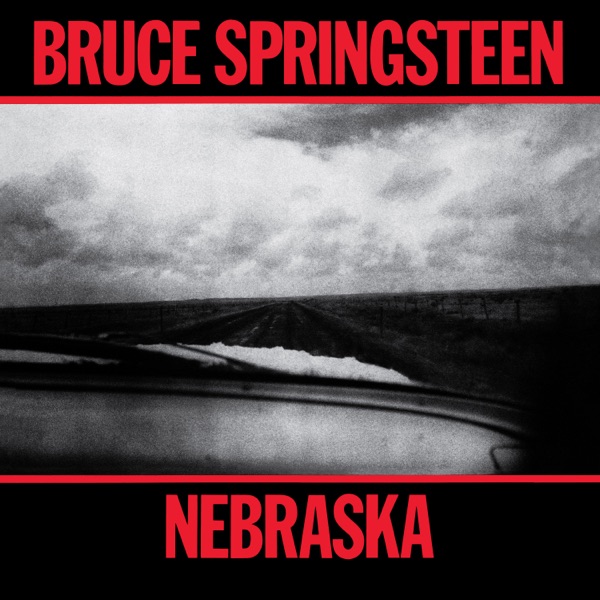
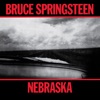 NebraskaBruce Springsteen198210 tracks
 -
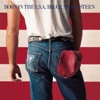 Born in the U.S.A.Bruce Springsteen198412 tracks
 -
 Tunnel of LoveBruce Springsteen198712 tracks
 -
 Human TouchBruce Springsteen199214 tracks
 -
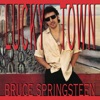 Lucky TownBruce Springsteen199210 tracks
 -
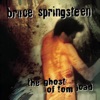 The Ghost of Tom JoadBruce Springsteen199512 tracks
 -
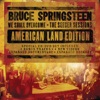 We Shall Overcome: The Seeger SessionsBruce Springsteen199818 tracks
 -
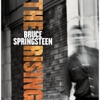 The RisingBruce Springsteen200215 tracks
 -
 Devils & DustBruce Springsteen200512 tracks
 -
 MagicBruce Springsteen200712 tracks
 -
 Working on a DreamBruce Springsteen200813 tracks
 -
 Wrecking BallBruce Springsteen201211 tracks
 -
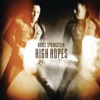 High HopesBruce Springsteen201412 tracks
 -
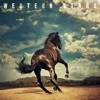 Western StarsBruce Springsteen201913 tracks
 -
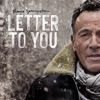 Letter to YouBruce Springsteen202012 tracks
Deep Dive
Overview
Bruce Frederick Joseph Springsteen stands as one of rock music’s most prolific and enduring figures. Born in 1949 in the United States, Springsteen has released 21 studio albums across six decades, establishing himself as a songwriter and performer whose work spans intimate folk-influenced narratives to arena-scaled anthems of working-class American life. Known by the nickname “the Boss,” Springsteen has remained fundamentally tied to the E Street Band, his backing ensemble since 1972, forging one of rock’s most stable and celebrated partnerships.
Formation Story
Springsteen emerged from the New Jersey rock scene in the early 1970s, establishing himself as a solo artist and bandleader before forming the definitive partnership with the E Street Band in 1972. His early work drew from the theatrical rock traditions of his era while incorporating deeply personal songwriting rooted in observations of small-town American life, economic struggle, and personal aspiration. The E Street Band became not merely a backing group but a creative collective, with Springsteen’s songwriting and vocals anchored by the band’s instrumental textures and ensemble arrangements.
Breakthrough Moment
Springsteen achieved widespread recognition with Born to Run in 1975, an album that synthesized his earlier explorations into a full-length statement of ambition and craft. The record paired intricate arrangements with Springsteen’s character-driven narratives, establishing him as a major figure in rock music and laying groundwork for sustained commercial and critical success. This breakthrough transformed him from a regional artist into a national presence whose influence would extend well beyond the rock radio format.
Peak Era
The period from 1978 through 1984 marked Springsteen’s most commercially dominant and creatively expansive era. Darkness on the Edge of Town (1978) deepened his exploration of working-class themes with sparse, guitar-driven arrangements. The River (1980) expanded into a double album surveying love, loss, and economic anxiety across multiple registers. Born in the U.S.A. (1984) became his most commercially successful work, blending synth-driven production with his signature lyrical concerns and generating multiple hit singles. These albums solidified Springsteen’s position as rock music’s premier chronicler of American life and aspiration.
Musical Style
Springsteen’s sound evolved significantly across his catalog, moving from the street-level rock and roll of his earliest work toward increasingly varied production and arrangement choices. His songwriting centers on narrative specificity—songs often feature named characters, particular places, and concrete details of working life rather than abstraction. Vocally, Springsteen employs a ragged, emotionally direct approach, often emphasizing dramatic phrasing over technical virtuosity. The E Street Band provided instrumental texture ranging from economical, guitar-forward arrangements (Darkness on the Edge of Town) to fuller, synth-informed production (Born in the U.S.A.). Later work experimented with folk aesthetics (Nebraska, The Ghost of Tom Joad), string arrangements, and cover material, demonstrating Springsteen’s refusal to calcify around a single sound despite his commercial success.
Major Albums
Born to Run (1975)
This album crystallized Springsteen’s breakthrough, combining orchestral rock arrangements with deeply personal songs about escape, desire, and limitation. The record established the aesthetic and thematic template that would define his subsequent decades.
Darkness on the Edge of Town (1978)
A leaner, guitar-centered work that deepened Springsteen’s engagement with economic hardship and personal reckoning, establishing a more mature songwriting voice distinct from the romantic idealism of its predecessor.
The River (1980)
A double album surveying love, work, and loss across multiple sonic approaches, The River demonstrated Springsteen’s willingness to expand scope and embrace formal experimentation while maintaining lyrical focus.
Born in the U.S.A. (1984)
Springsteen’s most commercially successful album, blending synth-based production with character-driven narratives about working-class struggle and survival. The record generated sustained commercial success and introduced his work to audiences beyond rock radio.
Nebraska (1982)
A stark departure recording solo with acoustic guitar, Nebraska stripped away band arrangement to foreground narrative and emotional directness, anticipating later acoustic explorations and demonstrating Springsteen’s confidence in his songwriting independent of production scale.
The Rising (2002)
Recorded with the E Street Band following a decade of varied output, The Rising reasserted Springsteen’s commitment to the band sound while engaging contemporary themes of loss and resilience with the accumulated emotional weight of his career.
Signature Songs
- “Born to Run” — The definitive Springsteen anthem, capturing themes of escape and desire across a fully orchestrated rock arrangement.
- “The River” — An introspective acoustic-electric piece examining memory, youth, and the passage of time.
- “Badlands” — A defiant, driving rock song embodying themes of persistence and refusal to surrender.
- “Darkness on the Edge of Town” — A stark, guitar-centered exploration of economic anxiety and emotional isolation.
- “Streets of Philadelphia” — A deeply empathetic urban narrative demonstrating Springsteen’s capacity for intimate, character-focused songwriting.
Influence on Rock
Springsteen established the template for the rock artist as social documenter, proving that commercially successful rock music could center working-class experience and economic anxiety without sacrificing artistic integrity or accessibility. His approach influenced generations of songwriters across rock, Americana, and roots-music traditions, establishing narrative specificity and character study as legitimate tools for large-scale rock production. The E Street Band model—a stable, album-to-album ensemble with defined instrumental roles—influenced how subsequent artists conceived of backing bands, emphasizing creative collaboration over session work.
Legacy
Springsteen’s six-decade career has established him as one of rock music’s foundational figures, with his work remaining central to contemporary rock discourse and streaming playlists. His output spanning from 1973 through 2022 demonstrates sustained creative engagement with rock music across changing production technologies and cultural moments. Albums from Born to Run through The Rising remain canonical rock works taught in educational contexts, while later work including Western Stars (2019) and Letter to You (2020) sustained his presence as an active, creatively engaged artist into his seventies. His consistent partnership with the E Street Band and his refusal to reduce rock music to entertainment or nostalgia have secured his standing as a generational touchstone.
Fun Facts
- Springsteen released two studio albums in 1973 (Greetings From Asbury Park, N.J. and The Wild, the Innocent & The E Street Shuffle), establishing his prolific working method from the outset of his career.
- Nebraska, recorded as a solo acoustic album in 1982, contained no band instrumentation, representing a dramatic formal departure despite its placement within his major-label catalog.
- Springsteen has returned to cover material and reinterpretation across his career, releasing We Shall Overcome: The Seeger Sessions (1998) and Only the Strong Survive: Covers, Vol. 1 (2022) among other archival projects.
- His recorded output has spanned from sparse acoustic arrangements to fully synth-integrated production across consecutive albums, demonstrating technical versatility and resistance to formula despite his commercial success.