
Photo by Crisco 1492 , licensed under CC BY-SA 4.0 · Wikimedia Commons
Rank #171
Chicago
From Wikipedia
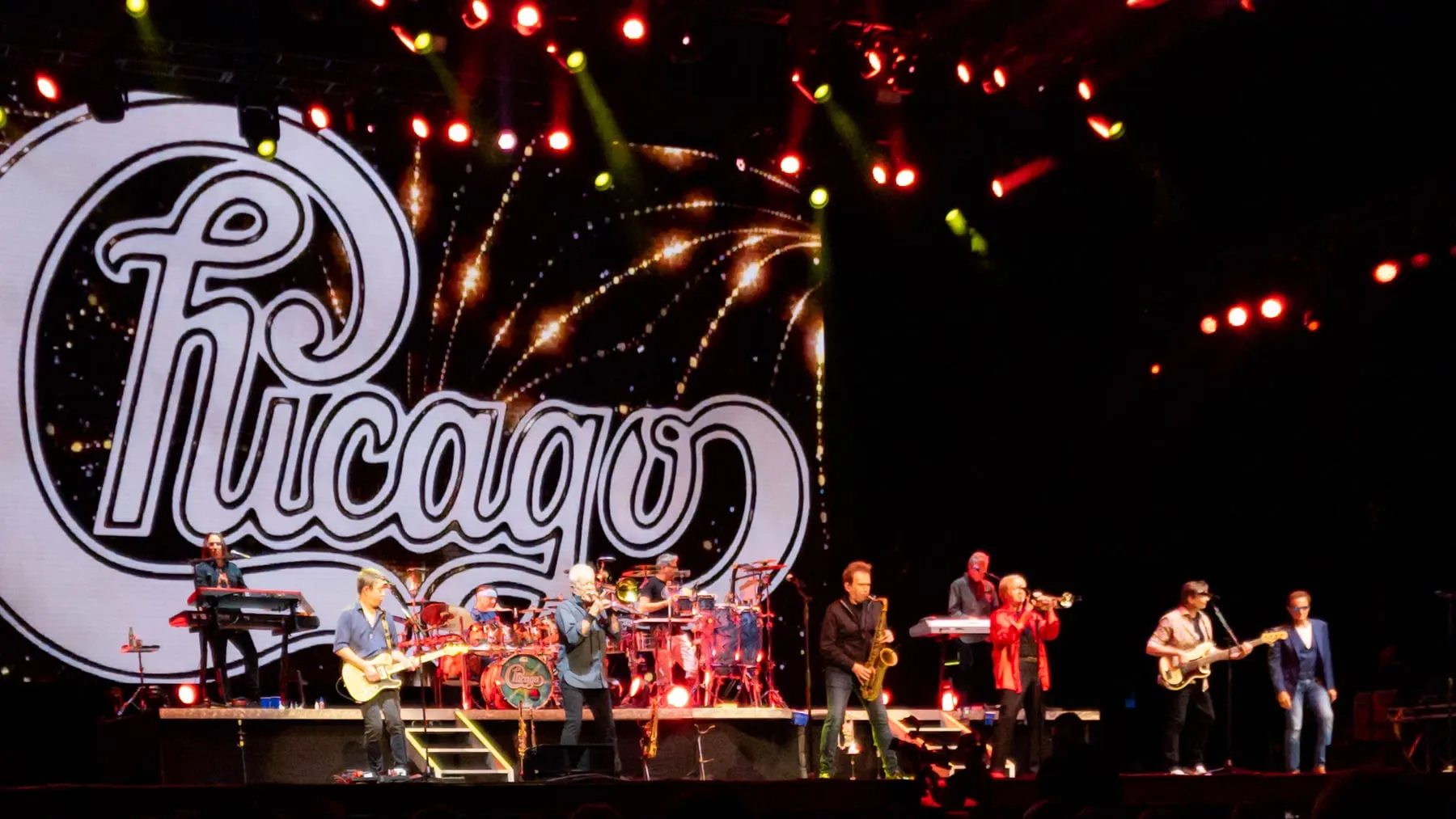
Chicago is an American rock band formed in Chicago, Illinois, in 1967. Self-described as a "rock and roll band with horns", their songs often also combine elements of classical music, jazz, R&B, and pop music.
Members
- James Pankow (1967–present)
- Peter Cetera (1967–1985)
- Robert Lamm (1967–present)
- Terry Kath (1967–1978)
Discography & Previews
Browse through and click an album to open and play 30-second previews streamed from Apple Music.
Chicago
1970 · 23 tracks
- 1 Movin' In (Steven Wilson Remix) ↗ 4:06
- 2 The Road (Steven Wilson Remix) ↗ 3:10
- 3 Poem for the People (Steven Wilson Remix) ↗ 5:35
- 4 In the Country (Steven Wilson Remix) ↗ 6:34
- 5 Wake Up Sunshine (Steven Wilson Remix) ↗ 2:32
- 6 Make Me Smile (Steven Wilson Remix) ↗ 3:15
- 7 So Much to Say, So Much to Give (Steven Wilson Remix) ↗ 1:12
- 8 Anxiety's Moment (Steven Wilson Remix) ↗ 1:01
- 9 West Virginia Fantasies (Steven Wilson Remix) ↗ 1:34
- 10 Colour My World (Steven Wilson Remix) ↗ 3:00
- 11 To Be Free (Steven Wilson Remix) ↗ 1:15
- 12 Now More Than Ever (Steven Wilson Remix) ↗ 1:26
- 13 Fancy Colours (Steven Wilson Remix) ↗ 5:10
- 14 25 or 6 to 4 (Steven Wilson Remix) ↗ 4:58
- 15 Prelude (Steven Wilson Remix) ↗ 1:10
- 16 A.M. Mourning (Steven Wilson Remix) ↗ 2:06
- 17 P.M. Mourning (Steven Wilson Remix) ↗ 1:58
- 18 Memories of Love (Steven Wilson Remix) ↗ 3:59
- 19 It Better End Soon (1st Movement) [Steven Wilson Remix] ↗ 2:33
- 20 It Better End Soon (2nd Movement) [Steven Wilson Remix] ↗ 3:40
- 21 It Better End Soon (3rd Movement) [Steven Wilson Remix] ↗ 3:18
- 22 It Better End Soon (4th Movement) [Steven Wilson Remix] ↗ 0:56
- 23 Where Do We Go from Here (Steven Wilson Remix) ↗ 2:49

Chicago III
1971 · 23 tracks
- 1 Sing a Mean Tune Kid ↗ 9:18
- 2 Loneliness In Just a Word ↗ 2:36
- 3 What Else Can I Say ↗ 3:14
- 4 I Don't Want Your Money ↗ 4:47
- 5 Flight 602 (Remastered Version) ↗ 2:45
- 6 Motorboat to Mars ↗ 1:30
- 7 Free ↗ 2:19
- 8 Free Country ↗ 5:47
- 9 At the Sunrise ↗ 2:49
- 10 Happy 'Cause I'm Going Home ↗ 7:28
- 11 Mother ↗ 4:31
- 12 Lowdown ↗ 3:35
- 13 A Hard Risin' Morning Without Breakfast ↗ 1:52
- 14 Off to Work ↗ 0:46
- 15 Fallin' Out ↗ 0:53
- 16 Dreamin' Home ↗ 0:49
- 17 Morning Blues Again ↗ 1:12
- 18 When All the Laughter Dies In Sorrow ↗ 1:04
- 19 Canon ↗ 1:05
- 20 Once Upon a Time ↗ 2:34
- 21 Progress? ↗ 2:35
- 22 The Approaching Storm ↗ 6:26
- 23 Man vs. Man: The End ↗ 1:34

Chicago V
1972 · 13 tracks
- 1 A Hit By Varese (Remastered) ↗ 4:56
- 2 All Is Well (Remastered) ↗ 3:45
- 3 Now That You've Gone (Remastered) ↗ 5:07
- 4 Dialogue, Pt. 1 (Remastered) ↗ 2:58
- 5 Dialogue, Pt.. 2 (Remastered) ↗ 4:23
- 6 While the City Sleeps (Remastered) ↗ 3:55
- 7 Saturday In the Park (Remastered) ↗ 4:02
- 8 State of the Union (Remastered) ↗ 6:17
- 9 Goodbye (Remastered) ↗ 5:57
- 10 Alma Mater (Remastered) ↗ 3:58
- 11 A Song For Richard and His Friends (Studio Version) [Instrumental] ↗ 8:14
- 12 Mississippi Delta City Blues (Scratch Vocal Version) ↗ 5:28
- 13 Dialogue, Pts. 1 & 3 (Remastered) ↗ 5:00

Chicago VI
1973 · 12 tracks
- 1 Critics' Choice ↗ 2:51
- 2 Just You n' Me ↗ 3:42
- 3 Darlin' Dear ↗ 2:57
- 4 Jenny ↗ 3:35
- 5 What's This World Comin' To ↗ 5:00
- 6 Something In This City Changes People ↗ 3:42
- 7 Hollywood ↗ 3:52
- 8 In Terms of Two ↗ 3:29
- 9 Rediscovery ↗ 4:49
- 10 Feelin' Stronger Every Day ↗ 4:15
- 11 Beyond All Our Sorrows (Terry Kath Demo) ↗ 7:06
- 12 Tired of Being Alone (Bonus Track) ↗ 4:09

Chicago VII
1974 · 16 tracks
- 1 Prelude To Aire (Remastered) ↗ 2:47
- 2 Aire (Remastered) ↗ 6:32
- 3 Devil's Sweet (Remastered) ↗ 10:08
- 4 Italian From New York (Remastered) ↗ 4:14
- 5 Hanky Panky (Remastered) ↗ 1:53
- 6 Life Saver (Remastered) ↗ 5:21
- 7 Happy Man (Remastered) ↗ 3:18
- 8 (I've Been) Searchin' So Long (Remastered) ↗ 4:29
- 9 Mongonucleosis (Remastered) ↗ 3:29
- 10 Song of the Evergreens (Remastered) ↗ 5:23
- 11 Byblos (Remastered) ↗ 6:21
- 12 Wishing You Were Here (Remastered) ↗ 4:39
- 13 Call On Me (Remastered) ↗ 4:04
- 14 Women Don't Want To Love me (Remastered) ↗ 4:38
- 15 Skinny Boy (Remastered) ↗ 5:17
- 16 Byblos (Rehearsal) [Remastered] ↗ 5:41

Chicago VIII
1975 · 13 tracks
- 1 Anyway You Want ↗ 3:37
- 2 Brand New Love Affair, Pts. 1 & 2 ↗ 4:28
- 3 Never Been In Love Before ↗ 4:10
- 4 Hideaway ↗ 4:44
- 5 Till We Meet Again ↗ 2:03
- 6 Harry Truman ↗ 3:03
- 7 Oh, Thank You Great Spirit ↗ 7:19
- 8 Long Time No See ↗ 2:46
- 9 Ain't It Blue? ↗ 3:31
- 10 Old Days ↗ 3:30
- 11 Sixth Sense (Rehearsal) ↗ 5:04
- 12 Bright Eyes (Rehearsal) ↗ 3:38
- 13 Satin Doll (Live) ↗ 2:48
Chicago X
1976 · 13 tracks
- 1 Once Or Twice ↗ 3:00
- 2 You Are on My Mind ↗ 3:23
- 3 Skin Tight ↗ 3:21
- 4 If You Leave Me Now (Remastered) ↗ 3:58
- 5 Together Again ↗ 3:54
- 6 Another Rainy Day in New York City (Remastered) ↗ 3:06
- 7 Mama Mama ↗ 3:33
- 8 Scrapbook ↗ 3:32
- 9 Gently I'll Wake You ↗ 3:37
- 10 You Get It Up ↗ 3:39
- 11 Hope for Love ↗ 3:07
- 12 I'd Rather Be Rich (Original Rehearsal Version) ↗ 2:37
- 13 Your Love's an Attitude (Bonus Track) ↗ 6:00

Chicago XI
1977 · 13 tracks
- 1 Mississippi Delta City Blues ↗ 4:39
- 2 Baby, What a Big Surprise ↗ 3:04
- 3 Till the End of Time ↗ 4:49
- 4 Policeman ↗ 4:02
- 5 Take Me Back to Chicago ↗ 5:15
- 6 Vote for Me ↗ 3:47
- 7 Takin' It On Uptown ↗ 4:45
- 8 This Time ↗ 4:44
- 9 The Inner Struggles of a Man ↗ 2:44
- 10 Prelude (Little One) ↗ 0:52
- 11 Little One ↗ 5:40
- 12 Wish I Could Fly ↗ 3:45
- 13 Paris ↗ 3:55
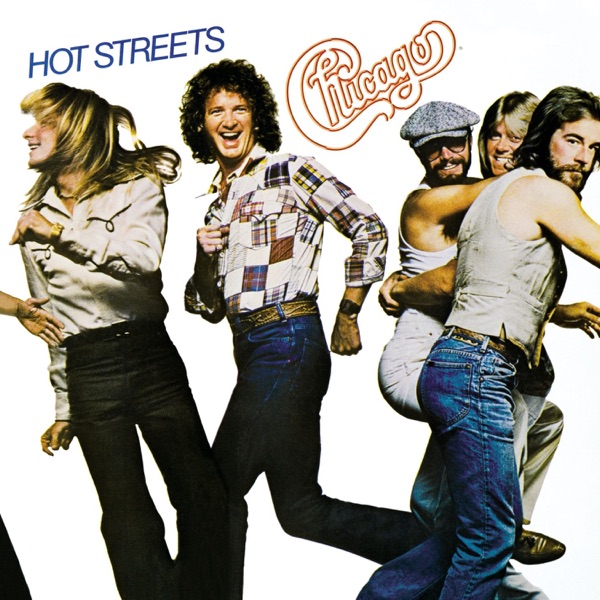
Hot Streets
1978 · 11 tracks
Chicago 13
1979 · 12 tracks
Chicago XIV
1980 · 13 tracks
- 1 Manipulation ↗ 3:45
- 2 Upon Arrival ↗ 3:48
- 3 Song for You ↗ 3:41
- 4 Where Did the Lovin' Go ↗ 4:06
- 5 Birthday Boy ↗ 4:55
- 6 Hold On ↗ 4:15
- 7 Overnight Cafe ↗ 4:19
- 8 Thunder and Lightning ↗ 3:32
- 9 I'd Rather Be Rich ↗ 3:08
- 10 The American Dream ↗ 3:19
- 11 Doin' Business ↗ 3:30
- 12 Live It Up ↗ 3:22
- 13 Soldier of Fortune ↗ 3:51
Chicago 16
1982 · 11 tracks

Chicago 17
1984 · 11 tracks

Chicago 19
1988 · 10 tracks
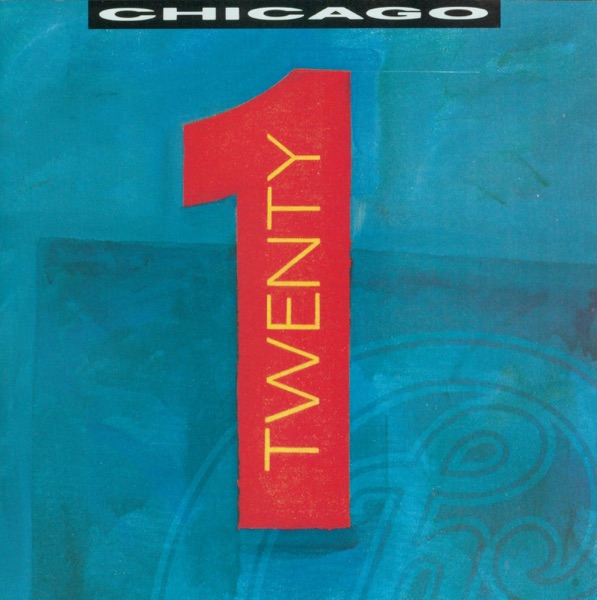
Twenty 1
1991 · 12 tracks
- 1 Explain It to My Heart ↗ 4:44
- 2 If It Were You ↗ 4:43
- 3 You Come to My Senses ↗ 3:49
- 4 Somebody, Somewhere ↗ 4:21
- 5 What Does It Take ↗ 4:38
- 6 One from the Heart ↗ 4:42
- 7 Chasin' the Wind ↗ 4:18
- 8 God Save the Queen ↗ 4:19
- 9 Man to Woman ↗ 3:55
- 10 Only Time Can Heal the Wounded ↗ 4:42
- 11 Who Do You Love ↗ 3:20
- 12 Holdin' On ↗ 4:15

Chicago XXX
2006 · 13 tracks
- 1 Feel (Hot Single Mix) ↗ 4:00
- 2 King of Might Have Been ↗ 3:52
- 3 Caroline ↗ 3:39
- 4 Why Can't We ↗ 4:05
- 5 Love Will Come Back ↗ 3:46
- 6 Long Lost Friend ↗ 4:32
- 7 90 Degrees and Freezing ↗ 3:50
- 8 Where Were You ↗ 4:16
- 9 Already Gone ↗ 6:51
- 10 Come to Me, Do ↗ 4:36
- 11 Lovin' Chains ↗ 3:56
- 12 Better ↗ 4:40
- 13 Feel (With Horns) ↗ 4:30

Chicago Christmas
2019 · 11 tracks
- 1 (Because) It's Christmastime ↗ 3:20
- 2 All Over the World ↗ 4:19
- 3 Bring My Baby Back ↗ 4:03
- 4 Merry Christmas, I Love You (R&B Version) ↗ 4:13
- 5 What the World Needs Now Is Love ↗ 3:31
- 6 All Is Right ↗ 4:03
- 7 Sleigh Ride 2019 ↗ 3:16
- 8 I'd Do It All Again (Christmas Moon) ↗ 4:58
- 9 I'm your Santa Claus ↗ 4:48
- 10 Here We Come a Caroling ↗ 3:06
- 11 Merry Christmas, I Love You (Ballad Version) ↗ 4:07

Born for This Moment
2022 · 14 tracks
- 1 Born For This Moment ↗ 4:50
- 2 If This Is Goodbye ↗ 3:49
- 3 Firecracker ↗ 3:51
- 4 Someone Needed Me the Most ↗ 5:18
- 5 Our New York Time ↗ 4:16
- 6 Safer Harbours ↗ 4:53
- 7 Crazy Idea ↗ 3:17
- 8 Make a Man Outta Me ↗ 4:15
- 9 She's Right ↗ 3:46
- 10 "The Mermaid" Sereia Do Mar ↗ 3:34
- 11 You've Got To Believe ↗ 3:13
- 12 For the Love ↗ 4:03
- 13 If This Isn't Love ↗ 4:38
- 14 House On the Hill ↗ 3:48
-
 ChicagoChicago197023 tracks
 -
 Chicago IIIChicago197123 tracks
 -
 Chicago VChicago197213 tracks
 -
 Chicago VIChicago197312 tracks
 -
 Chicago VIIChicago197416 tracks
 -
 Chicago VIIIChicago197513 tracks
 -
 Chicago XChicago197613 tracks
 -
 Chicago XIChicago197713 tracks
 -
 Hot StreetsChicago197811 tracks
 -
 Chicago 13Chicago197912 tracks
 -
 Chicago XIVChicago198013 tracks
 -
 Chicago 16Chicago198211 tracks
 -
 Chicago 17Chicago198411 tracks
 -
 Chicago 18Chicago198610 tracks
 -
 Chicago 19Chicago198810 tracks
 -
 Twenty 1Chicago199112 tracks
 -
 Chicago XXXChicago200613 tracks
 -
 Chicago ChristmasChicago201911 tracks
 -
 Born for This MomentChicago202214 tracks
Deep Dive
Overview
Chicago is an American rock band formed in Chicago, Illinois, in 1967 that bridged the gap between hard rock, jazz fusion, and mainstream pop music. Self-described as a “rock and roll band with horns,” the group synthesized elements of classical music, jazz, R&B, and pop into a distinctive sound that dominated radio and concert halls throughout the 1970s and beyond. Over five decades, the band evolved from a horn-powered fusion outfit into a soft-rock institution, becoming one of the most commercially successful groups in rock history and a fixture of the classic-rock canon.
Formation Story
Chicago emerged from the city that gave the band its name in 1967, assembling a lineup built around horns and a rock foundation. The founding core included keyboardist and songwriter Robert Lamm, trombonist James Pankow, guitarist and vocalist Terry Kath, and bassist Peter Cetera. The group’s early identity reflected the late-1960s appetite for ambitious, genre-blending arrangements—they viewed themselves not as a conventional rock band but as an ensemble capable of integrating brass, woodwinds, and complex compositional structures into rock’s framework. This ambition set them apart from their peers and defined their artistic mission from the outset.
Breakthrough Moment
Chicago’s first album, Chicago (1970), introduced the world to their signature sound: propulsive rock rhythms underpinned by sharp horn arrangements and layered vocal harmonies. The album established the sonic blueprint that would carry them forward. By Chicago III (1971) and the subsequent releases Chicago V (1972) and Chicago VI (1973), the band had built a massive commercial presence, proving that orchestrated rock with serious instrumental chops could achieve mainstream success. Albums released through the mid-1970s—Chicago VII (1974), Chicago VIII (1975), and Chicago X (1976)—consolidated their position as one of the decade’s dominant acts, with consistent radio play and platinum sales that reflected an audience hungry for their blend of rock sophistication and pop accessibility.
Peak Era
The period from 1973 through 1978 represented Chicago’s creative and commercial zenith. During these years, the band released a string of platinum albums while maintaining significant radio presence and concert draw. Albums like Chicago VI, Chicago VII, and Chicago VIII showcased a group in full command of their formula: complex arrangements that never sacrificed melody, songwriting that balanced rock intensity with pop sensibility, and performances that demonstrated both instrumental precision and emotional directness. By the late 1970s, the band’s sound began to shift toward softer, more ballad-oriented material, a direction evident on Hot Streets (1978) and Chicago 13 (1979). The departure of guitarist Terry Kath in 1978 marked a significant turning point, after which the band’s sonic palette narrowed and their aesthetic increasingly centered on commercial accessibility over instrumental adventurousness.
Musical Style
Chicago’s signature approach combined rock’s energy with jazz orchestration and pop melody. The horn section—featuring trumpets, trombones, and saxophones—was not decorative but integral to the composition and arrangement, often driving the melody rather than supporting it from behind. Their early work drew from jazz-rock and fusion traditions, employing sophisticated chord changes, extended instrumental passages, and a willingness to extend songs beyond conventional three-minute pop structures. The band’s vocals were layered and harmonically rich, creating a choir-like fullness even in intimate arrangements. As the 1970s progressed and especially after the 1978 lineup change, Chicago’s sound became more streamlined and ballad-focused, emphasizing emotional delivery over instrumental density. By the 1980s, the group had fully embraced a softer, adult-contemporary approach that prioritized accessibility and radio-friendly songwriting.
Major Albums
Chicago (1970)
The debut established the band’s core identity: hard-driving rock framed by brass arrangements, complex rhythms, and layered vocal harmonies that set them apart from contemporaries.
Chicago VI (1973)
A commercial and artistic peak, the album demonstrated the group’s ability to balance instrumental sophistication with memorable songwriting and broad appeal.
Chicago VIII (1975)
Released during the height of their commercial dominance, this album showcased the band’s continued mastery of their signature sound before a gradual shift toward softer material.
Hot Streets (1978)
Marked a turning point toward ballad-heavy arrangements and a softer sound, signaling the band’s evolution beyond their early rock-fusion identity.
Chicago 16 (1982)
With a reconfigured lineup and a fully realized adult-contemporary orientation, this album cemented the band’s appeal to radio and established their presence as a soft-rock act.
Chicago XXXV: The Nashville Sessions (2013)
A late-career album that demonstrated the band’s continued productivity and willingness to explore new recording contexts decades after formation.
Signature Songs
- “Beginnings” — An early standout that combined rock propulsion with intricate horn arrangements and became a defining example of the band’s formula.
- “Saturday in the Park” — A radio staple from Chicago V that paired accessible melody with the group’s signature brass arrangements.
- “Feelin’ Stronger Every Day” — A mid-1970s hit that epitomized the band’s evolution toward more pop-oriented material while retaining their instrumental identity.
- “25 or 6 to 4” — An iconic track that merged rock intensity with jazzy instrumentation and became synonymous with the band’s peak commercial period.
- “Hard to Say I’m Sorry” — A soft-rock ballad from their 1982 album that shifted the band’s public image toward emotional accessibility and adult-contemporary radio.
- “If You Leave Me Now” — A defining ballad that represented the band’s full embrace of softer material in the post-1978 era.
Influence on Rock
Chicago demonstrated that rock music could incorporate orchestral density, jazz harmonies, and classical compositional techniques without sacrificing commercial appeal or emotional directness. They proved that a “rock band with horns” was not a novelty but a viable, durable concept capable of sustaining decades-long careers and multiple lineup changes. The group influenced subsequent bands exploring the intersection of rock and soul, and their shift toward soft rock and adult contemporary in the 1980s helped codify that sound as a mainstream radio staple. Their emphasis on vocal harmony and commercial songwriting anticipated trends in pop rock that would dominate the 1980s and beyond.
Legacy
Chicago remains one of the best-selling rock acts in history, with continuous touring and recording activity spanning more than five decades. The band has maintained a presence in popular culture through their music’s use in film and television, and their albums from the 1970s remain staples of classic-rock radio. The group continues to perform with surviving original members including Robert Lamm and James Pankow, demonstrating the durability of their musical foundation and their appeal across generational lines. Their catalog—from the complex, horn-driven arrangements of their early work to the polished soft-rock ballads of their commercial peak—represents a complete history of American rock’s evolution from the 1970s onward.
Fun Facts
- The band’s self-titled debut album was released in 1970 with the simple title “Chicago,” establishing a naming convention they would follow for decades, ultimately reaching “Chicago XXXVI: Now” in 2014.
- Chicago maintained a prolific recording schedule throughout the 1970s and 1980s, releasing new studio albums nearly every year during their initial two decades of existence.
- The band recorded a big-band album, Night & Day: Big Band (1995), demonstrating their long-standing affinity for jazz instrumentation and arrangement.
- Over the course of their career, Chicago recorded multiple Christmas albums, beginning with Chicago XXV: The Christmas Album in 1998 and continuing into the 2010s and 2020s, reflecting their status as an established, family-friendly entertainment institution.