
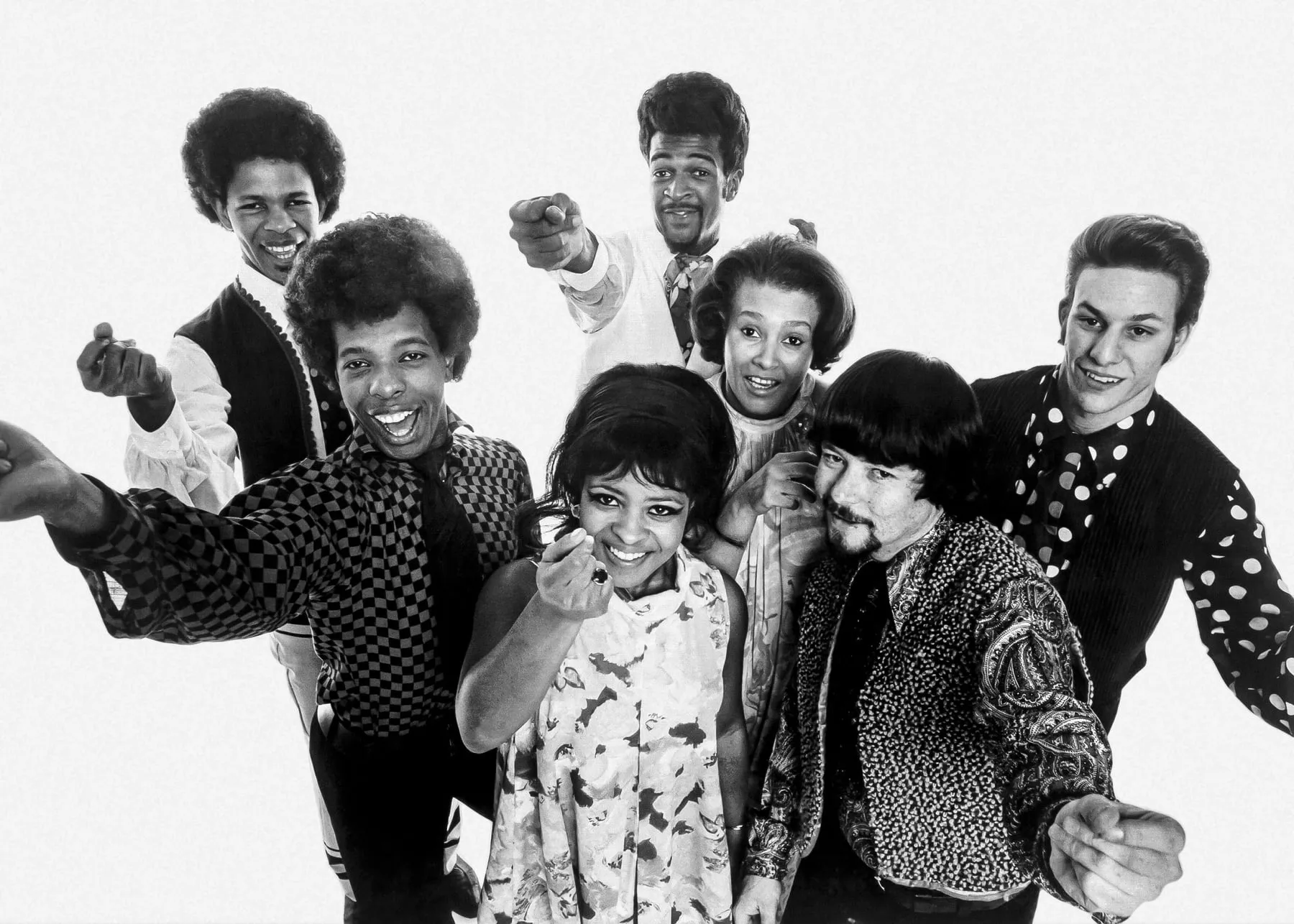
Photo by Distributed by Epic Records, Daedalus Management, and William Morris Agency, Inc. Photographer uncredited and unknown. , licensed under Public domain · Wikimedia Commons
Rank #29
Sly and the Family Stone
From Wikipedia
Sly and the Family Stone was an American band formed in San Francisco, California, in 1966 and active until 1983. Their work, which blended elements of funk, soul, psychedelic rock, gospel, and R&B, became a pivotal influence on subsequent American popular music. Their core line-up was led by singer-songwriter, producer, and multi-instrumentalist Sly Stone, and included Stone's siblings Freddie Stone and Rose Stone alongside Cynthia Robinson, Greg Errico (drums), Jerry Martini (saxophone), and Larry Graham. The band was the first major American rock group to have a racially integrated, mixed-gender lineup.
Members
- Freddie Stone
- Sly Stone
Discography & Previews
Browse through and click an album to open and play 30-second previews streamed from Apple Music.
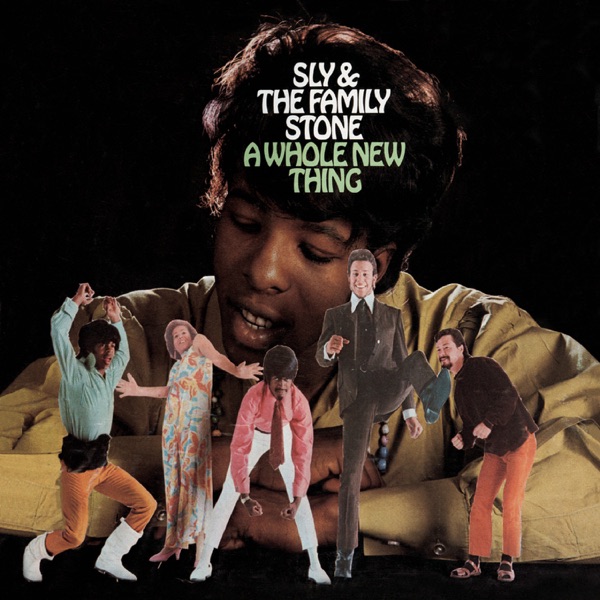
A Whole New Thing
1967 · 17 tracks
- 1 Underdog ↗ 3:58
- 2 If This Room Could Talk ↗ 3:10
- 3 Run, Run, Run ↗ 3:05
- 4 Turn Me Loose ↗ 1:56
- 5 Let Me Hear It From You ↗ 3:33
- 6 Advice ↗ 2:21
- 7 I Cannot Make It ↗ 3:19
- 8 Trip to Your Heart ↗ 3:41
- 9 I Hate to Love Her ↗ 3:31
- 10 Bad Risk ↗ 3:04
- 11 That Kind of Person ↗ 4:26
- 12 Dog ↗ 3:03
- 13 Underdog (Mono Single Version) [Bonus Track] ↗ 3:05
- 14 Let Me Hear It From You (Mono Single Version) [Bonus Track] ↗ 3:28
- 15 Only One Way Out of This Mess (Bonus Track) ↗ 3:52
- 16 What Would I Do (Bonus Track) ↗ 4:05
- 17 You Better Help Yourself (Instrumental Version) [Bonus Track] ↗ 2:19
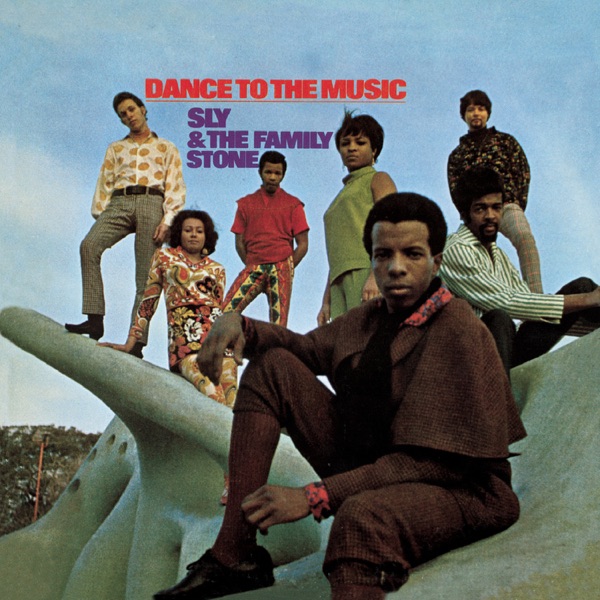
Dance to the Music
1968 · 15 tracks
- 1 Dance to the Music ↗ 2:59
- 2 Higher ↗ 2:48
- 3 I Ain't Got Nobody (For Real) ↗ 4:25
- 4 Dance To The Medley: Music is Alive/Dance In/Music Lover ↗ 12:11
- 5 Ride the Rhythm ↗ 2:47
- 6 Color Me True ↗ 3:08
- 7 Are You Ready ↗ 2:49
- 8 Don't Burn Baby ↗ 3:13
- 9 I'll Never Fall in Love Again ↗ 3:25
- 10 Dance to the Music (Mono Single Version) [Bonus Track] ↗ 2:57
- 11 Higher (Mono Single Version) [Bonus Track] ↗ 2:53
- 12 Soul Clappin' (Bonus Track) ↗ 2:38
- 13 We Love All (Bonus Track) ↗ 4:30
- 14 I Can't Turn You Loose (Bonus Track) ↗ 3:33
- 15 Never Do Your Woman Wrong (Instrumental Version) [Bonus Track] ↗ 3:34

Life
1968 · 15 tracks
- 1 Dynamite! ↗ 2:45
- 2 Chicken ↗ 2:13
- 3 Plastic Jim ↗ 3:29
- 4 Fun ↗ 2:23
- 5 Into My Own Thing ↗ 2:13
- 6 Harmony ↗ 2:52
- 7 Life ↗ 3:01
- 8 Love City ↗ 2:43
- 9 I'm an Animal ↗ 3:21
- 10 M'Lady ↗ 2:46
- 11 Jane is a Groupee ↗ 2:49
- 12 Dynamite! (Single Version) [Bonus Track] ↗ 2:08
- 13 Seven More Days (Bonus Track) ↗ 3:24
- 14 Pressure (Bonus Track) ↗ 3:44
- 15 Sorrow (Instrumental) [Bonus Track] ↗ 3:19

Stand!
1969 · 13 tracks
- 1 Stand! ↗ 3:08
- 2 Don't Call Me N****r, Whitey ↗ 5:58
- 3 I Want to Take You Higher ↗ 5:22
- 4 Somebody's Watching You ↗ 3:20
- 5 Sing a Simple Song ↗ 3:56
- 6 Everyday People ↗ 2:22
- 7 Sex Machine ↗ 13:46
- 8 You Can Make It If You Try ↗ 3:38
- 9 Stand! (Single Version) ↗ 3:08
- 10 I Want to Take You Higher (Single Version) ↗ 3:01
- 11 You Can Make It If You Try (Single Version) ↗ 3:38
- 12 Soul Clappin' II ↗ 3:26
- 13 My Brain (Zig-Zag) ↗ 3:19
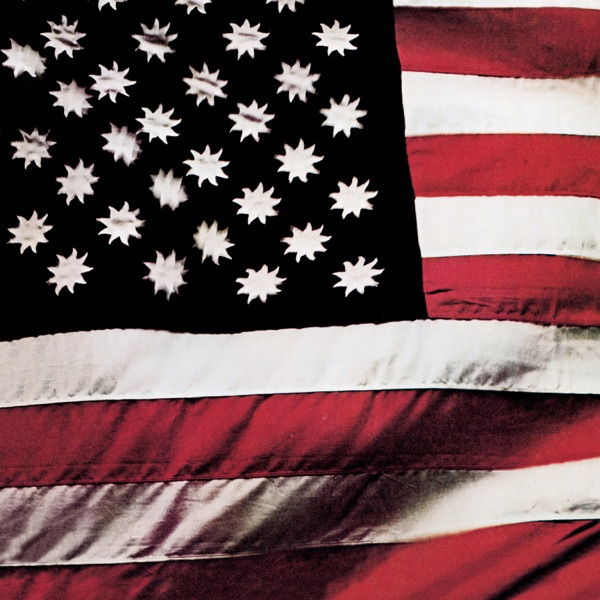
There’s a Riot Goin’ On
1971 · 12 tracks
- 1 Luv N' Haight ↗ 4:04
- 2 Just Like a Baby ↗ 5:13
- 3 Poet ↗ 3:03
- 4 Family Affair ↗ 3:09
- 5 Africa Talks to You ("The Asphalt Jungle") ↗ 8:45
- 6 There's a Riot Goin' On ↗ 0:04
- 7 Brave & Strong ↗ 3:32
- 8 (You Caught Me) Smilin' ↗ 2:56
- 9 Time ↗ 3:06
- 10 Spaced Cowboy ↗ 4:00
- 11 Runnin' Away ↗ 2:58
- 12 Thank You for Talkin' to Me, Africa ↗ 7:16
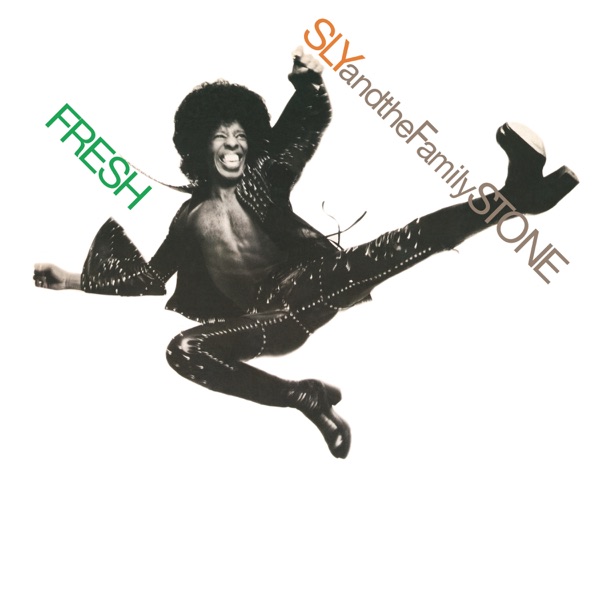
Fresh
1973 · 16 tracks
- 1 In Time ↗ 5:47
- 2 If You Want Me to Stay ↗ 3:00
- 3 Let Me Have It All ↗ 2:56
- 4 Frisky ↗ 3:12
- 5 Thankful N' Thoughtful ↗ 4:40
- 6 Skin I'm In ↗ 2:55
- 7 I Don't Know (Satisfaction) ↗ 3:52
- 8 Keep On Dancin' ↗ 2:23
- 9 Que Sera, Sera (Whatever Will Be, Will Be) ↗ 5:22
- 10 If It Were Left Up to Me ↗ 1:58
- 11 Babies Makin' Babies ↗ 3:38
- 12 Let Me Have It All (Alternate Mix) ↗ 2:18
- 13 Frisky (Alternate Mix) ↗ 3:26
- 14 Skin I'm In (Alternate Mix) ↗ 2:47
- 15 Keep On Dancin' (Alternate Mix) ↗ 2:43
- 16 Babies Makin' Babies (Alternate Version) ↗ 4:20

Small Talk
1974 · 15 tracks
- 1 Small Talk ↗ 3:23
- 2 Say You Will ↗ 3:19
- 3 Mother Beautiful ↗ 2:00
- 4 Time For Livin' ↗ 3:17
- 5 Can't Strain My Brain ↗ 4:09
- 6 Loose Booty ↗ 3:46
- 7 Holdin' On ↗ 3:39
- 8 Wishful Thinkin' ↗ 4:25
- 9 Better Thee Than Me ↗ 3:35
- 10 Livin' While I'm Livin' ↗ 2:58
- 11 This Is Love ↗ 2:54
- 12 Crossword Puzzle (Early Version) [Bonus Track] ↗ 3:47
- 13 Time For Livin' (Alternate Version) [Bonus Track] ↗ 4:00
- 14 Loose Booty (Alternate Version) [Bonus Track] ↗ 2:05
- 15 Positive (Instrumental) [Bonus Track] ↗ 2:15

Heard Ya Missed Me, Well I’m Back
1976 · 10 tracks


-
 A Whole New ThingSly and the Family Stone196717 tracks
 -
 Dance to the MusicSly and the Family Stone196815 tracks
 -
 LifeSly and the Family Stone196815 tracks
 -
 Stand!Sly and the Family Stone196913 tracks
 -
 There’s a Riot Goin’ OnSly and the Family Stone197112 tracks
 -
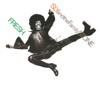 FreshSly and the Family Stone197316 tracks
 -
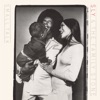 Small TalkSly and the Family Stone197415 tracks
 -
 Heard Ya Missed Me, Well I’m BackSly and the Family Stone197610 tracks
 -
 Back on the Right TrackSly and the Family Stone19798 tracks
 -
 Ain’t but the One WaySly and the Family Stone19829 tracks
Deep Dive
Overview
Sly and the Family Stone stands as one of the most transformative acts in American popular music, a band that collapsed the boundaries between funk, soul, psychedelic rock, gospel, and R&B into a unified and infectious sonic language. Formed in San Francisco in 1967, the group became the first major American rock ensemble to maintain a racially integrated, mixed-gender lineup—a fact that carried as much cultural weight as their music itself. Their influence rippled through decades of subsequent popular music, establishing sonic and social templates that countless artists would follow.
Formation Story
Sly and the Family Stone emerged from the San Francisco music scene in 1967, a moment when the city was already a hotbed of genre-crossing experimentation. The band was built around singer-songwriter, producer, and multi-instrumentalist Sly Stone, who assembled a core lineup that included his siblings Freddie Stone and Rose Stone, alongside saxophonist Jerry Martini, drummer Greg Errico, and trumpeter Cynthia Robinson. This formation—combining family members with carefully selected musicians, blending instruments typically associated with brass bands and orchestral R&B with rock guitars and electric bass—created a sonic palette that was immediately distinctive. The San Francisco origin was not incidental; the city’s progressive racial attitudes and musical openness in the mid-1960s provided the cultural space for such a lineup to take root and flourish.
Breakthrough Moment
Sly and the Family Stone’s initial albums established their credentials within the soul and funk circuits, but it was Stand! in 1969 that signaled their arrival as a crossover phenomenon. The album synthesized their myriad influences into a coherent artistic statement, one that spoke to the optimistic (if turbulent) cultural moment of the late 1960s. Following this success, There’s a Riot Goin’ On in 1971 deepened their commercial penetration and critical credibility, marking them as artists who could evolve and darken their sound while maintaining their essential identity. These albums established Sly and the Family Stone not merely as a novelty act or a soul group with rock trappings, but as major innovators capable of shaping the direction of American popular music.
Peak Era
The period from 1969 through 1973, spanning Stand!, There’s a Riot Goin’ On, and Fresh, represented the band’s creatively and commercially dominant moment. During these years, Sly and the Family Stone achieved a rare synthesis: they were simultaneously embraced by rock audiences, funk purists, soul radio, and pop listeners. Fresh in 1973 sustained their creative momentum and extended their chart presence, proving that their success was not a single-album phenomenon but rather reflected a genuine and broad cultural resonance. This era positioned them at the nexus of American popular music, influential across genres and demographics in ways that few acts achieve.
Musical Style
Sly and the Family Stone’s sound was predicated on a radical mixing of idioms that would have seemed incongruous a few years prior. They grafted psychedelic rock’s textural adventurousness and guitar work onto a foundation of James Brown–influenced funk grooves and New Orleans soul tradition, all filtered through gospel harmonies and call-and-response vocal arrangements. Greg Errico’s drumming drove the rhythm section with a jazz-informed precision that locked into Larry Graham’s innovative bass playing—Graham pioneered the slap-bass technique that would become foundational to funk and subsequent music. Jerry Martini’s saxophone and Cynthia Robinson’s trumpet provided the brass foundation, while Sly Stone’s keyboards and arrangements wove everything into a cohesive whole. Sly’s own vocal approach ranged from tender soul crooning to percussive rhythmic chanting, and his production decisions—including the use of echo, compression, and multitrack layering—gave the band’s records a dense, almost claustrophobic intimacy that contrasted with their obvious party appeal. The band’s evolution was marked by There’s a Riot Goin’ On moving toward a darker, more introspective funk aesthetic, with heavier compression and more paranoid lyrical themes, while Fresh found them reasserting their celebratory side without sacrificing the musical sophistication that had defined their maturation.
Major Albums
Stand! (1969)
A landmark statement that unified funk, soul, rock, and psychedelia into a genre-defying celebration. The album announced Sly and the Family Stone as major artists and established them as crossover phenomena, reaching both pop and soul audiences simultaneously.
There’s a Riot Goin’ On (1971)
A darker, more introspective funk masterpiece that deepened their artistic vision while maintaining commercial appeal. The album proved the band could evolve their sound and address weightier emotional and social terrain without losing their essential groove.
Fresh (1973)
A culmination of the band’s peak era, balancing their party-oriented funk energy with sophisticated production and arrangement. The album sustained their cultural relevance and demonstrated their ability to iterate on their formula without repeating themselves.
A Whole New Thing (1967)
Their debut introduced the integrated band concept and the eclectic genre-blending that would define their project, setting the template for all that followed.
Dance to the Music (1968)
An early consolidation of their sound that emphasized the funk and soul elements while introducing their arrangements to wider audiences.
Signature Songs
- “Dance to the Music” — The defining early anthem that introduced their integration of funk, soul, and rock to mainstream audiences.
- “Stand!” — A socially conscious plea for unity and resilience that became both a signature statement and a concert staple.
- “Family Affair” — A showcase for their groove-oriented production aesthetic and introspective vocal approach from the There’s a Riot Goin’ On era.
- “Hot Fun in the Summertime” — An infectious, summery funk-pop gem that exemplified their ability to craft indelible pop hooks within complex arrangements.
Influence on Rock
Sly and the Family Stone’s impact on subsequent popular music cannot be overstated. They demonstrated that rock and funk were not separate genres but points on a continuum, and their commercial success opened pathways for countless artists to draw freely across racial, gender, and genre boundaries. The band’s integration—both racial and gender—provided a visible model for what popular music could be beyond the segregation that had long characterized American entertainment. Their production innovations, particularly in the use of compression, layering, and studio as instrument, influenced a generation of funk, soul, and ultimately hip-hop producers. The combination of Sly Stone’s production vision and the band’s ensemble musicianship established a template for funk as a democratic form in which every instrument carried equal narrative weight. Artists from Earth, Wind & Fire to Parliament-Funkadelic to subsequent generations of funk and soul musicians drew directly from the template Sly and the Family Stone established.
Legacy
Sly and the Family Stone’s influence persists in the DNA of contemporary funk, soul, and hip-hop production. Though the band’s initial run ended in 1983, their recorded legacy—anchored by the studio albums from 1967 through 1973—remains foundational listening for anyone seeking to understand American popular music’s evolution. Their status as the first major integrated rock band carries historical weight beyond music, marking a visible shift in how American popular culture could be organized. Subsequent reissues and streaming availability have ensured that new generations encounter their work, and their influence remains audible in funk and soul revival movements. The band’s basic insistence—that funk, soul, rock, and psychedelia belonged together, and that musicians of all races and genders could play together—changed the landscape of popular music irreversibly.
Fun Facts
- Larry Graham, the band’s bassist, pioneered the slap-bass technique on his instrument, a playing method that became foundational to funk music and influenced virtually every funk and R&B bassist who followed.
- The band’s 1967 formation in San Francisco placed them at the exact nexus of the psychedelic rock explosion and the emerging funk movement, allowing them to synthesize both traditions simultaneously.
- Sly and the Family Stone’s willingness to tour extensively and perform on major television programs during the early 1970s was crucial to their mainstream crossover, making them visible to audiences beyond traditional soul and funk radio listeners.