
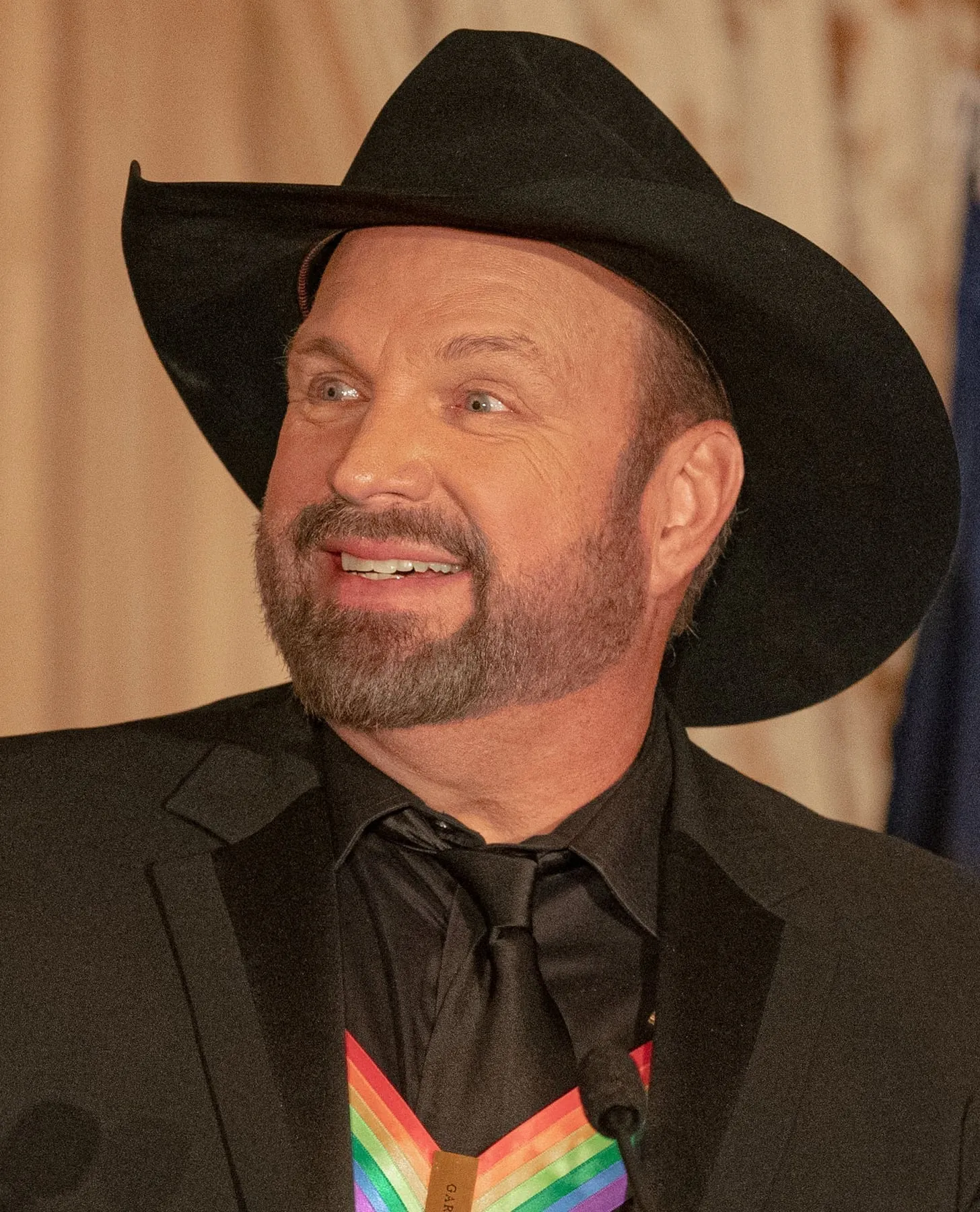
Photo by U.S. Department of State from United States , licensed under Public domain · Wikimedia Commons
Rank #391
Garth Brooks
From Wikipedia
Troyal Garth Brooks is an American country singer and songwriter. His musical style blends traditional country with pop and rock elements, which has earned him his immense popularity, particularly in the United States, with success on the country music single and album charts, multi-platinum recordings and record-breaking live performances, while also crossing over into the mainstream pop arena.
Deep Dive
Overview
Garth Brooks is an American country singer and songwriter born in 1962 whose musical style fuses traditional country with pop and rock elements. Since his debut in 1989, Brooks has achieved unprecedented commercial success on the country charts while simultaneously crossing over into the mainstream pop arena. His combination of stadium-scale live performances, radio-friendly songwriting, and a sound that bridged the gap between country purists and pop audiences made him one of the defining artists of 1990s country music.
Formation Story
Born Troyal Garth Brooks in 1962, Brooks emerged from a cultural moment when country music was beginning to splinter into competing factions—traditional country on one side, pop-influenced New Crap Country on the other. His upbringing and early exposure to multiple musical genres positioned him uniquely to synthesize these sounds. By the late 1980s, Brooks had developed a distinctive approach that honored country’s narrative traditions and instrumentation while incorporating production techniques and melodic sensibilities drawn from rock and pop. When he signed with RCA Records Nashville and released his self-titled debut, Garth Brooks, in 1989, he arrived fully formed as an artist, bringing with him a clear vision of how country music could sound when stripped of genre-purist gatekeeping.
Breakthrough Moment
Brooks’ self-titled debut in 1989 established his commercial viability, but his second album, No Fences (1990), transformed him into a superstar. The album’s success on both country and pop charts demonstrated that his crossover appeal was not marginal but central to his artistry. No Fences became a multi-platinum juggernaut that established the template for Brooks’ career: radio singles that charted across formats, album sales that competed with mainstream pop releases, and a live performance reputation that began to reshape how country artists approached touring. The album’s breakthrough proved that a country artist could achieve genuine mainstream popularity without diluting the country elements of his music—a lesson that would influence country radio for the next two decades.
Peak Era
Brooks’ peak commercial and creative period extended from 1990 through the late 1990s, anchored by a succession of multi-platinum albums. Ropin’ the Wind (1991), In Pieces (1993), and Fresh Horses (1995) maintained the momentum established by No Fences, each achieving massive sales and spawning radio hits that crossed over to pop formats. His live performances during this era became legendary for their scale and production values, with Brooks pioneering the use of stadium touring in country music at a level that had previously been reserved for arena rock acts. By the mid-1990s, Brooks was not simply a successful country artist—he was competing with pop and rock acts for overall music industry dominance, a position he maintained through the release of Sevens in 1997.
Musical Style
Brooks’ sound synthesizes traditional country songwriting—built on narrative lyrics, emotional directness, and country instrumental textures—with production techniques, melodic hooks, and structural choices drawn from pop and rock music. His vocal delivery combines country phrasing with a pop sensibility, allowing him to communicate intimate emotion across stadium-sized venues. The arrangement of his recordings typically maintains country-core instrumentation—acoustic and electric guitars, drums, and traditional country percussion—while incorporating the polished production values and layered vocal harmonies associated with pop records. This blend allowed Brooks to satisfy country radio programmers, country music fans, and mainstream pop audiences simultaneously, a rare achievement in genre-divided music markets. His songwriting draws on country’s tradition of character-driven storytelling and emotional specificity while constructing songs with the structural clarity and hook-focused design of pop songwriting.
Major Albums
Garth Brooks (1989)
Brooks’ debut established his core sound and introduced his distinctive vocal phrasing and arrangement philosophy, setting the stage for the commercial success to follow.
No Fences (1990)
The album that transformed Brooks from a promising debut artist into a crossover phenomenon, achieving multi-platinum status and proving that country-pop fusion could dominate both country and mainstream charts simultaneously.
Ropin’ the Wind (1991)
Released at the peak of Brooks’ commercial momentum, this album demonstrated that his breakthrough was not a one-off phenomenon and solidified his status as country’s dominant commercial force.
In Pieces (1993)
A continuation of Brooks’ peak-era commercial dominance, showcasing his ability to consistently deliver radio-friendly material while maintaining artistic credibility within country circles.
Fresh Horses (1995)
By mid-decade, this album confirmed Brooks’ staying power and proved his appeal remained undiminished, contributing to his reputation as country music’s most reliable platinum-album generator.
Sevens (1997)
Representing the final major statement of his 1990s peak era, this album marked a moment when Brooks remained at the absolute summit of country music’s commercial hierarchy.
Signature Songs
- “Friends in Low Places” — An anthem of country-pop accessibility that became Brooks’ defining single and a staple of country radio and mainstream pop rotation.
- “The Dance” — A ballad that showcases Brooks’ emotional vocal delivery and demonstrates his ability to craft deeply personal material within a pop-friendly framework.
- “In Another’s Eyes” — A duet that furthered Brooks’ mainstream crossover appeal through collaboration with established pop/rock artists.
- “She’s Every Woman” — A showcase of Brooks’ romantic songwriting and his ability to craft character-driven narratives within commercially viable structures.
Influence on Rock
Brooks’ success fundamentally altered the relationship between country music and mainstream pop markets. By demonstrating that a country artist could achieve genuine blockbuster status without abandoning country identity, Brooks opened industry pathways for subsequent country acts to pursue mainstream crossover ambitions. His touring innovations—particularly the deployment of stadium-scale production values within country music—influenced how country artists positioned their live performances, transforming country touring from arena-scale events into stadium spectacles competitive with rock touring. His commercial dominance throughout the 1990s also influenced how the broader music industry understood the country audience, positioning country music as a major commercial force rather than a regional or demographic niche.
Legacy
Brooks’ career represents a turning point in late-20th-century country music, when genre boundaries became permeable in ways that benefited both country and pop music markets. His continued active status as a recording and touring artist—exemplified by releases including Man Against Machine (2014), Gunslinger (2016), and Fun (2020)—demonstrates the durability of his appeal across multiple generations of country music listeners. His 2024 album Time Traveler confirms his ongoing relevance as a recording artist, while his reputation as a live performer remains undiminished, securing his position as one of country music’s most commercially consequential figures across multiple decades.
Fun Facts
- Brooks released multiple Christmas albums during his career, including Garth Brooks & The Magic of Christmas (1999) and Christmas Together (2016), demonstrating his diversification beyond core country material.
- His recording history spans multiple major labels including RCA Records Nashville, Capitol Records Nashville, and Big Machine Records, reflecting the various phases of his long career.
- The breadth of his studio album output from 1989 through 2024 spans compilations, live recordings, and studio work across genres, showcasing a prolific approach to recording uncommon among mainstream country artists.