
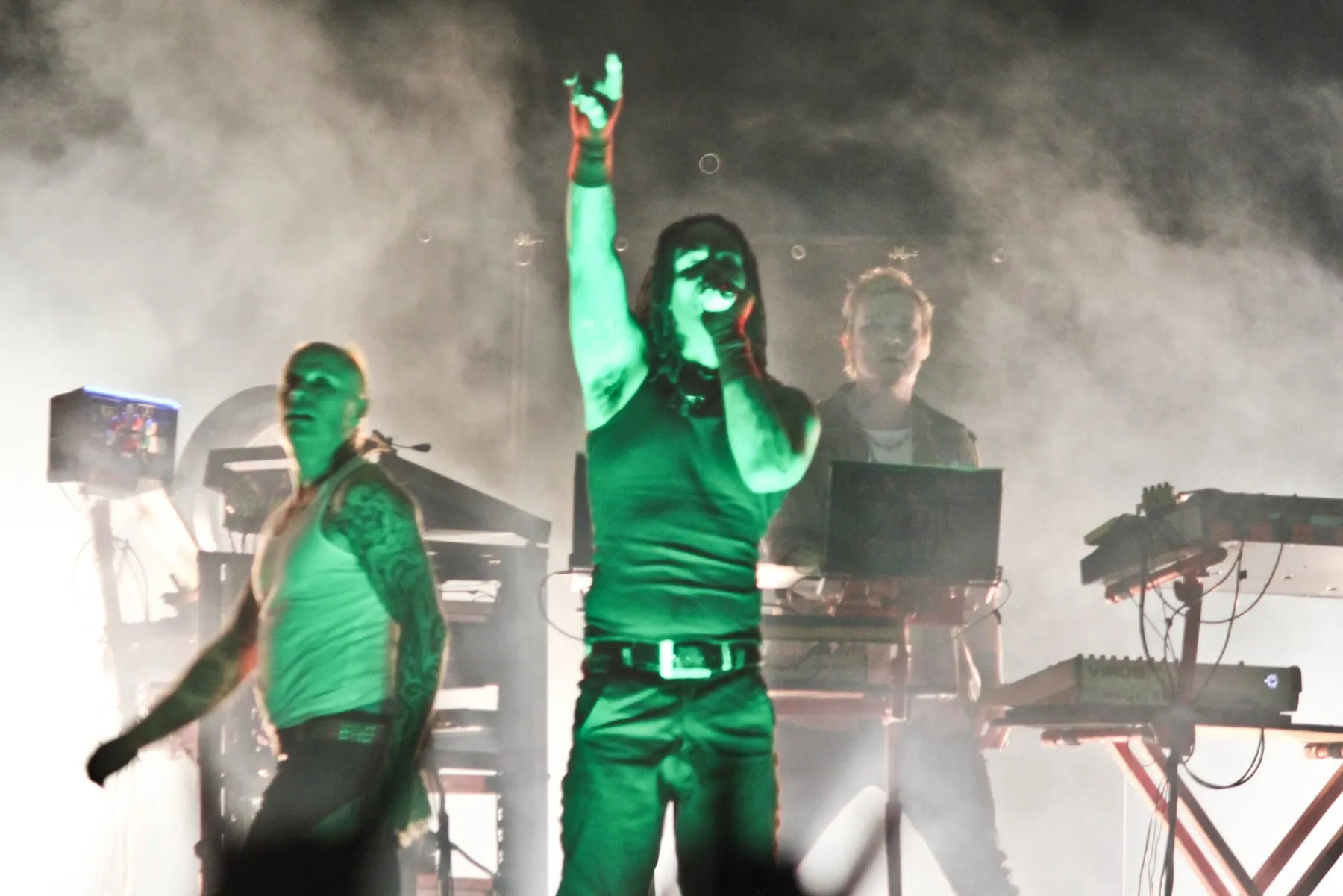
Photo by Silver Blu3 , licensed under CC BY 2.0 · Wikimedia Commons
Rank #392
The Prodigy
From Wikipedia
The Prodigy are an English electronic dance music band formed in Braintree in 1990 by producer, keyboardist, and songwriter Liam Howlett, dancer and occasional vocalist Keith Flint and dancer and occasional live keyboardist Leeroy Thornhill, who were joined by MC and lead vocalist Maxim. AllMusic described The Prodigy as "the premiere dance act for the alternative masses" and "the Godfathers of Rave". They are considered to be pioneers in a number of breakbeat led musical genres including breaks and breakbeat hardcore. Liam Howlett describes their style as electronic punk.
Members
- David Santos
- Keith Flint
- Leeroy Thornhill
- Liam Howlett
Discography & Previews
Browse through and click an album to open and play 30-second previews streamed from Apple Music.

Experience
1992 · 9 tracks

Music for the Jilted Generation
1994 · 13 tracks
- 1 Intro ↗ 0:46
- 2 Break & Enter ↗ 8:25
- 3 Their Law ↗ 6:41
- 4 Full Throttle ↗ 5:03
- 5 Voodoo People ↗ 6:27
- 6 Speedway (Theme from "Fastlane") ↗ 6:24
- 7 The Heat (The Energy) ↗ 7:00
- 8 Poison ↗ 6:42
- 9 No Good (Start the Dance) ↗ 6:20
- 10 One Love (Edit) ↗ 3:54
- 11 The Narcotic Suite: 3 Kilos ↗ 7:26
- 12 The Narcotic Suite: Skylined ↗ 5:58
- 13 The Narcotic Suite: Claustrophobic Sting ↗ 7:12


Always Outnumbered, Never Outgunned
2004 · 12 tracks
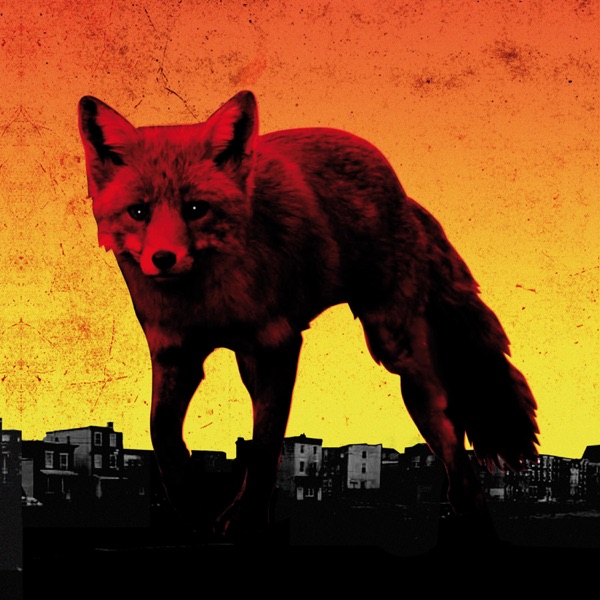
The Day Is My Enemy
2015 · 14 tracks
- 1 The Day Is My Enemy ↗ 4:25
- 2 Nasty ↗ 4:03
- 3 Rebel Radio ↗ 3:52
- 4 Ibiza (feat. Sleaford Mods) ↗ 2:46
- 5 Destroy ↗ 4:29
- 6 Wild Frontier ↗ 4:28
- 7 Rok-Weiler ↗ 3:51
- 8 Beyond the Deathray ↗ 3:09
- 9 Rhythm Bomb (feat. Flux Pavilion) ↗ 4:12
- 10 Roadblox ↗ 5:01
- 11 Get Your Fight On ↗ 3:39
- 12 Medicine ↗ 3:56
- 13 Invisible Sun ↗ 4:16
- 14 Wall of Death ↗ 4:12

No Tourists
2018 · 10 tracks
-
 ExperienceThe Prodigy19929 tracks
 -
 Music for the Jilted GenerationThe Prodigy199413 tracks
 -
 The Fat of the LandThe Prodigy199710 tracks
 -
 Always Outnumbered, Never OutgunnedThe Prodigy200412 tracks
 -
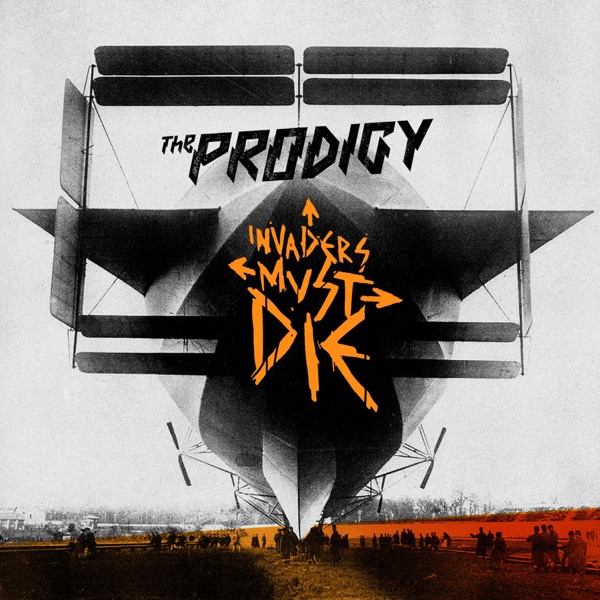
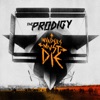 Invaders Must DieThe Prodigy200911 tracks
 -
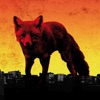 The Day Is My EnemyThe Prodigy201514 tracks
 -
 No TouristsThe Prodigy201810 tracks
Deep Dive
Overview
The Prodigy are an English electronic dance music band that emerged from Braintree in 1990 and became one of the most significant acts in rave and alternative electronic music. Built on a foundation of breakbeat, hard-edged production, and visceral live performance, they expanded the audience for dance music far beyond traditional club spaces, reaching alternative rock listeners and mainstream audiences alike. Liam Howlett’s description of their style as “electronic punk” captures their essence: uncompromising, aggressive, and rooted in a DIY ethos rather than polish or accessibility.
Formation Story
The Prodigy coalesced in Braintree, Essex, around producer and keyboardist Liam Howlett in 1990. Howlett, who had been experimenting with electronic music and sampling, formed the core of the group with dancer and occasional vocalist Keith Flint and dancer and live keyboardist Leeroy Thornhill. The addition of MC and lead vocalist Maxim completed the classic lineup. The band emerged from the UK rave scene of the late 1980s and early 1990s, a cultural moment defined by illegal warehouse parties, acid house, and the wholesale rejection of 1980s pop convention. Rather than remaining confined to that underground, The Prodigy would become the vehicle by which rave aesthetics and breakbeat production reached audiences who would never set foot in a club.
Breakthrough Moment
The Prodigy’s debut album Experience, released in 1992, announced their arrival with a sound that bridged the underground energy of rave with song structures and hooks that could appeal beyond the dance floor. Two years later, Music for the Jilted Generation (1994) established them as major alternative figures. That album’s combination of punishing breakbeats, industrial textures, and Maxim’s aggressive vocal delivery proved that electronic music could carry the same defiant attitude as punk or hardcore rock. The album arrived with substantial radio and MTV presence, a breakthrough moment that transformed them from a cult rave act into a crossover phenomenon.
Peak Era
The Prodigy’s commercial and creative peak came with The Fat of the Land (1997), which consolidated their position as mainstream stars without sacrificing their abrasive edge. This period—spanning the mid-to-late 1990s—saw the band perform at major festivals and sold-out venues worldwide, their live shows distinguished by Flint’s charismatic dancing and the band’s refusal to soften their sound for larger audiences. They maintained momentum through 1999 with Prodigy Present: The Dirtchamber Sessions, Volume One, demonstrating their continued relevance and creativity during the final years of the decade that had made them famous.
Musical Style
The Prodigy’s sound is rooted in breakbeat, a production technique that deconstructs and reassembles drum breaks into rapid, jagged percussion patterns. This technical foundation sits alongside heavy use of sampling, industrial synthesizers, and aggressive EQ choices that make their records feel confrontational rather than welcoming. Liam Howlett’s production approach favors density and texture over empty space; tracks pile multiple melodic and rhythmic elements atop one another, creating a sense of controlled chaos. Keith Flint’s physical presence as a dancer and occasional vocalist added a human dimension to the electronic framework, while Maxim’s MC work brought hip-hop influences and attitude to the mix. The band’s evolution saw them incorporate elements from techno, electronicore, and big beat, but their core signature—punishing breakbeats married to rock-like intensity—remained constant. Howlett’s frequent description of the music as “electronic punk” is apt: the production philosophy prioritizes impact and rejection of convention over technical smoothness.
Major Albums
Experience (1992)
The Prodigy’s debut announced the band’s combination of rave energy and alternative sensibility, establishing their signature breakbeat-driven sound and proving that electronic music could reach beyond the club underground.
Music for the Jilted Generation (1994)
A more aggressive and structured statement than its predecessor, this album secured the band’s crossover status, balancing industrial textures with accessible melodic hooks and cementing their role as leaders of the rave-into-mainstream movement.
The Fat of the Land (1997)
The band’s most commercially successful album, The Fat of the Land represented their creative peak, showcasing sophisticated production and songwriting while maintaining their hard-edged aesthetic and aggressive energy.
Invaders Must Die (2009)
Released more than a decade after their previous studio work, this album demonstrated the band’s continued vitality and their ability to refresh their sound while honoring their breakbeat foundations.
No Tourists (2018)
The Prodigy’s most recent studio album, No Tourists confirmed their endurance as a creative force, blending modern production techniques with the industrial and breakbeat elements that defined their career.
Signature Songs
- Firestarter — An aggressive, propulsive track featuring Maxim’s snarling vocals, representing the band’s uncompromising approach to mainstream music.
- Out of Space — A landmark breakbeat production showcasing Liam Howlett’s technical prowess and the band’s ability to create club-ready tracks with crossover appeal.
- Smack My Bitch Up — One of the band’s most provocative and recognizable tracks, demonstrating their willingness to provoke despite commercial success.
- Breathe — A later-period track that maintained the band’s aggressive production approach while showing their continued relevance.
Influence on Rock
The Prodigy’s historical significance lies in their role as translators and amplifiers: they took the breakbeat and rave aesthetics that existed in UK underground culture and made them available to alternative and mainstream rock audiences. Their success proved that electronic dance music could achieve the same intensity and artistic credibility as rock and punk, a boundary-crossing move that influenced countless artists across genres. Bands and electronic producers in the 2000s and beyond drew on their template of aggressive production, accessible song structures, and physical live performance. Beyond direct musical influence, they demonstrated that rave culture could exist in the mainstream without dilution or co-option, a stance that legitimized electronic music as a serious alternative to rock.
Legacy
More than three decades after their formation, The Prodigy remain active and touring, their presence in contemporary music reinforced by continued studio work and festival appearances. No Tourists (2018) confirmed that they were not a legacy act resting on 1990s success but an ongoing creative concern. Their influence extends across electronic music, alternative rock, and hip-hop, with their catalog accessible on all major streaming platforms and their live performances consistently drawing large crowds. The band’s refusal to soften or update their sound toward mainstream comfort has earned them respect from both longtime fans and younger listeners discovering their work. The Prodigy stand as proof that the energy and ideology of 1990s rave culture, once dismissed as a passing trend, contained lasting artistic substance.
Fun Facts
- Leeroy Thornhill and Keith Flint’s roles as dancers became as visually recognizable as Liam Howlett’s production work, giving The Prodigy a fully realized live spectacle rather than a laptop-and-mixer performance.
- The band’s association with Maverick Records and later major labels like Elektra and Warner Music Group demonstrated that genuine alternative acts could maintain creative control while achieving major-label distribution.
- The title Music for the Jilted Generation was itself a statement, referencing and claiming common ground with John Philip Sousa’s orchestral work The Stars and Stripes Forever, asserting The Prodigy’s place in a lineage of pop cultural rebellion across centuries.