

Photo by Raph_PH , licensed under CC BY 4.0 · Wikimedia Commons
Rank #351
Gary Numan
From Wikipedia
Gary Anthony James Webb, known professionally as Gary Numan, is an English singer, songwriter and musician. He entered the music industry as frontman of the new wave band Tubeway Army. The band's second and final album, 1979's Replicas, reached No. 1 on the UK Albums Chart, and spawned a UK No. 1 single with "Are 'Friends' Electric?". Following the band's split, he released his debut solo album The Pleasure Principle later in 1979, which also reached No. 1 in the UK and produced another UK No. 1 single with "Cars". Although his commercial popularity peaked in the late 1970s and early 1980s, he has maintained a strong cult following since then. He has sold over 10 million records.
Discography & Previews
Browse through and click an album to open and play 30-second previews streamed from Apple Music.

The Pleasure Principle
1979 · 21 tracks
- 1 Cars (Demo Version 2) ↗ 3:15
- 2 Films (Demo Version) ↗ 2:42
- 3 Complex (Demo Version) ↗ 3:16
- 4 Random (Remastered 2009) ↗ 3:59
- 5 M.E. (Demo Version) ↗ 4:32
- 6 Conversation (Demo Version 2) ↗ 6:49
- 7 Tracks (Demo Version) ↗ 3:02
- 8 Cars (Demo Version 1) ↗ 3:37
- 9 Metal (Demo Version) ↗ 3:35
- 10 Airlane (Demo Version) ↗ 3:18
- 11 Trois Gymnopédies No. 1 (Demo) ↗ 2:26
- 12 Observer (Demo Version) ↗ 3:03
- 13 Conversation (Demo Version 1) ↗ 3:56
- 14 Engineers (Demo Version) ↗ 3:52
- 15 Asylum (Remastered 2009) ↗ 2:31
- 16 Oceans (Remastered 2009) ↗ 3:01
- 17 Photograph (Remastered 2009) ↗ 2:27
- 18 Airlane (BBC Peel Sessions) ↗ 3:25
- 19 Cars (BBC Peel Sessions) ↗ 3:15
- 20 Films (BBC Peel Sessions) ↗ 2:50
- 21 Conversation (BBC Peel Sessions) ↗ 6:50

Telekon
1980 · 16 tracks
- 1 This Wreckage ↗ 5:27
- 2 The Aircrash Bureau ↗ 5:42
- 3 Telekon ↗ 4:30
- 4 Remind Me to Smile ↗ 4:03
- 5 Sleep By Windows ↗ 4:58
- 6 We Are Glass ↗ 4:47
- 7 I’m an Agent ↗ 4:20
- 8 I Dream of Wires ↗ 5:10
- 9 Remember I Was Vapour ↗ 5:11
- 10 Please Push No More ↗ 5:39
- 11 The Joy Circuit ↗ 5:12
- 12 I Die: You Die (Video Version) ↗ 3:48
- 13 A Game Called Echo ↗ 5:07
- 14 Photograph ↗ 2:28
- 15 Down In the Park (Piano Version) ↗ 4:15
- 16 Trois Gymnopedies ↗ 2:44

Dance
1981 · 16 tracks
- 1 Slowcar to China ↗ 9:07
- 2 Night Talk ↗ 4:28
- 3 A Subway Called 'You' ↗ 4:41
- 4 Cry the Clock Said ↗ 9:58
- 5 She's Got Claws ↗ 4:56
- 6 Crash ↗ 3:41
- 7 Boys Like Me ↗ 4:17
- 8 Stories ↗ 3:13
- 9 My Brother's Time ↗ 4:37
- 10 You Are, You Are ↗ 4:03
- 11 Moral (Extended Version) ↗ 5:37
- 12 Stormtrooper in Drag ↗ 4:53
- 13 Face to Face ↗ 3:49
- 14 Dance ↗ 2:50
- 15 Exhibition ↗ 4:28
- 16 I Sing Rain ↗ 2:29

I, Assassin
1982 · 15 tracks
- 1 White Boys and Heroes ↗ 6:23
- 2 War Songs ↗ 5:06
- 3 A Dream of Siam ↗ 6:14
- 4 Music for Chameleons ↗ 6:06
- 5 This Is My House ↗ 4:52
- 6 I, Assassin ↗ 5:27
- 7 The 1930’s Rust ↗ 3:56
- 8 We Take Mystery (to Bed) ↗ 6:11
- 9 War Games ↗ 3:56
- 10 Glitter and Ash ↗ 4:43
- 11 The Image Is ↗ 5:56
- 12 This House Is Cold ↗ 5:27
- 13 Noise Noise ↗ 3:49
- 14 We Take Mystery (To Bed) [Early Version] ↗ 5:59
- 15 Bridge? What Bridge? ↗ 4:23

Warriors
1983 · 15 tracks
- 1 Warriors ↗ 5:53
- 2 I Am Render ↗ 5:03
- 3 The Iceman Comes ↗ 4:26
- 4 This Prison Moon ↗ 3:17
- 5 My Centurion ↗ 5:22
- 6 Sister Surprise ↗ 8:31
- 7 The Tick Tock Man ↗ 4:24
- 8 Love Is Like Clock Law ↗ 4:05
- 9 The Rhythm of the Evening ↗ 5:57
- 10 Poetry and Power ↗ 4:31
- 11 My Car Slides (1) ↗ 3:01
- 12 My Car Slides (2) ↗ 4:43
- 13 Gangster Strut ↗ 4:54
- 14 Sister Surprise (Single Mix) ↗ 5:03
- 15 Warriors (Full Length Version) ↗ 7:30

Berserker
1984 · 9 tracks
- 1 Berserker (2024 Remaster) ↗ 5:52
- 2 This Is New Love (2024 Remaster) ↗ 6:21
- 3 The Secret (2024 Remaster) ↗ 5:57
- 4 My Dying Machine (2024 Remaster) ↗ 5:37
- 5 Cold Warning (2024 Remaster) ↗ 6:03
- 6 Pump It Up (2024 Remaster) ↗ 4:49
- 7 The God Film (2024 Remaster) ↗ 4:44
- 8 A Child With the Ghost (2024 Remaster) ↗ 4:10
- 9 The Hunter (2024 Remaster) ↗ 4:31

The Fury
1985 · 9 tracks
- 1 Call Out the Dogs (2024 Remaster) ↗ 4:42
- 2 This Disease (2024 Remaster) ↗ 4:04
- 3 Your Fascination (2024 Remaster) ↗ 4:46
- 4 Miracles (2024 Remaster) ↗ 3:39
- 5 The Pleasure Skin (2024 Remaster) ↗ 4:11
- 6 Creatures (2024 Remaster) ↗ 5:13
- 7 Tricks (2024 Remaster) ↗ 5:43
- 8 God Only Knows (2024 Remaster) ↗ 5:28
- 9 I Still Remember (2024 Remaster) ↗ 4:03

Strange Charm
1986 · 8 tracks
- 1 My Breathing (2024 Remaster) ↗ 6:41
- 2 Unknown and Hostile (2024 Remaster) ↗ 4:32
- 3 The Sleeproom (2024 Remaster) ↗ 5:21
- 4 New Thing From London Town (2024 Remaster) ↗ 6:01
- 5 I Can't Stop (2024 Remaster) ↗ 5:50
- 6 Strange Charm (2024 Remaster) ↗ 5:05
- 7 The Need (2024 Remaster) ↗ 7:11
- 8 This Is Love (2024 Remaster) ↗ 4:31

Outland
1991 · 13 tracks
- 1 (Interval 1) [Instrumental] ↗ 1:13
- 2 Soul Protection ↗ 3:36
- 3 Confession ↗ 4:17
- 4 My World Storm ↗ 3:44
- 5 Dream Killer ↗ 4:21
- 6 Dark Sunday ↗ 4:04
- 7 Outland ↗ 4:07
- 8 Heart ↗ 4:06
- 9 (Interval 2) [Instrumental] ↗ 0:19
- 10 From Russia Infected ↗ 4:30
- 11 (Interval 3) [Instrumental] ↗ 0:39
- 12 Devotion ↗ 4:13
- 13 Whisper ↗ 4:20


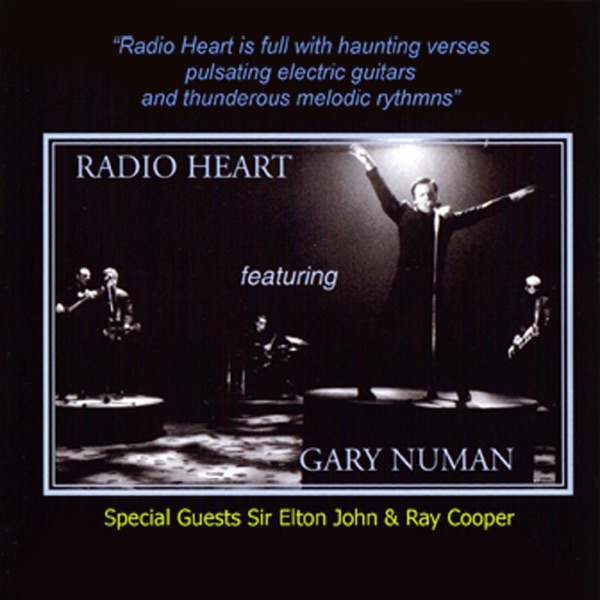
Radio Heart
1999 · 9 tracks
- 1 Radio Heart (feat. Gary Numan) ↗ 3:48
- 2 Blue Nights ↗ 4:39
- 3 Starlight Jingles ↗ 4:12
- 4 Strange Thing (feat. Ray Cooper & Elton John) ↗ 4:28
- 5 All Across the Nation (feat. Gary Numan) ↗ 4:02
- 6 I'm Alone (feat. Elton John) ↗ 4:11
- 7 Mad About the Girl ↗ 3:48
- 8 London Times (feat. Gary Numan) ↗ 3:41
- 9 The Victim (feat. Ray Cooper & Elton John) ↗ 3:59

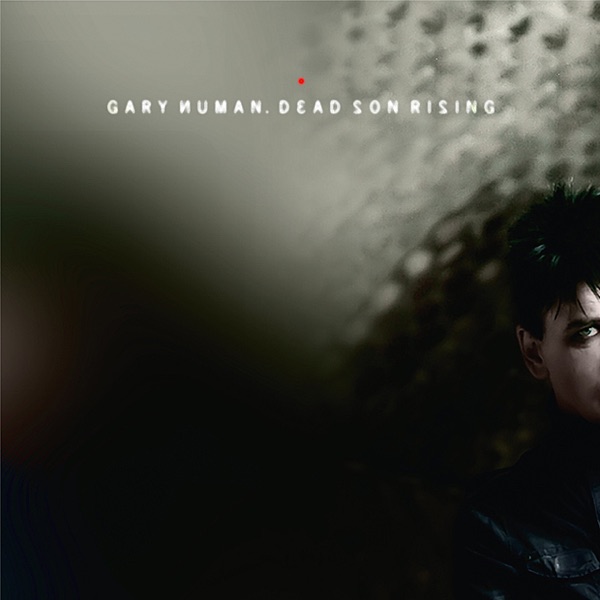
Dead Son Rising
2011 · 11 tracks
- 1 Resurrection ↗ 3:25
- 2 Big Noise Transmission ↗ 4:20
- 3 Dead Sun Rising ↗ 4:57
- 4 When the Sky Bleeds He Will Come ↗ 4:47
- 5 For the Rest of My Life ↗ 5:02
- 6 Not the Love We Dream Of ↗ 5:11
- 7 The Fall ↗ 4:20
- 8 We Are Lost ↗ 5:09
- 9 For the Rest of My Life (Reprise) ↗ 5:44
- 10 Into Battle ↗ 5:04
- 11 Not the Love We Dream Of (Piano Version) ↗ 4:52

Intruder
2021 · 13 tracks
- 1 Betrayed ↗ 4:42
- 2 The Gift ↗ 6:07
- 3 I Am Screaming ↗ 3:53
- 4 Intruder ↗ 4:24
- 5 Is This World Not Enough ↗ 5:25
- 6 A Black Sun ↗ 5:40
- 7 The Chosen ↗ 4:44
- 8 And It Breaks Me Again ↗ 4:46
- 9 Saints and Liars ↗ 4:01
- 10 Now and Forever ↗ 5:57
- 11 The End of Dragons ↗ 5:12
- 12 When You Fall ↗ 5:08
- 13 The End of Dragons (Alt) ↗ 4:58
-
 The Pleasure PrincipleGary Numan197921 tracks
 -
 TelekonGary Numan198016 tracks
 -
 DanceGary Numan198116 tracks
 -
 I, AssassinGary Numan198215 tracks
 -
 WarriorsGary Numan198315 tracks
 -
 BerserkerGary Numan19849 tracks
 -
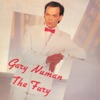 The FuryGary Numan19859 tracks
 -
 Strange CharmGary Numan19868 tracks
 -
 OutlandGary Numan199113 tracks
 -
 Machine + SoulGary Numan19929 tracks
 -
 SacrificeGary Numan19949 tracks
 -
 ExileGary Numan19979 tracks
 -
 Radio HeartGary Numan19999 tracks
 -
 PureGary Numan200011 tracks
 -
 JaggedGary Numan200612 tracks
 -
 Dead Son RisingGary Numan201111 tracks
 -
 IntruderGary Numan202113 tracks
Deep Dive
Overview
Gary Numan emerged as one of the defining figures of British new wave and electronic rock, first as the frontman of Tubeway Army and then as a solo artist whose synthesizer-driven sound became synonymous with the late 1970s and early 1980s. Born Gary Anthony James Webb in 1958, Numan built a career on the marriage of cold, mechanical electronic production with deeply human songwriting, creating a bridge between punk’s raw energy and the emerging synthesizer revolution. His chart dominance in 1979 and 1980 was swift and total; his cultural longevity has proven even more significant, maintaining a devoted following across more than four decades despite shifting commercial tides.
Formation Story
Gary Webb’s entry into rock music came through Tubeway Army, the new wave outfit he fronted in the late 1970s. The band’s second album, Replicas, released in 1979, became a watershed moment in British rock, reaching No. 1 on the UK Albums Chart and introducing Webb’s distinctive synthesizer sound to a mass audience. The single “Are ‘Friends’ Electric?” climbed to No. 1 on the UK charts, establishing the template for his approach: sparse, driving synth melodies layered over introspective and often dystopian lyrical themes. The success of Replicas positioned Webb as a central figure in the new wave movement at precisely the moment when electronic instruments were transitioning from novelty to mainstream acceptance. By late 1979, with Tubeway Army’s vision exhausted and the electronic frontier opening wider, Webb dissolved the band and stepped into a solo career that would deepen and expand upon the sound he had already proven audiences craved.
Breakthrough Moment
While Tubeway Army’s “Are ‘Friends’ Electric?” had proven Webb’s ability to craft chart-dominating new wave, his true breakthrough as a solo entity came immediately in 1979 with the release of The Pleasure Principle, his debut solo album. Released the same year as Replicas, The Pleasure Principle also climbed to No. 1 on the UK Albums Chart and spawned another UK No. 1 single in “Cars,” a skeletal electronic hymn that would become his signature song. The album’s sparse production, dominated by synthesizers and electronic percussion, set the sonic blueprint that would define his sound throughout the 1980s. “Cars” in particular transcended new wave circles, becoming a mainstream hit that introduced Numan to audiences far beyond rock cognoscenti. The success of The Pleasure Principle confirmed that his appeal was not tied solely to Tubeway Army’s band dynamic but rather to his vision as a songwriter and electronic innovator.
Peak Era
Numan’s commercial and creative peak occurred from 1979 through the early 1980s, a concentrated period in which he released The Pleasure Principle (1979), Telekon (1980), Dance (1981), I, Assassin (1982), and Warriors (1983). During this window, he defined the sonic and thematic parameters of synth-pop and electronic rock for an entire generation. Telekon, his second solo album, maintained his chart presence and allowed him to refine the synthesizer-driven minimalism he had pioneered. The subsequent albums explored variations on his core sound while maintaining the cold, machine-like production values and introspective lyricism that set him apart from more extroverted pop acts of the era. By the mid-1980s, as new wave gave way to synthpop and the broader 1980s electronic landscape became crowded, Numan’s commercial momentum slowed, but his creative output remained prolific and committed to the electronic vision that had always driven him.
Musical Style
Gary Numan’s sound is defined by his use of the synthesizer as a primary songwriting and textural instrument rather than as an ornament to conventional rock instrumentation. His approach drew from the electronic experimentation of earlier pioneers but married it to the economy and directness of punk and new wave, creating a style that was simultaneously futuristic and emotionally stark. His vocals—thin, precise, and often processed through electronic filters—became as much an electronic instrument as the synthesizers that surrounded them. Lyrically, Numan frequently explored themes of isolation, alienation, technology, and dystopia, positioning the synthesizer not as a symbol of progress but as a mirror to modern anxieties. His production style, particularly in the early solo years, favored sparse arrangements that allowed individual melodic and percussive elements to dominate, creating music that felt simultaneously mechanical and deeply atmospheric. Over his career, his sound evolved to incorporate elements of synth-pop, electronic rock, and industrial textures, but the core of his approach—the marriage of synthesizer-driven composition with introspective, often dystopian subject matter—remained consistent from The Pleasure Principle onward.
Major Albums
The Pleasure Principle (1979)
Numan’s debut solo album established the sonic and thematic foundation for his entire career, reaching No. 1 in the UK and spawning the signature single “Cars,” a spare, hypnotic meditation on isolation and urban detachment that became his most enduring song.
Telekon (1980)
His second solo album maintained momentum from The Pleasure Principle while demonstrating his ability to develop and refine the synthesizer-driven minimalism that defined his approach, solidifying his position as a leading figure in new wave and electronic rock.
Dance (1981)
This album continued Numan’s exploration of electronic production and dystopian themes, showcasing his commitment to the synthesizer as a primary compositional tool during the early 1980s peak of his commercial and critical presence.
Splinter: Songs From a Broken Mind (2013)
Released over three decades into his career, Splinter demonstrated that Numan’s creative vision and emotional directness remained intact, earning critical reassessment and introducing his work to younger audiences discovering electronic rock heritage.
Signature Songs
- “Cars” (1979) — A skeletal electronic meditation on isolation, featuring one of rock’s most memorable synthesizer melodies and becoming Numan’s most universally recognized song.
- “Are ‘Friends’ Electric?” (1979) — His breakthrough single with Tubeway Army, introducing his distinctive synthesizer sound and reaching No. 1 on the UK charts before his solo career began.
- “We Take Mystery (To Bed)” (1985) — A later-era track demonstrating his continued sophistication in blending electronic production with emotionally resonant songwriting.
- “Metal Rhythm” (1988) — A harder-edged exploration of synthesizer-driven rock from the album of the same name, showing his willingness to incorporate industrial textures into his sound.
Influence on Rock
Gary Numan’s influence on rock music extends far beyond his own chart success in the late 1970s and early 1980s. He was instrumental in establishing the synthesizer as a primary instrument in rock composition rather than as an auxiliary coloration, directly paving the way for the explosion of synth-pop in the 1980s and the subsequent emergence of industrial and electronic rock as major forces in popular music. His sparse, machine-like production aesthetic influenced countless artists working in electronic music, synth-pop, and industrial rock throughout subsequent decades. The combination of synthesizer-driven melody with introspective and often dystopian lyricism became a template adopted by artists across multiple genres and generations. His work demonstrated that electronic instruments could carry emotional weight and psychological depth, challenging the notion that synthesizers were suited only to cold, impersonal music. Numan’s commitment to his vision despite shifting commercial fortunes helped establish a template for artists who maintained artistic integrity across changing markets and cultural contexts.
Legacy
Gary Numan’s commercial peak was concentrated in the late 1970s and early 1980s, a period in which he sold millions of records and defined new wave and synth-pop for a generation. However, his long-term cultural impact has proven more durable than the rise-and-fall trajectory typical of many pop acts. Over more than four decades of continuous recording and performing, he has maintained a strong cult following and has been subject to critical reassessment by music historians and younger audiences discovering electronic rock heritage through streaming platforms and reissue campaigns. His solo discography, spanning from The Pleasure Principle to Intruder (2021), demonstrates an artist who did not coast on early success but continued to engage with electronic production techniques and thematic concerns across multiple decades. His total record sales exceed 10 million copies, a figure that places him among the most commercially successful artists of the new wave era. Numan’s persistence in performing and recording throughout periods of waning mainstream interest established him as a figure of respect within rock and electronic music communities, influencing multiple generations of musicians and maintaining relevance across shifting cultural contexts.
Fun Facts
- Numan released four albums under the “Images” series designation between 1986 and 1989, exploring experimental and atmospheric variations on his electronic sound.
- His prolific output in the 1990s and 2000s, including albums like Exile (1997), Radio Heart (1999), and Pure (2000), demonstrated his continued commitment to songwriting and recording despite reduced mainstream commercial presence.
- The span of his career—from Tubeway Army’s formation in the late 1970s through releases like Savage: Songs From a Broken World (2017) and Intruder (2021)—covers more than four decades of consistent creative engagement with electronic rock and synth-pop.