

Photo by Sebastien.gross , licensed under CC BY-SA 4.0 · Wikimedia Commons
Rank #228
Mark Knopfler
From Wikipedia
Mark Freuder Knopfler is a British musician. He was the lead guitarist, singer and songwriter of the rock band Dire Straits from 1977 to 1995, and he is one of the two members who stayed throughout the band's existence, along with the bassist John Illsley. After Dire Straits dissolved, he pursued a solo career and is now an independent artist.
Discography & Previews
Browse through and click an album to open and play 30-second previews streamed from Apple Music.
Golden Heart
1996 · 14 tracks
- 1 Darling Pretty ↗ 4:31
- 2 Imelda ↗ 5:26
- 3 Golden Heart ↗ 5:01
- 4 No Can Do ↗ 4:54
- 5 Vic and Ray ↗ 4:36
- 6 Don't You Get It ↗ 5:17
- 7 A Night In Summer Long Ago ↗ 4:43
- 8 Cannibals ↗ 3:41
- 9 I'm the Fool ↗ 4:28
- 10 Je suis désolé ↗ 5:15
- 11 Rudiger ↗ 6:03
- 12 Nobody's Got the Gun ↗ 5:26
- 13 Done With Bonaparte ↗ 5:06
- 14 Are We In Trouble Now ↗ 5:55
Sailing to Philadelphia
2000 · 13 tracks
- 1 What It Is ↗ 4:58
- 2 Sailing to Philadelphia ↗ 5:30
- 3 Who's Your Baby Now ↗ 3:06
- 4 Baloney Again ↗ 5:10
- 5 The Last Laugh ↗ 3:22
- 6 Do America ↗ 4:12
- 7 El Macho ↗ 5:30
- 8 Prairie Wedding ↗ 4:27
- 9 Wanderlust ↗ 3:53
- 10 Speedway At Nazareth ↗ 6:23
- 11 Junkie Doll ↗ 4:35
- 12 Silvertown Blues ↗ 5:29
- 13 Sands of Nevada ↗ 3:57
The Ragpicker’s Dream
2002 · 12 tracks
- 1 Why Aye Man ↗ 6:12
- 2 Devil Baby ↗ 4:03
- 3 Hill Farmer's Blues ↗ 3:44
- 4 A Place Where We Used to Live ↗ 4:32
- 5 Quality Shoe ↗ 3:52
- 6 Fare Thee Well Northumberland ↗ 6:27
- 7 Marbletown ↗ 3:34
- 8 You Don't Know You're Born ↗ 5:19
- 9 Coyote ↗ 5:55
- 10 The Ragpicker's Dream ↗ 4:21
- 11 Daddy's Gone to Knoxville ↗ 2:47
- 12 Old Pigweed ↗ 4:35
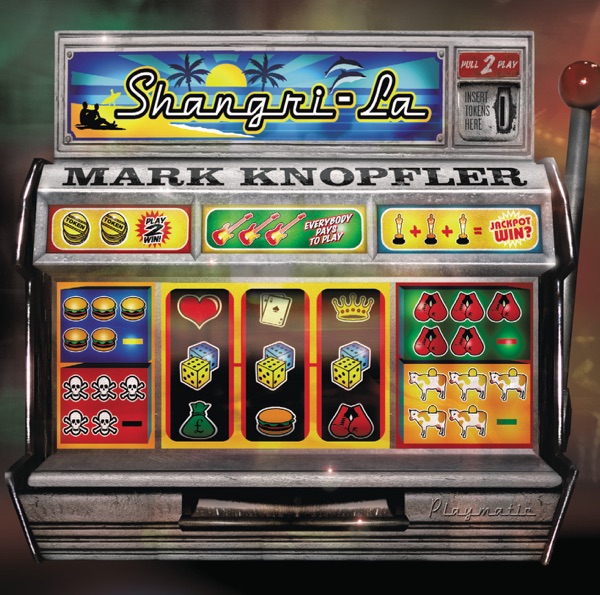
Shangri‐La
2004 · 14 tracks
- 1 5:15 Am ↗ 5:54
- 2 Boom, Like That ↗ 5:49
- 3 Sucker Row ↗ 4:55
- 4 The Trawlerman's Song ↗ 5:01
- 5 Back To Tupelo ↗ 4:29
- 6 Our Shangri-La ↗ 5:41
- 7 Everybody Pays ↗ 5:23
- 8 Song for Sonny Liston ↗ 5:07
- 9 Whoop De Doo ↗ 3:49
- 10 Postcards from Paraguay ↗ 4:05
- 11 All That Matters ↗ 3:09
- 12 Stand Up Guy ↗ 4:33
- 13 Donegan's Gone ↗ 3:00
- 14 Don't Crash The Ambulance ↗ 5:07

All the Roadrunning
2006 · 15 tracks
- 1 Beachcombing ↗ 4:14
- 2 I Dug Up a Diamond ↗ 3:36
- 3 This Is Us ↗ 4:36
- 4 Red Staggerwing ↗ 3:01
- 5 Rollin' On ↗ 4:12
- 6 Love and Happiness ↗ 4:21
- 7 Right Now ↗ 3:32
- 8 Donkey Town ↗ 5:42
- 9 Belle Starr ↗ 3:04
- 10 Beyond My Wildest Dreams ↗ 4:24
- 11 All the Roadrunning ↗ 4:49
- 12 If This Is Goodbye ↗ 4:45
- 13 Right Now (Live At Gibson Amphitheatre / June 28th 2006) ↗ 4:50
- 14 This Is Us (Live At Gibson Amphitheatre / June 28th 2006) ↗ 5:19
- 15 If This Is Goodbye (Live At Gibson Amphitheatre / June 28th 2006) ↗ 4:56
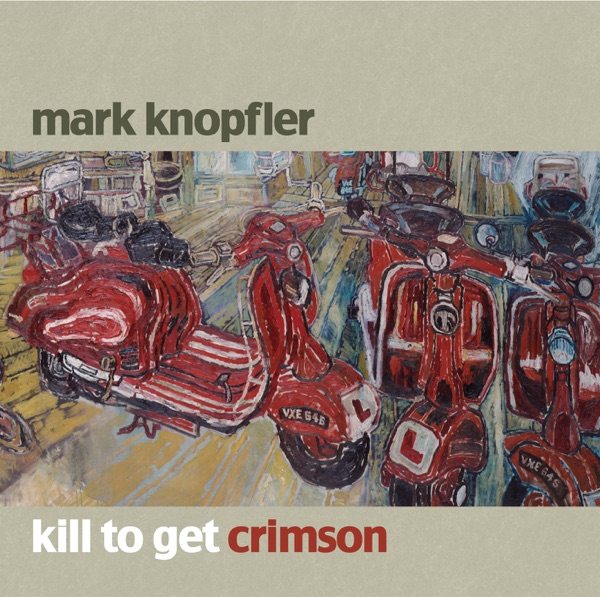
Kill to Get Crimson
2007 · 13 tracks
- 1 True Love Will Never Fade ↗ 4:22
- 2 The Scaffolder's Wife ↗ 3:52
- 3 The Fizzy and the Still ↗ 4:08
- 4 Heart Full of Holes ↗ 6:36
- 5 We Can Get Wild ↗ 4:19
- 6 Secondary Waltz ↗ 3:44
- 7 Punish the Monkey ↗ 4:38
- 8 Let It All Go ↗ 5:18
- 9 Behind With the Rent ↗ 4:49
- 10 The Fish and the Bird ↗ 3:45
- 11 Madame Geneva's ↗ 3:59
- 12 In the Sky ↗ 7:31
- 13 Boom, Like That (Live in Denver) ↗ 6:32

Get Lucky
2009 · 12 tracks
- 1 Border Reiver ↗ 4:35
- 2 Hard Shoulder ↗ 4:34
- 3 You Can't Beat the House ↗ 3:26
- 4 Before Gas and Tv ↗ 5:50
- 5 Monteleone ↗ 3:40
- 6 Cleaning My Gun ↗ 4:43
- 7 The Car Was the One ↗ 3:56
- 8 Remembrance Day ↗ 5:06
- 9 Get Lucky ↗ 4:34
- 10 So Far From the Clyde ↗ 5:59
- 11 Piper to the End ↗ 5:47
- 12 Early Bird ↗ 5:36

Privateering
2012 · 20 tracks
- 1 Redbud Tree ↗ 3:19
- 2 Haul Away ↗ 4:01
- 3 Don't Forget Your Hat ↗ 5:15
- 4 Privateering ↗ 6:19
- 5 Miss You Blues ↗ 4:18
- 6 Corned Beef City ↗ 3:32
- 7 Go, Love ↗ 4:52
- 8 Hot or What ↗ 4:54
- 9 Yon Two Crows ↗ 4:26
- 10 Seattle ↗ 4:17
- 11 Kingdom of Gold ↗ 5:22
- 12 Got to Have Something ↗ 4:01
- 13 Radio City Serenade ↗ 5:13
- 14 I Used to Could ↗ 3:36
- 15 Gator Blood ↗ 4:15
- 16 Bluebird ↗ 3:27
- 17 Dream of the Drowned Submariner ↗ 4:57
- 18 Blood and Water ↗ 5:19
- 19 Today Is Okay ↗ 4:45
- 20 After the Beanstalk ↗ 3:54
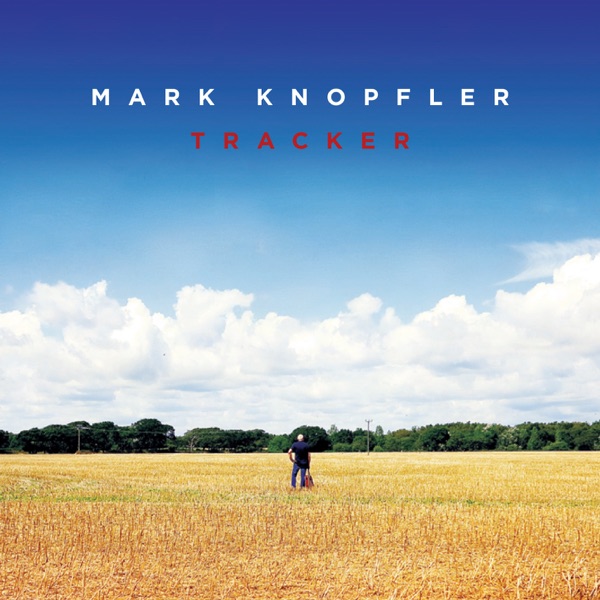
Tracker
2015 · 11 tracks
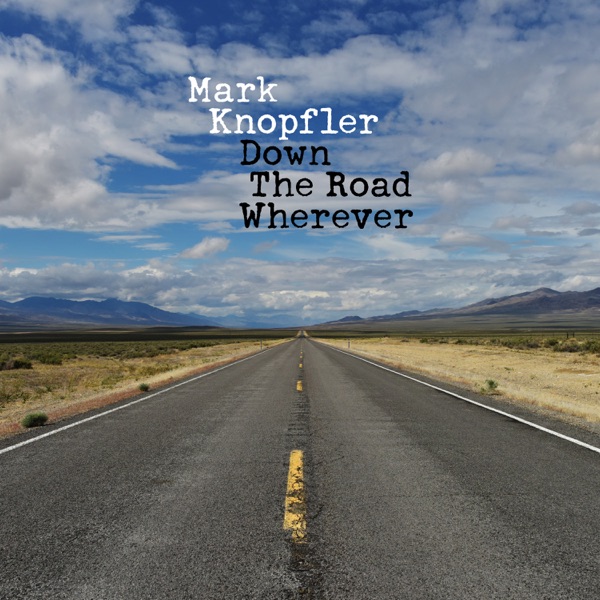
Down the Road Wherever
2018 · 13 tracks
- 1 Trapper Man ↗ 6:01
- 2 Back On The Dance Floor ↗ 5:31
- 3 Nobody’s Child ↗ 4:17
- 4 Just A Boy Away From Home ↗ 5:12
- 5 When You Leave ↗ 4:13
- 6 Good On You Son ↗ 5:38
- 7 My Bacon Roll ↗ 5:36
- 8 Nobody Does That ↗ 5:15
- 9 One Song At A Time ↗ 6:17
- 10 Floating Away ↗ 5:03
- 11 Slow Learner ↗ 4:34
- 12 Heavy Up ↗ 6:00
- 13 Matchstick Man ↗ 2:52

One Deep River
2024 · 12 tracks
- 1 Two Pairs Of Hands ↗ 4:05
- 2 Ahead Of The Game ↗ 3:56
- 3 Smart Money ↗ 4:27
- 4 Scavengers Yard ↗ 4:34
- 5 Black Tie Jobs ↗ 2:57
- 6 Tunnel 13 ↗ 5:28
- 7 Janine ↗ 4:43
- 8 Watch Me Gone ↗ 5:02
- 9 Sweeter Than The Rain ↗ 4:17
- 10 Before My Train Comes ↗ 4:05
- 11 This One’s Not Going To End Well ↗ 4:00
- 12 One Deep River ↗ 4:17
-
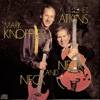 Neck and NeckMark Knopfler199010 tracks
 -
 Golden HeartMark Knopfler199614 tracks
 -
 Sailing to PhiladelphiaMark Knopfler200013 tracks
 -
 The Ragpicker’s DreamMark Knopfler200212 tracks
 -
 Shangri‐LaMark Knopfler200414 tracks
 -
 All the RoadrunningMark Knopfler200615 tracks
 -
 Kill to Get CrimsonMark Knopfler200713 tracks
 -
 Get LuckyMark Knopfler200912 tracks
 -
 PrivateeringMark Knopfler201220 tracks
 -
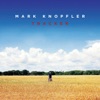 TrackerMark Knopfler201511 tracks
 -
 Down the Road WhereverMark Knopfler201813 tracks
 -
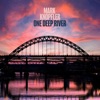 One Deep RiverMark Knopfler202412 tracks
Deep Dive
Overview
Mark Knopfler stands as one of rock music’s most distinctive and technically accomplished guitarists. He was the driving creative force behind Dire Straits from 1977 to 1995, serving as lead guitarist, vocalist, and primary songwriter for a band that became one of the 1980s most commercially successful rock acts. After the group’s dissolution, Knopfler embarked on a sustained solo career that has now spanned nearly three decades, establishing himself as an independent artist working across blues rock, country rock, and Celtic-influenced styles.
Knopfler’s significance lies in his fingerstyle guitar technique, his gift for economical songwriting, and his refusal to remain confined to a single genre. His solo work has allowed him to explore musical terrain only partially glimpsed during the Dire Straits years—from Americana and bluegrass to sophisticated jazz-influenced arrangements and film scoring. His body of solo work stands as testament to a musician more interested in artistic evolution than commercial repetition.
Formation Story
Mark Freuder Knopfler was born in 1949 in Newcastle upon Tyne, England, though his family relocated to Scotland and later the Midlands during his childhood. He grew up surrounded by diverse musical influences, from his mother’s classical training to the blues records that would deeply shape his aesthetic. By his late teens, Knopfler had gravitated toward the guitar, developing the fingerpicking technique that would become his trademark—a method influenced equally by country music pickers, blues masters, and his own compositional intuitions.
Before forming Dire Straits in 1977, Knopfler worked as a journalist and played in several pub rock bands, gradually honing his songwriting voice. When he finally assembled Dire Straits with bassist John Illsley—who would remain the sole constant alongside Knopfler throughout the band’s existence—the pair formed the nucleus of what would become a global phenomenon. The band emerged from a London scene hungry for authenticity after the excesses of mid-1970s rock, offering lean, blues-grounded compositions that contrasted sharply with prevailing trends.
Breakthrough Moment
Dire Straits’ self-titled debut album in 1978 introduced Knopfler’s guitar voice to the world and produced the radio staple “Sultans of Swing,” a track that showcased his fingerstyle precision and his ability to construct narratives within instrumental passages. The band’s subsequent albums, particularly Communiqué (1979) and Love Over Gold (1982), established Knopfler as a major rock voice. However, the 1985 release Brothers in Arms transformed Dire Straits into stadium-filling superstars, combining sophisticated production with Knopfler’s gift for character-driven storytelling and his unmistakable guitar tones.
By the early 1990s, Dire Straits had become one of the world’s biggest rock bands, yet the touring and recording demands of the group began to weigh on Knopfler. A series of collaborations outside Dire Straits—including soundtrack work and guest appearances—suggested a restless mind eager to explore beyond the band’s established template. When Dire Straits disbanded in 1995, Knopfler had already begun laying groundwork for what would become an expansive solo vision.
Peak Era
Knopfler’s solo peak spans the period from 1996 to the early 2010s, a stretch that produced some of his most adventurous and commercially successful independent work. Golden Heart (1996) announced his arrival as a solo force, followed by Sailing to Philadelphia (2000), which paired Knopfler with collaborators and showcased his growing interest in Americana, folk, and country influences. The years between 2000 and 2010 proved extraordinarily fertile: The Ragpicker’s Dream (2002), Shangri-La (2004), and All the Roadrunning (2006) demonstrated his range across folk-inflected narratives, studio experimentation, and live interpretations.
Kill to Get Crimson (2007) and Privateering (2012) continued to confirm Knopfler’s status as a major artist operating entirely outside the demands of a backing band or label infrastructure. His solo recordings allowed him to control every aspect of production and arrangement, resulting in a body of work that, while commercially smaller than Dire Straits’ peak, displayed greater artistic cohesion and personal vision. These albums proved that Knopfler’s appeal transcended the stadium rock context in which he’d first risen to fame.
Musical Style
Knopfler’s guitar technique remains rooted in fingerstyle picking—a method in which individual fingers strike the strings rather than a plectrum. This approach, informed by blues, folk, and country music, grants his playing a percussive quality and dynamic nuance impossible to achieve with conventional picking. His tone is characteristically clear and warm, often favoring vintage Fender Stratocasters recorded through understated amplification that allows detail to emerge rather than overwhelming it with gain or effects.
As a songwriter, Knopfler favors narrative specificity and character-driven narratives drawn from journalism, film, literature, and street observation. His solo work has incorporated an increasingly diverse palette: Celtic influences, country and bluegrass conventions, jazz harmonies, and folk balladeering all appear across his catalog. While Dire Straits operated within rock’s mainstream, Knopfler’s solo projects have permitted deeper exploration of blues idioms, acoustic arrangements, and cross-genre collaboration. His productions tend toward clarity and naturalism, preferring the grain of live recording to heavy studio artifice. His voice—conversational rather than theatrical—serves the storytelling function, never demanding spotlight but carrying narrative weight through directness and emotional restraint.
Major Albums
Golden Heart (1996)
Knopfler’s solo debut established his independence from Dire Straits while showcasing a more intimate songwriting voice; the album’s stripped-down arrangements and emotional directness set the template for much of his subsequent work.
Sailing to Philadelphia (2000)
This album paired Knopfler with a range of collaborators and reflected his deepening interest in Americana, folk traditions, and historical narrative, with production that emphasized acoustic instruments and conversational vocal delivery.
Shangri-La (2004)
Recorded in his own studio with meticulous attention to analog capture methods, Shangri-La represents one of Knopfler’s most sonically refined works, blending Americana, country, and blues influences with sophisticated but transparent production.
All the Roadrunning (2006)
A live-recorded collaboration capturing Knopfler in concert settings, demonstrating his sustained ability to reimagine and reinterpret his own compositions across different instrumental configurations.
Tracker (2015)
This album collected interpretations of American country, folk, and blues standards alongside original compositions, further cementing Knopfler’s position as a musician equally at home in traditional idioms as in his own songwriting.
Signature Songs
- “Sultans of Swing” — The Dire Straits signature instrumental that introduced his fingerstyle technique to mass audiences.
- “Money for Nothing” — Dire Straits’ biggest commercial hit, featuring heavy layered production yet retaining Knopfler’s distinctive guitar voice.
- “Why Worry” — A Dire Straits ballad showcasing his ability to extract emotional depth from restrained arrangements.
- “Sailing to Philadelphia” — The title track from his 2000 album, exemplifying his solo-era approach to narrative songwriting and folk-influenced production.
- “Dire Straits” — The opening track from the band’s debut, a nine-minute showcase of his architectural approach to instrumental composition.
Influence on Rock
Knopfler’s influence on rock and popular music extends across multiple registers. His fingerstyle technique revitalized interest in acoustic guitar virtuosity within rock contexts during the 1980s, inspiring subsequent generations of guitarists to move beyond distortion-heavy approaches. His songwriting—whether in Dire Straits or solo work—demonstrated that rock music could accommodate narrative subtlety and character-driven storytelling without sacrificing sophistication or commercial appeal.
His solo career has influenced musicians working across Americana, folk, and country-rock hybrids, particularly those seeking to operate outside major-label infrastructure. Knopfler’s commitment to analog recording methods and traditional instrumental palettes positioned him as a countercurrent to digital production trends and reinvigorated interest in folk and blues traditions within rock music. His willingness to foreground guitar craft and ensemble playing over production gimmickry shaped the aesthetics of alternative and independent rock for decades.
Legacy
Mark Knopfler’s legacy operates on multiple levels. Dire Straits remains one of the 1980s most significant rock bands, with their albums continuing to sell and stream in substantial numbers. The band’s dissolution and his sustained solo career over nearly thirty years have allowed Knopfler to define himself beyond any single period or album, functioning as an independent artist who has consistently released new material while maintaining touring activity well into his seventies.
His solo catalog, spanning from Golden Heart (1996) through One Deep River (2024), demonstrates an artist uninterested in nostalgia or repetition. Rather than trading on past glory, Knopfler has continued to explore new instrumental configurations, songwriting themes, and production approaches. His work has influenced how veteran rock musicians navigate post-band solo careers—not as epilogues to greater achievement but as ongoing expressions of evolving artistic vision. His continued activity and relevance confirm that his significance extends beyond one moment or band to encompass a lifetime commitment to craft, narrative, and musical exploration.
Fun Facts
- Knopfler pursued film scoring during and after Dire Straits’ existence, expanding his compositional range beyond rock contexts into cinema and television.
- He remained the sole consistent member throughout Dire Straits’ entire existence alongside bassist John Illsley, weathering multiple lineup changes across nearly two decades.
- His solo albums have been released on independent and smaller labels, allowing him complete artistic control and freedom from major-label commercial pressure following his Warner Bros. tenure with Dire Straits.
- Knopfler worked as a journalist before his music career took off, a background that directly informed his narrative songwriting approach and storytelling sensibility.