
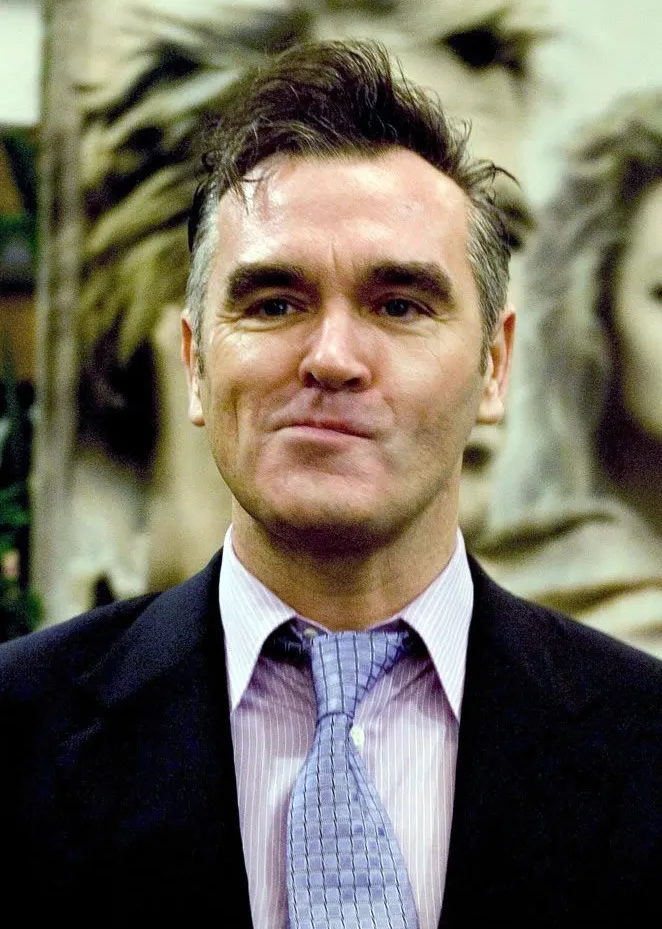
Photo by Caligvla at English Wikipedia , licensed under CC BY 2.5 · Wikimedia Commons
Rank #45
Morrissey
From Wikipedia
Steven Patrick Morrissey is an English singer and songwriter. He came to prominence as the frontman and lyricist of the rock band the Smiths, who were active from 1982 to 1987. Since then he has pursued a successful solo career. Morrissey's music is characterised by his baritone voice and distinctive lyrics with anti-establishment stances and recurring themes of emotional isolation, sexual longing, self-deprecation, and dark humour.
Discography & Previews
Browse through and click an album to open and play 30-second previews streamed from Apple Music.
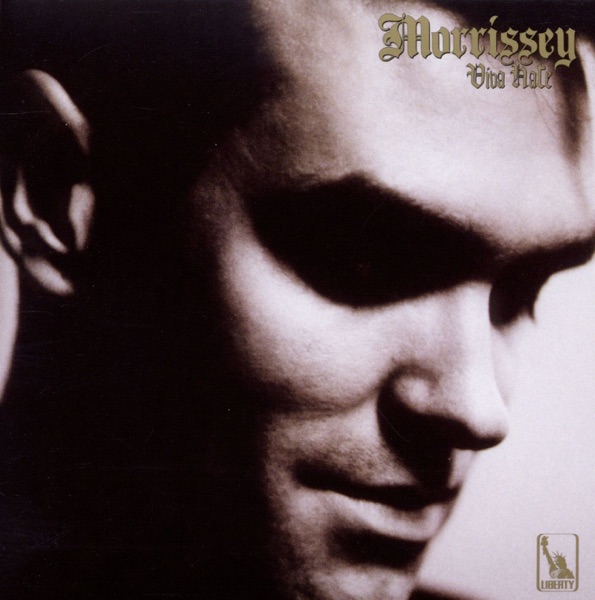
Viva Hate
1988 · 12 tracks
- 1 Alsatian Cousin (2011 Remaster) ↗ 3:13
- 2 Little Man, What Now? (2011 Remaster) ↗ 1:48
- 3 Everyday Is Like Sunday (2011 Remaster) ↗ 3:35
- 4 Bengali in Platforms (2011 Remaster) ↗ 3:54
- 5 Angel Angel Down We Go Together (2011 Remaster) ↗ 1:40
- 6 Late Night, Maudlin Street (2011 Remaster) ↗ 6:55
- 7 Suedehead (2011 Remaster) ↗ 3:56
- 8 Break Up the Family (2011 Remaster) ↗ 3:55
- 9 Treat Me Like a Human Being (2011 Remaster) ↗ 2:27
- 10 I Don't Mind If You Forget Me (2011 Remaster) ↗ 3:18
- 11 Dial a Cliche (2011 Remaster) ↗ 2:28
- 12 Margaret On the Guillotine (2011 Remaster) ↗ 3:44

Kill Uncle
1991 · 12 tracks
- 1 Our Frank (2013 Remaster) ↗ 3:22
- 2 Sing Your Life (2013 Remaster) ↗ 3:20
- 3 Mute Witness (2013 Remaster) ↗ 3:31
- 4 King Leer (2013 Remaster) ↗ 2:55
- 5 Asian Rut (2013 Remaster) ↗ 3:19
- 6 Pashernate Love (2013 Remaster) ↗ 2:19
- 7 East West (2013 Remaster) ↗ 2:33
- 8 Found Found Found (2013 Remaster) ↗ 1:58
- 9 Driving Your Girlfriend Home (2013 Remaster) ↗ 3:18
- 10 The Harsh Truth of the Camera Eye (2013 Remaster) ↗ 5:32
- 11 There's a Place in Hell for Me and My Friends (2013 Remaster) ↗ 2:20
- 12 (I'm) The End of the Family Line [2013 Remaster] ↗ 3:27

Your Arsenal
1992 · 10 tracks
- 1 You're Gonna Need Someone On Your Side (2014 - Remaster) ↗ 3:34
- 2 Glamorous Glue (2014 - Remaster) ↗ 4:04
- 3 We'll Let You Know (2014 - Remaster) ↗ 5:13
- 4 The National Front Disco (2014 - Remaster) ↗ 4:23
- 5 Certain People I Know (2014 - Remaster) ↗ 3:09
- 6 We Hate It When Our Friends Become Successful (2014 - Remaster) ↗ 2:29
- 7 You're the One For Me, Fatty (2014 - Remaster) ↗ 2:58
- 8 Seasick, Yet Still Docked (2014 - Remaster) ↗ 5:05
- 9 I Know It's Gonna Happen Someday (2014 - Remaster) ↗ 4:21
- 10 Tomorrow (2014 - Remaster) ↗ 4:17

Vauxhall and I
1994 · 11 tracks
- 1 Now My Heart Is Full ↗ 4:55
- 2 Spring-Heeled Jim ↗ 3:46
- 3 Billy Budd ↗ 2:09
- 4 Hold On to Your Friends ↗ 4:03
- 5 The More You Ignore Me, the Closer I Get ↗ 3:44
- 6 Why Don't You Find Out for Yourself ↗ 3:20
- 7 I Am Hated for Loving ↗ 3:41
- 8 Lifeguard Sleeping, Girl Drowning ↗ 3:40
- 9 Used to Be a Sweet Boy ↗ 2:50
- 10 The Lazy Sunbathers ↗ 3:07
- 11 Speedway ↗ 4:31


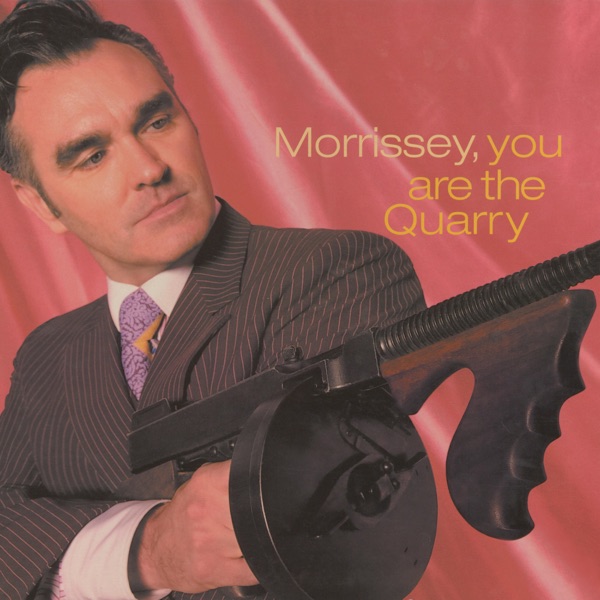
You Are the Quarry
2004 · 12 tracks
- 1 America Is Not the World ↗ 4:04
- 2 Irish Blood, English Heart ↗ 2:37
- 3 I Have Forgiven Jesus ↗ 3:42
- 4 Come Back to Camden ↗ 4:15
- 5 I'm Not Sorry ↗ 4:42
- 6 The World Is Full of Crashing Bores ↗ 3:52
- 7 How Can Anybody Possibly Know How I Feel? ↗ 3:25
- 8 First of the Gang to Die ↗ 3:39
- 9 Let Me Kiss You ↗ 3:31
- 10 All the Lazy Dykes ↗ 3:31
- 11 I Like You ↗ 4:11
- 12 You Know I Couldn't Last ↗ 5:51
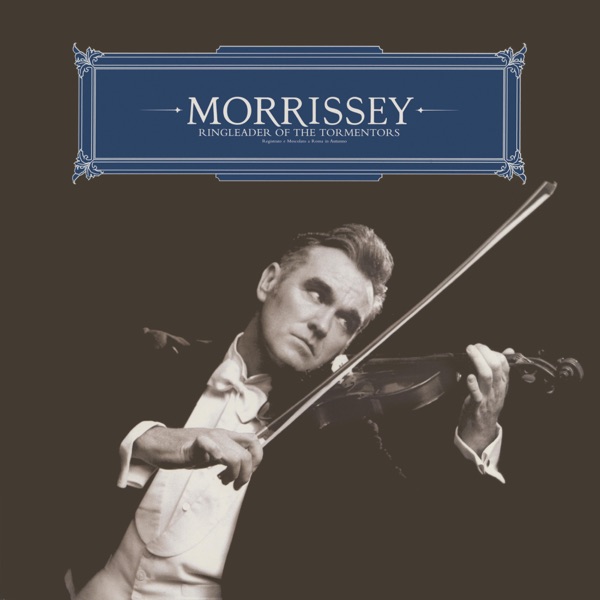
Ringleader of the Tormentors
2006 · 12 tracks
- 1 I Will See You in Far-Off Places ↗ 4:14
- 2 Dear God Please Help Me ↗ 5:52
- 3 You Have Killed Me ↗ 3:08
- 4 The Youngest Was the Most Loved ↗ 3:00
- 5 In the Future When All's Well ↗ 3:54
- 6 The Father Who Must Be Killed ↗ 3:54
- 7 Life Is a Pigsty ↗ 7:23
- 8 I'll Never Be Anybody's Hero Now ↗ 4:14
- 9 On the Streets I Ran ↗ 3:51
- 10 To Me You Are a Work of Art ↗ 4:02
- 11 I Just Want to See the Boy Happy ↗ 2:59
- 12 At Last I Am Born ↗ 3:33
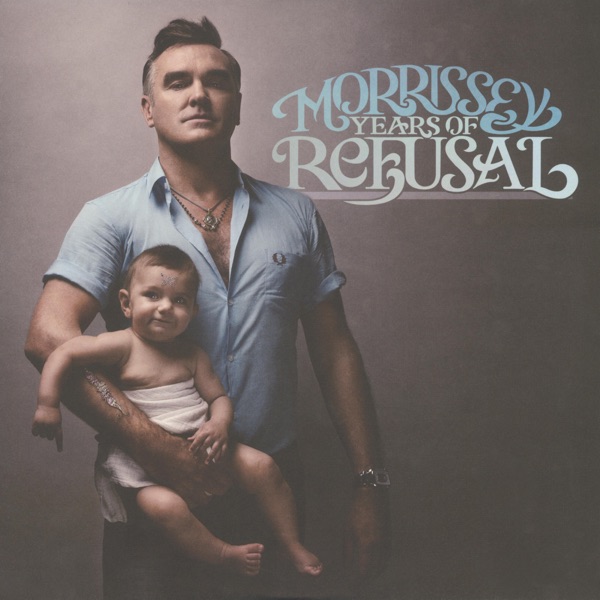
Years of Refusal
2009 · 12 tracks
- 1 Something Is Squeezing My Skull ↗ 2:38
- 2 Mama Lay Softly on the Riverbed ↗ 3:53
- 3 Black Cloud ↗ 2:48
- 4 I'm Throwing My Arms Around Paris ↗ 2:31
- 5 All You Need Is Me ↗ 3:13
- 6 When Last I Spoke to Carol ↗ 3:24
- 7 That's How People Grow Up ↗ 2:59
- 8 One Day Goodbye Will Be Farewell ↗ 2:57
- 9 It's Not Your Birthday Anymore ↗ 5:10
- 10 You Were Good in Your Time ↗ 5:01
- 11 Sorry Doesn't Help ↗ 4:03
- 12 I'm OK By Myself ↗ 4:48

Low in High School
2017 · 12 tracks
- 1 My Love, I'd Do Anything for You ↗ 4:43
- 2 I Wish You Lonely ↗ 2:59
- 3 Jacky's Only Happy When She's Up on the Stage ↗ 4:19
- 4 Home Is a Question Mark ↗ 4:00
- 5 Spent the Day in Bed ↗ 3:31
- 6 I Bury the Living ↗ 7:25
- 7 In Your Lap ↗ 4:36
- 8 The Girl from Tel-Aviv Who Wouldn't Kneel ↗ 4:57
- 9 All the Young People Must Fall in Love ↗ 3:37
- 10 When You Open Your Legs ↗ 3:17
- 11 Who Will Protect Us from the Police? ↗ 4:05
- 12 Israel ↗ 5:56
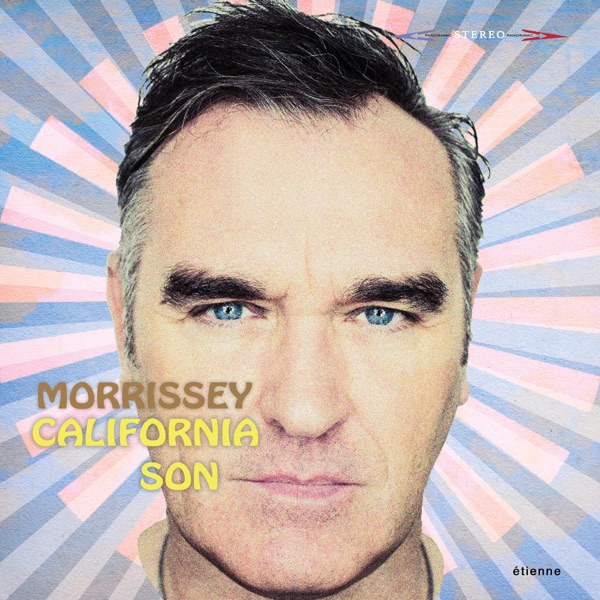
California Son
2019 · 12 tracks
- 1 Morning Starship ↗ 3:29
- 2 Don't Interrupt the Sorrow ↗ 4:06
- 3 Only a Pawn in Their Game ↗ 3:46
- 4 Suffer the Little Children ↗ 3:32
- 5 Days of Decision ↗ 2:56
- 6 It's Over ↗ 2:52
- 7 Wedding Bell Blues ↗ 2:57
- 8 Loneliness Remembers What Happiness Forgets ↗ 2:09
- 9 Lady Willpower ↗ 3:07
- 10 When You Close Your Eyes ↗ 3:29
- 11 Lenny's Tune ↗ 3:31
- 12 Some Say I Got Devil ↗ 4:09

I Am Not a Dog on a Chain
2020 · 11 tracks
- 1 Jim Jim Falls ↗ 3:44
- 2 Love Is on Its Way Out ↗ 3:15
- 3 Bobby, Don't You Think They Know? ↗ 5:46
- 4 I Am Not a Dog on a Chain ↗ 3:53
- 5 What Kind of People Live in These Houses? ↗ 3:41
- 6 Knockabout World ↗ 3:25
- 7 Darling, I Hug a Pillow ↗ 4:47
- 8 Once I Saw the River Clean ↗ 4:20
- 9 The Truth About Ruth ↗ 3:45
- 10 The Secret of Music ↗ 7:52
- 11 My Hurling Days Are Done ↗ 5:01

Make-Up Is a Lie
2026 · 12 tracks
- 1 You're Right, It's Time ↗ 3:48
- 2 Make-up is a Lie ↗ 3:10
- 3 Notre-Dame ↗ 4:08
- 4 Amazona ↗ 4:11
- 5 Headache ↗ 4:20
- 6 Boulevard ↗ 5:40
- 7 Zoom Zoom the Little Boy ↗ 3:12
- 8 The Night Pop Dropped ↗ 4:24
- 9 Kerching Kerching ↗ 2:53
- 10 Lester Bangs ↗ 3:42
- 11 Many Icebergs Ago ↗ 5:24
- 12 The Monsters of Pig Alley ↗ 4:57
-
 Viva HateMorrissey198812 tracks
 -
 Kill UncleMorrissey199112 tracks
 -
 Your ArsenalMorrissey199210 tracks
 -
 Vauxhall and IMorrissey199411 tracks
 -
 Southpaw GrammarMorrissey19958 tracks
 -
 MaladjustedMorrissey199711 tracks
 -
 You Are the QuarryMorrissey200412 tracks
 -
 Ringleader of the TormentorsMorrissey200612 tracks
 -
 Years of RefusalMorrissey200912 tracks
 -
 Low in High SchoolMorrissey201712 tracks
 -
 California SonMorrissey201912 tracks
 -
 I Am Not a Dog on a ChainMorrissey202011 tracks
 -
 Make-Up Is a LieMorrissey202612 tracks
Deep Dive
Overview
Steven Patrick Morrissey stands as one of rock music’s most instantly recognizable voices—a baritone of pronounced depth and emotional range that has anchored some of the genre’s most affecting and lyrically acute work. Born in Manchester in 1959, he came to prominence as the frontman and lyricist of the Smiths, the influential British rock band active from 1982 to 1987. Since the Smiths’ dissolution, Morrissey has sustained a solo career spanning more than three decades, establishing himself as an indie rock auteur whose music is characterized by anti-establishment stances, recurring themes of emotional isolation, sexual longing, self-deprecation, and dark humor. His solo work has proven durable and commercially viable within the alternative and indie rock landscape, marking him as a significant figure in rock music beyond his foundational role with the Smiths.
Formation Story
Morrissey grew up in Manchester during the 1960s and 1970s, a formative period that shaped his sensibility toward art, music, and cultural critique. Before the Smiths, he worked as a lyricist and performer in minor bands and pursued solo projects, but it was the partnership with guitarist Johnny Marr, beginning in 1982, that crystallized his artistic vision. The Smiths emerged from the Manchester rock scene and quickly became one of the defining British acts of the 1980s, known for their jangle pop-inflected indie rock sound and Morrissey’s verbose, witty, and frequently poignant lyrics. When the Smiths disbanded in 1987, Morrissey possessed both a substantial fanbase and a fully formed artistic identity, positioning him well for a transition to solo work.
Breakthrough Moment
Morrissey’s debut solo album, Viva Hate, arrived in 1988 and announced his viability as a standalone artist. Working with producer Stephen Street and featuring guitarist Alain Whyte, the album demonstrated that his distinctive lyrical voice and emotional intensity were not dependent on Marr’s musicianship, though the sound differed notably from the Smiths’ approach. Viva Hate reached the UK Top Ten and spawned successful singles, establishing that a significant audience would follow Morrissey into his post-Smiths career. The album’s success removed any doubt about his capacity to sustain a solo presence and set the template for subsequent releases: literate, often darkly comic songs paired with a strong melodic sensibility and his unmistakable vocal delivery.
Peak Era
The period from 1992 to 1997 represented Morrissey’s most consistently acclaimed and commercially successful solo stretch. Your Arsenal (1992), produced by Mick Ronson, marked a sonic shift toward a harder, more guitar-driven rock sound that some critics regarded as his most vital solo statement. Vauxhall and I (1994) brought a return to introspection and sophistication, with Whyte’s guitar work and Morrissey’s lyrics achieving a refined emotional depth. Southpaw Grammar (1995) and Maladjusted (1997) continued this trajectory, with the latter serving as a bookend to a particularly fertile creative period. Across these albums, Morrissey refined a distinctive solo aesthetic that departed from the Smiths’ jangle pop foundation toward a more orchestral, often cinematic indie rock sound, with arrangements that emphasized both grandeur and intimacy.
Musical Style
Morrissey’s voice remains his most defining instrumental asset: a rich baritone of considerable emotional range, capable of tenderness and aggression, often deployed with theatrical precision. His solo work has gravitated toward lush arrangements and orchestral instrumentation that distinguish it from the Smiths’ more economical approach. Guitarist Alain Whyte, who became his primary collaborator across multiple albums, contributed both jangly indie rock textures and expansive, sometimes Romantic-inflected arrangements. Lyrically, Morrissey sustained the Smiths’ tradition of literary reference, social observation, and emotionally sophisticated songwriting, often addressing themes of alienation, desire, and cultural critique with wry humor and genuine pathos. His songs frequently employ narrative structures and vivid character detail, drawing from both British literary tradition and the melodramatic conventions of mid-twentieth-century popular music. The production across his solo work has varied considerably—from the harder-edged rock of Your Arsenal to the more introspective, string-arrangement-heavy approach of later records—but consistently emphasizes the primacy of melody and the emotional weight of his vocal performance.
Major Albums
Viva Hate (1988)
Morrissey’s solo debut proved his distinctive vision remained vital without the Smiths’ songwriter partnership, featuring Alain Whyte’s nimble guitar work and Stephen Street’s sympathetic production.
Your Arsenal (1992)
Produced by Mick Ronson, this album shifted toward a harder, guitar-driven rock sound that many regard as among his finest solo work, balancing lyrical sophistication with accessible melodic strength.
Vauxhall and I (1994)
A refined and introspective work featuring some of Morrissey’s most emotionally mature songwriting, with Whyte’s arrangements providing both delicacy and grandeur.
Ringleader of the Tormentors (2006)
A late-period album that demonstrated Morrissey’s continued capacity for craft and ambition, with orchestral arrangements and sophisticated melodic sensibilities intact.
Years of Refusal (2009)
This album showcased Morrissey maintaining his lyrical wit and emotional depth into his fifth decade, with arrangements that blended his indie rock foundation with larger-scale production ambitions.
Signature Songs
- “Suedehead” — A melancholic solo signature from Viva Hate, crystallizing Morrissey’s gift for emotional understatement and intimate vulnerability.
- “The More You Ignore Me, the Closer I Get” — A wry, darkly humorous commentary on obsession and social rejection, demonstrating his capacity for both catchiness and lyrical bite.
- “Ouija Board, Ouija Board” — A gothic, atmospheric piece showcasing his ability to construct richly textured indie rock narratives.
- “First of the Gang to Die” — A later-period song illustrating his continued engagement with literary allusion and melancholy storytelling.
- “Now My Heart Is Full” — A characteristic example of Morrissey’s gift for emotional directness, featuring uncomplicated but deeply felt melody and lyrical honesty.
Influence on Rock
Morrissey’s influence as a solo artist extends across indie rock, alternative rock, and art-pop, particularly among singer-songwriters for whom literate, emotionally sophisticated lyrics paired with melodic intelligence became a viable path. His post-Smiths work demonstrated that solo careers could be sustained through artistic integrity and distinctive vision rather than commercial calculation, influencing a generation of indie rock vocalists who prioritized character and emotional authenticity over chart success. His lyrical approach—combining social observation, personal vulnerability, sexual frankness, and dark humor—established a template that numerous alt-rock and indie artists have subsequently adopted. Beyond specific musical influence, Morrissey’s career model itself proved consequential: the idea that a band’s breakup could launch an equally important solo trajectory rather than representing an artist’s commercial and creative diminishment.
Legacy
Morrissey has maintained an active recording career into the 2020s, with albums including World Peace Is None of Your Business (2014), Low in High School (2017), California Son (2019), and I Am Not a Dog on a Chain (2020), demonstrating remarkable longevity and continuing artistic productivity. His solo catalogue, spanning more than thirty-five years, has accumulated substantial streaming presence and remains a touchstone for indie and alternative rock audiences. The Smiths’ reunion status remains uncertain, but Morrissey’s solo work has established him as a fully independent artistic figure whose legacy rests equally on post-1987 accomplishments as on his 1980s band work. His distinctive baritone voice, readily identifiable across any era of his catalogue, and his commitment to literate, emotionally complex songwriting have secured his position as a significant voice in contemporary rock music.
Fun Facts
- Morrissey has been a vocal advocate for animal rights throughout his career, frequently incorporating vegetarian and activist themes into his public persona and lyrics.
- His stage presence is marked by distinctive gestures, including the shirt-grabbing flourish during performances that became visually iconic during the Smiths era and has persisted in his solo shows.
- Maximum Morrissey & The Smiths (2004) compiled recordings from across his solo and band career, representing a retrospective overview of his major work spanning two decades.