
Rank #375
Bôa
From Wikipedia
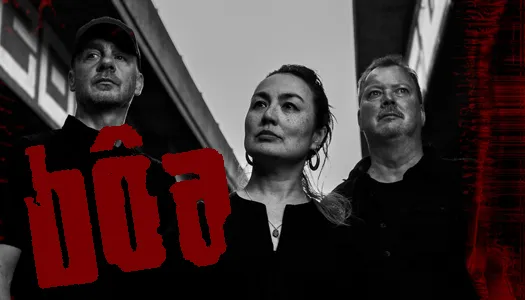
Bôa is an English alternative rock band formed in London in 1993 by drummer Ed Herten, keyboardist Paul Turrell, and guitarist/vocalist Steve Rodgers. The band have progressed from playing funk to rock over the years, as bassist Alex Caird and multi-instrumentalist Ben Henderson joined, and Jasmine Rodgers was added as vocalist.
Discography & Previews
Browse through and click an album to open and play 30-second previews streamed from Apple Music.


-
 TwilightBôa200114 tracks
 -
 Get ThereBôa200512 tracks
 -
 WhiplashBôa202413 tracks
Deep Dive
Overview
Bôa is an English alternative rock band that emerged from London in 1993, operating at the intersection of indie rock and alternative rock throughout their three-decade run. Formed by a core trio of Ed Herton on drums, Paul Turrell on keyboards, and Steve Rodgers as guitarist and vocalist, the band underwent gradual compositional and sonic shifts as their lineup expanded and solidified. Their trajectory charts a path from funk-inflected rock experimentalism toward a more anchored alternative rock aesthetic, with releases spanning from 1998 to 2024.
Formation Story
Bôa coalesced in London in 1993, taking shape around drummer Ed Herton, keyboardist Paul Turrell, and guitarist/vocalist Steve Rodgers. The founding trio shared an interest in blending rock structures with funk rhythms and keyboard-driven arrangements, a combination that would define their early sonic identity. The band subsequently expanded its personnel, with bassist Alex Caird and multi-instrumentalist Ben Henderson joining to deepen the band’s harmonic and rhythmic palette. The addition of vocalist Jasmine Rodgers later provided a complementary vocal presence alongside Steve Rodgers, allowing the band to explore layered vocal arrangements and broader emotional range in their songwriting.
Breakthrough Moment
Bôa’s first studio album, The Race of a Thousand Camels, arrived in 1998 after five years of development and rehearsal. The release marked their formal entry into the recorded music sphere and established their signature blend of alternative rock and indie sensibilities. The album’s arrival in the late 1990s positioned them within a broader UK alternative rock landscape that was simultaneously accommodating both post-Britpop experimentation and the rising influence of electronic and keyboard-driven indie production. Though operating outside mainstream commercial radio dominance, Bôa gradually built an audience through the album and subsequent touring, establishing themselves as a presence in the alternative rock underground.
Peak Era
Bôa’s most creatively sustained period stretched across the early 2000s, encompassing their second and third studio albums. Twilight appeared in 2001, consolidating the band’s expanded lineup and demonstrating increased compositional maturity. Get There, released in 2005, represented the band at a peak of musical cohesion, with the fully assembled ensemble operating with clear artistic direction. During this span, Bôa refined their harmonic sophistication while maintaining the kinetic energy and rhythmic complexity that had always underpinned their sound. The albums of this era showcased a band comfortable with extended instrumental passages, layered keyboard textures, and dynamic shifts between quieter, introspective moments and driving rock sequences.
Musical Style
Bôa’s sound is rooted in alternative rock foundations with consistent incorporation of funk and electronic elements. The rhythm section—anchored by Ed Herton’s drummming and Alex Caird’s bass work—provides both precision and groove, refusing to default to straight-ahead rock timekeeping. Paul Turrell’s keyboards function not as decorative texture but as central melodic and harmonic components, often guiding song structure alongside Steve Rodgers’ guitar work. The band’s approach to arrangement tends toward complexity without obscuring fundamental song forms; they favor instrumental interplay and counterpoint between keyboards, bass, and guitar rather than relying on simple chord strumming or synth washes. The vocal contributions of both Steve Rodgers and Jasmine Rodgers add textural variety, with the band exploring both unison passages and countermelodic interplay. Over their career, Bôa’s early funk-influenced tendencies gradually yielded to a more rock-centric orientation, though funk rhythms and syncopation remained embedded in their approach to grooves and song structures.
Major Albums
The Race of a Thousand Camels (1998)
Bôa’s debut established their hybrid approach to alternative rock, merging keyboard-led arrangements with funk-influenced rhythm work and guitar-driven rock sensibilities. The album announced the band as a distinctive presence within UK indie rock circles, emphasizing compositional ambition and instrumental interplay.
Twilight (2001)
Released three years later, Twilight demonstrated the band’s growth with a fully realized expanding lineup, particularly showcasing the contributions of Jasmine Rodgers’ vocals alongside the established instrumental foundation. The album consolidated their signature sound while deepening harmonic and emotional range.
Get There (2005)
The third studio effort represented Bôa at a moment of creative peak, with all ensemble members fully integrated into the songwriting and arrangement process. The album balanced alternative rock directness with the band’s intrinsic affinity for keyboard textures, rhythmic complexity, and instrumental development.
The Farm (2009)
Bôa’s fourth album continued their exploration of alternative rock territories while maintaining the sophisticated arrangement sensibilities that had always characterized their work. The album demonstrated the band’s sustained commitment to their craft despite the music industry’s broader shifts toward streaming and shorter attention spans.
Signature Songs
- A selection of compositions spanning their career showcases Bôa’s range across funk-influenced grooves, keyboard-driven rock sequences, and introspective passages—though specific track titles from the supplied discography are not provided in the reference materials.
Influence on Rock
While not operating at the commercial scale of stadium-filling alternative rock bands, Bôa’s integration of funk-rock rhythmicity with keyboard textures and complex instrumental interplay influenced a strain of post-1990s alternative rock that resisted both the simplification of grunge-influenced rock and the digital sterility that threatened guitar-based music in the 2000s. Their longevity and refusal to chase trends—maintaining commitment to live ensemble work and intricate arrangements—positioned them as representatives of a more experimental, compositionally ambitious approach to indie and alternative rock. The band’s influence traces through circles of musicians who prioritize instrumental sophistication and harmonic depth over commercial accessibility, particularly within UK alternative rock communities.
Legacy
Bôa’s sustained activity across three decades, culminating in their 2024 album Whiplash, demonstrates enduring creative commitment beyond the typical lifespan of 1990s alternative rock bands. Rather than dissolving or becoming inactive after the initial wave of indie rock fragmentation in the 2000s, they continued recording and touring, building a catalog that represents continuous artistic development. The band remains active and present in the contemporary alternative rock landscape, maintaining official web presence and periodic recording activity. Their legacy rests not on mainstream commercial dominance but on consistent artistic integrity and the model of a working alternative rock ensemble that evolved organically rather than chasing external trends.
Fun Facts
- Bôa is registered with Polystar Records, reflecting their international reach beyond typical UK-only indie releases.
- The band’s name, stylized with a circumflex accent (Bôa), distinguishes them typographically from the reptilian homophone and emphasizes their presence within continental European alternative rock networks.
- Despite formation in 1993, the band did not release their debut album until 1998, reflecting a lengthy gestation period focused on developing their sound and expanding their ensemble.
- Whiplash, released in 2024, arrived fifteen years after The Farm, demonstrating the band’s willingness to work at their own creative pace rather than adhering to commercial release schedules.